Using other people’s stories can be a powerful way to convey your message and connect with readers, especially when you’re unable or choose not to use your own personal stories.
There are several reasons why a writer may be unable or unwilling to use their own story in their writing:
Privacy Concerns: Some writers may have concerns about privacy and prefer to keep personal details or experiences private, especially if they involve sensitive or intimate topics. They may choose to respect their own privacy boundaries and refrain from sharing personal stories in their writing.
Emotional Distress: Writing about personal experiences can be emotionally challenging and may bring up painful memories or trauma. Some writers may not feel ready or comfortable exploring these emotions on the page and may choose to focus on other topics instead.
Legal or Ethical Considerations: Writers may face legal or ethical considerations that prevent them from sharing certain aspects of their personal story. This could include concerns about defamation, invasion of privacy, or confidentiality agreements that restrict what they can disclose publicly.
Cultural or Familial Expectations: In some cultures or families, there may be expectations or taboos surrounding the sharing of personal stories in public settings. Writers may feel pressure to adhere to these cultural or familial norms and choose to respect these boundaries in their writing.
Desire for Objectivity: Some writers may prefer to maintain a sense of objectivity and distance from their subject matter, particularly if they are writing about controversial or contentious topics. They may believe that using their own story could introduce bias or undermine the credibility of their writing.
Focus on Universal Themes: Writers may choose to focus on universal themes and experiences rather than their own personal story in order to make their writing more accessible and relatable to a wider audience. By using stories that resonate with readers from diverse backgrounds, they can create a more inclusive and impactful narrative.
Artistic Choice: Ultimately, the decision to use or not use one’s own story in writing is a personal and artistic choice. Writers may have their own reasons for choosing to incorporate or exclude personal stories from their work, and these decisions should be respected and understood within the context of their creative process.
Here’s how you can effectively use other people’s stories to drive your point home in a non-fiction Christian book:
By using other people’s stories thoughtfully and respectfully, you can enrich your non-fiction Christian book with diverse perspectives and insights, ultimately helping readers connect more deeply with the message you’re conveying.
When incorporating other people’s public stories into a non-fiction Christian book, it’s essential to do so ethically and responsibly.
Here are some ethical guidelines to follow:
Select Relevant Stories: Choose stories that are relevant to the themes, concepts, or lessons you want to convey in your book. Look for stories that resonate with your target audience and illustrate the key points you’re trying to make. Ensure that the stories align with the overall message and tone of your book.
Seek Permission: Always seek permission from the individuals whose stories you want to include in your book, especially if they are identifiable. Obtain written consent that clearly outlines how their story will be used, including any potential edits or adaptations.
Respect Privacy and Confidentiality: Respect the privacy and confidentiality of individuals by anonymizing their stories whenever possible. Avoid sharing sensitive or personal information that could potentially harm or embarrass the individuals involved unless you have explicit permission to do so.
Provide Context and Attribution: Provide context and attribution for the stories you include, acknowledging the individuals who shared them and providing appropriate credit. Clearly indicate whether the stories are based on real-life experiences or fictionalized accounts. Offer context and background information to help readers understand the significance of the stories you’re sharing. Explain why you’ve chosen to include these particular stories and how they relate to the topics you’re discussing. Provide any necessary details to help readers fully grasp the meaning and impact of the stories.
Obtain Verifiable Information: Verify the accuracy and authenticity of the stories you include to ensure that they are truthful and factually correct. Avoid embellishing or exaggerating details for dramatic effect, as this can undermine the credibility of your book.
Maintain Authenticity: Even though you’re using other people’s stories, strive to maintain authenticity and honesty in your writing. Present the stories truthfully and accurately, respecting the integrity of the individuals involved.
Respect Cultural and Ethical Considerations: Be mindful of cultural sensitivities and ethical considerations when sharing other people’s stories, especially those related to sensitive topics such as trauma, illness, or personal struggles. Obtain informed consent and handle the material with sensitivity and compassion.
Use Stories to Illustrate Key Themes: Use other people’s stories to illustrate key themes, concepts, or principles in your book in a respectful and meaningful way. Ensure that the stories contribute to the overall message and purpose of your book, adding depth and relevance to the narrative.
Protect Against Misuse or Misrepresentation: Avoid using other people’s stories in a way that could be perceived as exploitative, manipulative, or misleading. Be transparent about how the stories will be used and ensure that they are presented in a responsible and respectful manner.
Consider Alternatives: If obtaining permission for the use of other people’s stories is not feasible, consider using fictionalized accounts or composite characters to illustrate similar themes or experiences. However, be transparent about the creative liberties taken and avoid misleading readers about the nature of the material.
Highlight Universal Themes: Look for stories that contain universal themes or experiences that readers can relate to and learn from. Focus on the emotions, challenges, and insights conveyed in the stories, rather than the specific details of the individuals’ lives. Highlight the broader lessons and principles that emerge from the stories.
Offer Reflection and Application: After sharing each story, offer reflection questions or prompts to help readers process and apply the lessons learned. Encourage readers to consider how the stories resonate with their own lives and experiences, and to reflect on how they can incorporate the lessons into their faith journey.
Acknowledge Sources: Provide proper attribution for the stories you’re sharing, acknowledging the individuals or sources from which they originated. Give credit where credit is due, and avoid presenting other people’s stories as if they were your own. Be transparent about the sources of the stories and the context in which they were shared.
Overall, the ethical use of other people’s public stories in a non-fiction Christian book requires careful consideration, respect, and integrity. By following these guidelines, you can incorporate compelling stories into your book in a way that honors the individuals involved and enriches the reader’s experience.

Training by: Dr. Muthoni Mercy Omukhango
Your task as a Christian writer is not merely to gather powerful material. Your task is to handle truth faithfully. Even when a story is public, you should not treat it as raw material to add to your chapter. You should use it only when it truly serves your reader and supports the lesson God has placed on your heart.
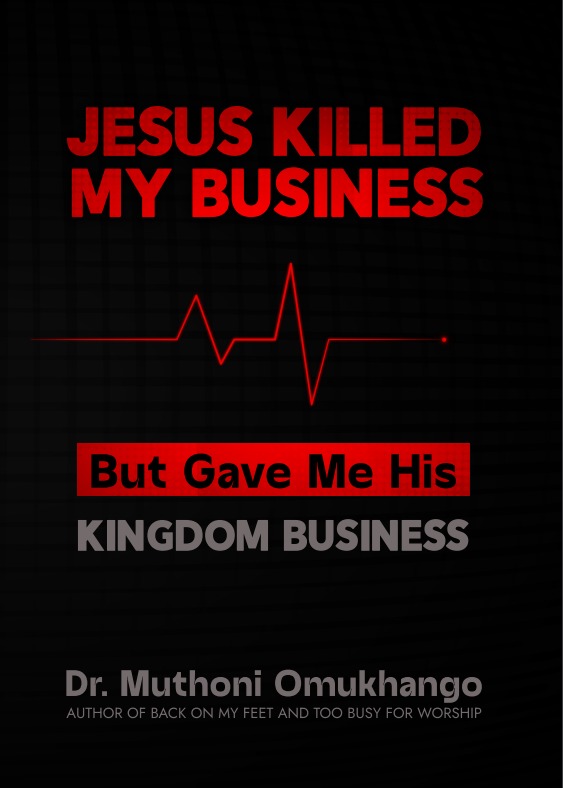
These examples are built around three simple principles that also appear in Jesus Killed My Business: But Gave Me His. The book is mainly personal testimony, but it still gives you useful models for ethical use of public material.
1. Use public stories to give context, not to take over your message
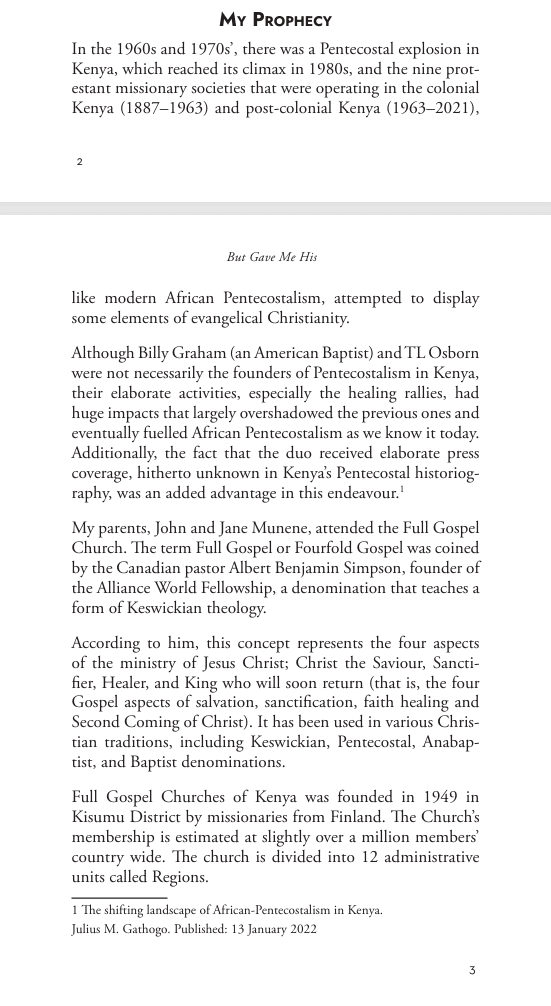
One of the clearest examples in the book appears in Chapter One. The writer refers to the Pentecostal movement in Kenya, mentions public figures such as Billy Graham and T. L. Osborn, and explains the Full Gospel background before returning to her own family, church setting, and calling story.
This teaches you an important lesson. You may use public history or public stories to help your reader understand the environment in which your own story happened. That is ethical because you are not pretending that public history is your own experience. You are not borrowing greatness from famous names. You are simply giving enough background to make your own testimony clearer.
So when you write, you should ask yourself whether the public story is helping the reader understand your point, or whether it is distracting from it. If the reader remembers the public figure but forgets your lesson, then you may have given the supporting material too much space.
A public story should act like a lamp. It should bring light to your message. It should not become the entire room.
2. Acknowledge influence honestly
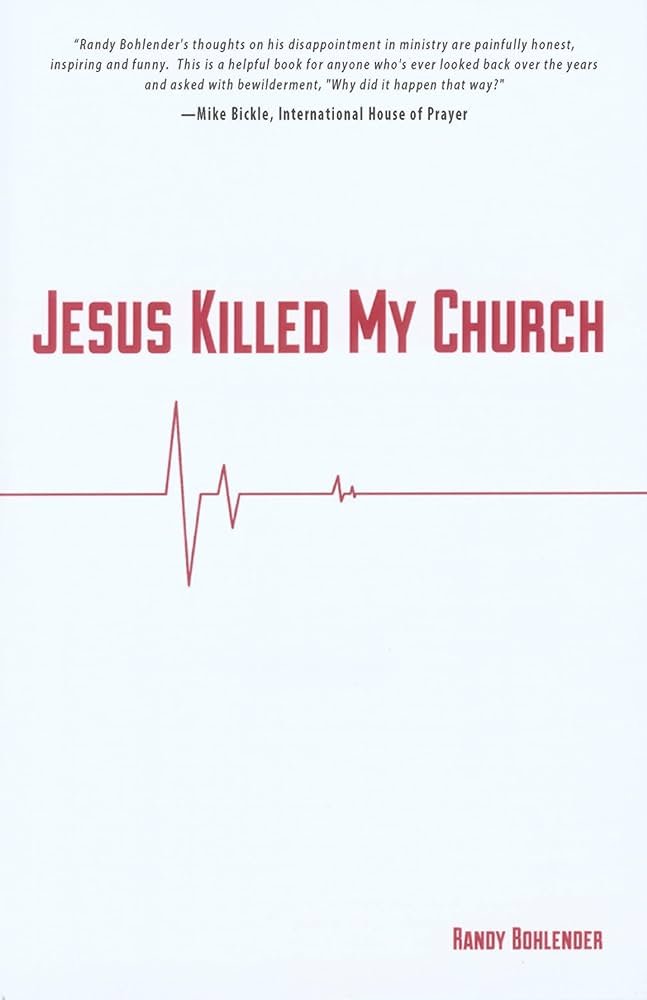
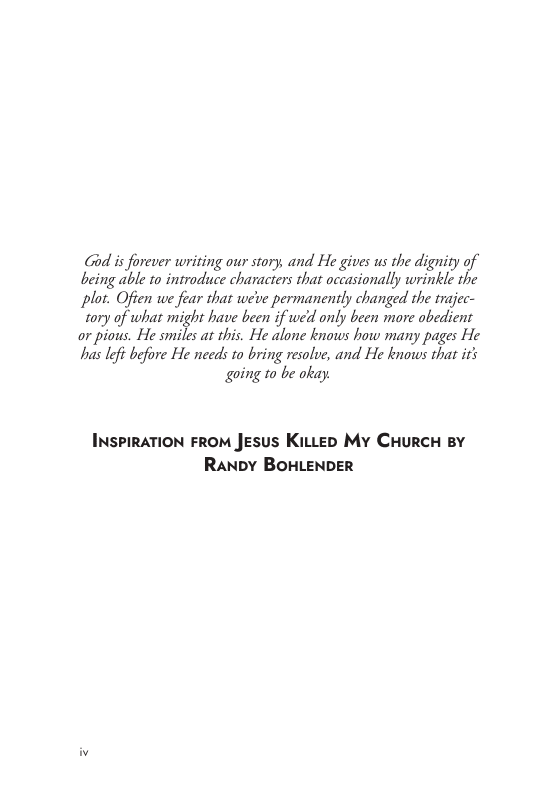
Another example appears near the beginning of the book, where the writer openly says that one reflection was inspired by Jesus Killed My Church by Randy Bohlender.
This matters because ethical writing requires honesty about influence. You may read a book, hear a sermon, encounter a reflection, or learn from another writer in a way that shapes how you later express your own message. There is nothing wrong with that. In fact, all writers are shaped by what they read and hear. The problem begins when you hide that influence and present it as though it came entirely from you.
As a Christian writer, you should be especially careful here. Your credibility depends not only on what you say but also on how truthfully you handle sources, ideas, and influence. If a phrase, structure, reflection, or framing concept clearly came from another person’s published work, you should acknowledge it appropriately.
This does not weaken your authority. It strengthens your integrity. It tells your reader that you are a trustworthy steward of ideas.
3. Separate another story from your own application
A third example appears in the way the book uses Jacob’s story. Across the chapters, the writer retells biblical events and then connects them to her own life, struggle, and calling. She does not pretend that her life is identical to Jacob’s life. Instead, she recognises a spiritual pattern and draws a careful application.
This is a very important lesson for your own writing. When you use another person’s story, whether biblical or public, you should not collapse the two stories into one. Their story remains their story. Your lesson from it remains your lesson.
You must therefore learn to retell faithfully first and apply carefully second. That means you honour the original account before drawing your conclusion. You do not overstate the similarity. You do not make yourself the centre of someone else’s story. You simply show the reader the connection with humility and clarity.
This protects your writing from manipulation. It keeps your voice balanced. It also helps your reader trust you.
Conclusion
These three examples give you a strong working rule for non-fiction Christian writing.
- You may use public stories to provide context.
- You should acknowledge influence honestly.
- You must separate the original story from your application.
If you remember those three things, you will already avoid many common writing mistakes.
Mistakes you should avoid
- One mistake is using another person’s public story simply because it is dramatic. A story may be powerful, emotional, and memorable, but that does not automatically mean you should use it. If it does not serve your message, leave it out.
- Another mistake is overusing background information. You may begin with a helpful public example, but if you linger too long in it, your own chapter loses focus.
- A third mistake is failing to acknowledge influence. If your thinking was shaped by a public source in a clear way, do not act as though the idea was born entirely within you.
- Another mistake is careless comparison. You should not force your life into another person’s experience just to make your writing sound deeper.
- Finally, you should avoid using public stories in a way that feels exploitative. Even when something is public, you should still ask whether you are using it respectfully, fairly, and with purpose.
Questions you should ask before using a public story
- Before you include another person’s public story in your writing, pause and ask yourself a few questions.
- Are you using this story because it truly serves the reader, or because it sounds impressive?
- Have you made it clear that the story belongs to someone else?
- Have you kept the details fair and accurate?
- Have you acknowledged the source or influence where needed?
- Have you returned to your own lesson clearly and quickly?
If you cannot answer those questions well, you should revise that section before moving on.
When you finish, check whether the public story served your message, whether you handled it honestly, and whether your own lesson remained clear.
Getting Started: Publishing Books
Preparing to Write/Publish
No posts found!
Elementary Skills: Publishing Books
How to Write
No posts found!
Technical Skills: Publishing Books
Refining Your Manuscript
No posts found!
Advanced Skills: Publishing Books
Going the Extra Mile
No posts found!
Contractual Skills: Publishing Books
Be Informed (Not Legal Advice)
No posts found!