Writing from real life is one of the bravest things an author can do. Real stories carry weight. They carry tears, memory, regret, healing, and wisdom. But they also carry responsibility, especially when the story includes other people from painful seasons such as a difficult marriage, a painful church environment, an unhealthy friendship, or a harmful workplace.
The question is not only whether the story is true. The deeper question is how to tell it wisely.
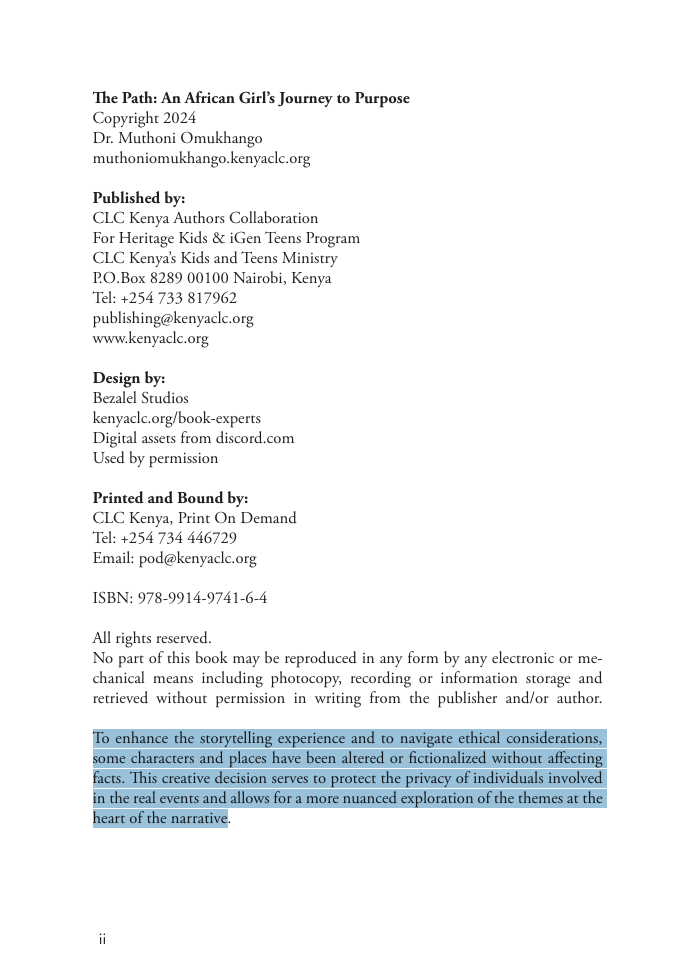
A good example of this is The Path: An African Girl’s Journey to Purpose. The book makes it clear from the beginning that it is rooted in real events, while also carefully protecting people and places. It says that “some characters and places have been altered or fictionalized” in order to protect privacy while preserving the truth of the story. That is a strong model for authors. It shows how a writer can move from memoir into fictional autobiography without losing honesty.
Change Names and Settings Where Necessary
Sometimes authors think that telling the truth means using every real name, every real place, and every exact detail. But wisdom teaches otherwise.
If your manuscript is based on a painful real-life experience, changing names and settings may be the wisest path. You are not denying the truth. You are protecting people while preserving the lesson. That is exactly what The Path does. The book openly acknowledges that real events remain at the heart of the story, even though names and places have been adjusted.
This is especially helpful when a story moves from memoir to fictional autobiography. It allows the author to tell what happened, reflect on its meaning, and still guard private identities.
Be Truthful Without Becoming Harsh
Pain can make writers sharp. That is why authors must be careful when writing about hard seasons. The goal is not to make people look bad. The goal is to tell the story faithfully and redemptively.
In The Path, difficult experiences are told with reflection rather than attack. Neo faces confusion, inner conflict, wrong choices, hard seasons, and spiritual struggle, but the storytelling does not become venomous. Even when she is affected by the influence of others, the tone stays thoughtful. The writing is more interested in what was learned than in publicly shaming people.
That is a lesson for every author. If a painful chapter in your manuscript sounds more like revenge than wisdom, it needs more healing before publication.
Acknowledge Your Own Part
One of the strongest things an author can do is admit personal responsibility.
It is easy to write as though all the trouble came from other people. But mature writing asks harder questions. Did I ignore warning signs? Did I stay where I should have left? Did I allow wrong influences? Did I compromise my values?
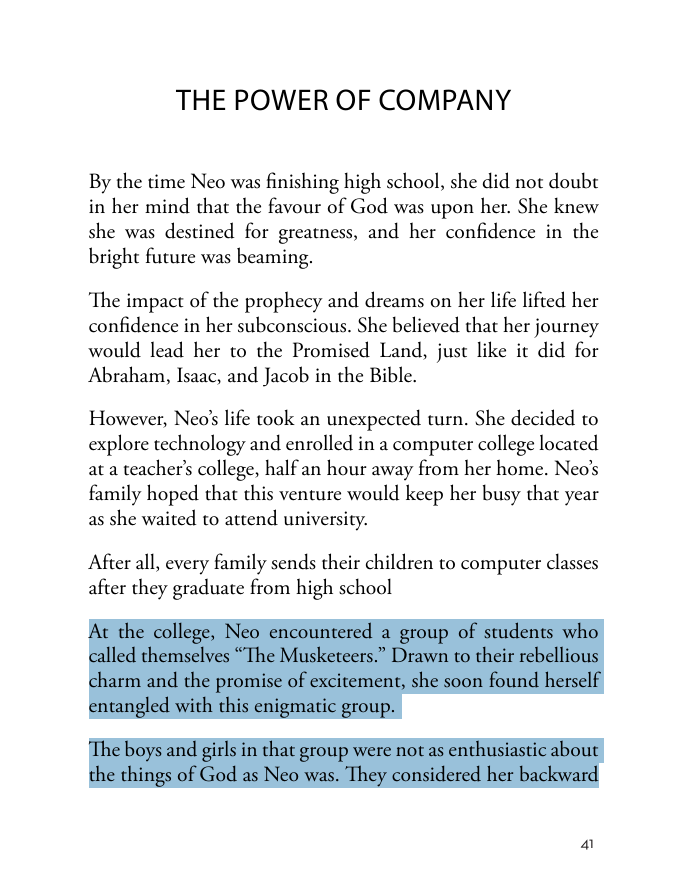
The Path gives a clear example of this in Neo’s season with the wrong company. She is not written merely as a victim of bad people. The story shows her inner conflict, her desire for acceptance, and the choices that slowly pulled her away from her convictions. The book says that the wrong company “pulled her away” from the love of God and His calling, but it also shows that she had choices to make within that season.
That makes the story more honest. It also makes the lesson more powerful.
Let the Lesson Be Greater Than the Exposure
A manuscript should not exist to embarrass people. It should exist to reveal truth, growth, warning, healing, and the hand of God.
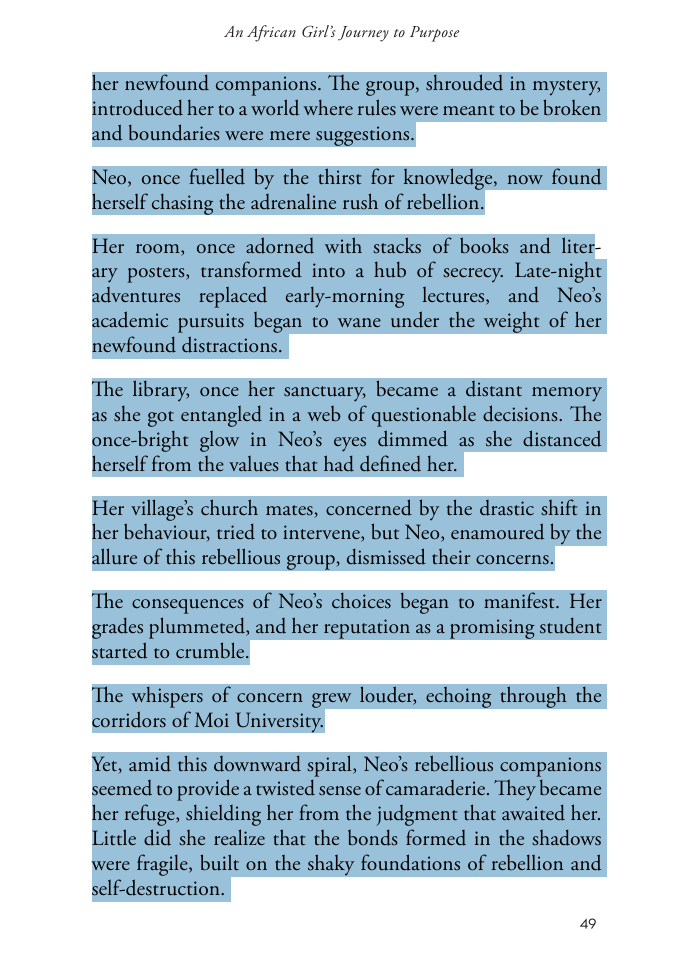
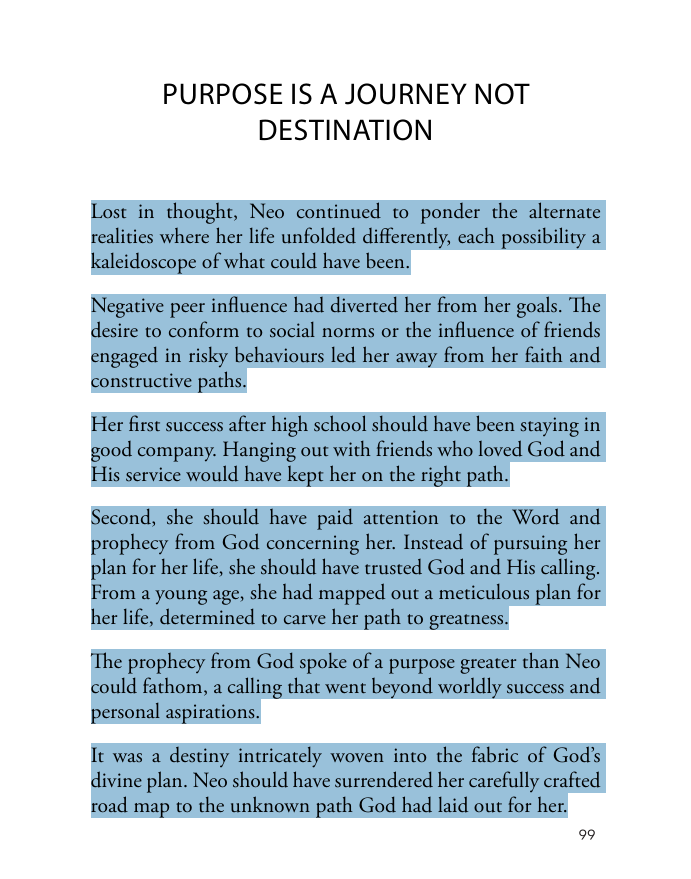
One of the strengths of The Path is that the book keeps returning to purpose. Even when Neo is confused, distracted, tempted, or wounded, the story keeps moving towards calling, surrender, and divine direction. The reader is not left staring only at human failure. The reader is guided toward meaning.
That is how authors should handle difficult stories. Let the lesson be louder than the injury. Let the purpose of the chapter be greater than the exposure of the people in it.
Honour the Good Where It Exists
Balanced writing does not only remember pain. It also remembers grace.
In The Path, alongside struggle and misdirection, there is also gratitude, honour, support, and love. The front matter appreciates family, husband, friends, colleagues, and helpers who supported the journey. This matters. It reminds authors that real life is rarely all dark or all light. Even in difficult stories, there are often people who stood with us, guided us, or carried us.
A trustworthy manuscript does not become selective in memory. It does not only magnify the wounds. It also honours the kindnesses.
Do Not Slander
Christian authors, especially, must guard their pens.
Slander does not only mean inventing lies. Sometimes it means using true details carelessly, maliciously, or unnecessarily. It means presenting private pain in a way meant to damage another person’s name. It means making assumptions sound like facts.
When writing about painful situations, describe what happened with restraint. Avoid dramatic insults. Avoid exaggerated labels. Avoid turning your manuscript into polished gossip.
A story can be honest without being cruel.
Fictional Autobiography Can Be a Wise Bridge
For some authors, fictional autobiography becomes a helpful bridge between silence and full memoir. It allows a writer to speak truthfully from lived experience while softening identifying details. It also creates room for reflection, theme, and storytelling craft.
That is what makes The Path especially useful as an example. It shows how a real story can be retold through a fictionalised frame without losing its emotional and spiritual truth. The reader still encounters the heart of the journey, but with the ethical care that protects real individuals and settings.
For authors carrying sensitive stories, that can be a very wise approach.
No posts found!
Conclusion
When writing about other people in painful stories, authors need both courage and caution. Courage to tell the truth. Caution to tell it well.
Change names where necessary. Adjust settings when needed. Be objective. Acknowledge your own part. Refuse slander. Honour the good. Let the lesson rise above the injury. And where memoir would expose too much, consider fictional autobiography as a wise and ethical bridge.
The Path shows that this can be done well. It is a real story retold with care, where truth is preserved, privacy is respected, and the deeper purpose of the narrative remains clear.
Listen to The Path: Audio Book
An African Girl’s Journey to Purpose
Getting Started: Publishing Books
Preparing to Write/Publish
No posts found!
Elementary Skills: Publishing Books
How to Write
No posts found!
Technical Skills: Publishing Books
Refining Your Manuscript
No posts found!
Advanced Skills: Publishing Books
Going the Extra Mile
No posts found!
Contractual Skills: Publishing Books
Be Informed (Not Legal Advice)
No posts found!