Latest posts
-
Beyond the Book Table: Preparing for an ACABA Bookfest
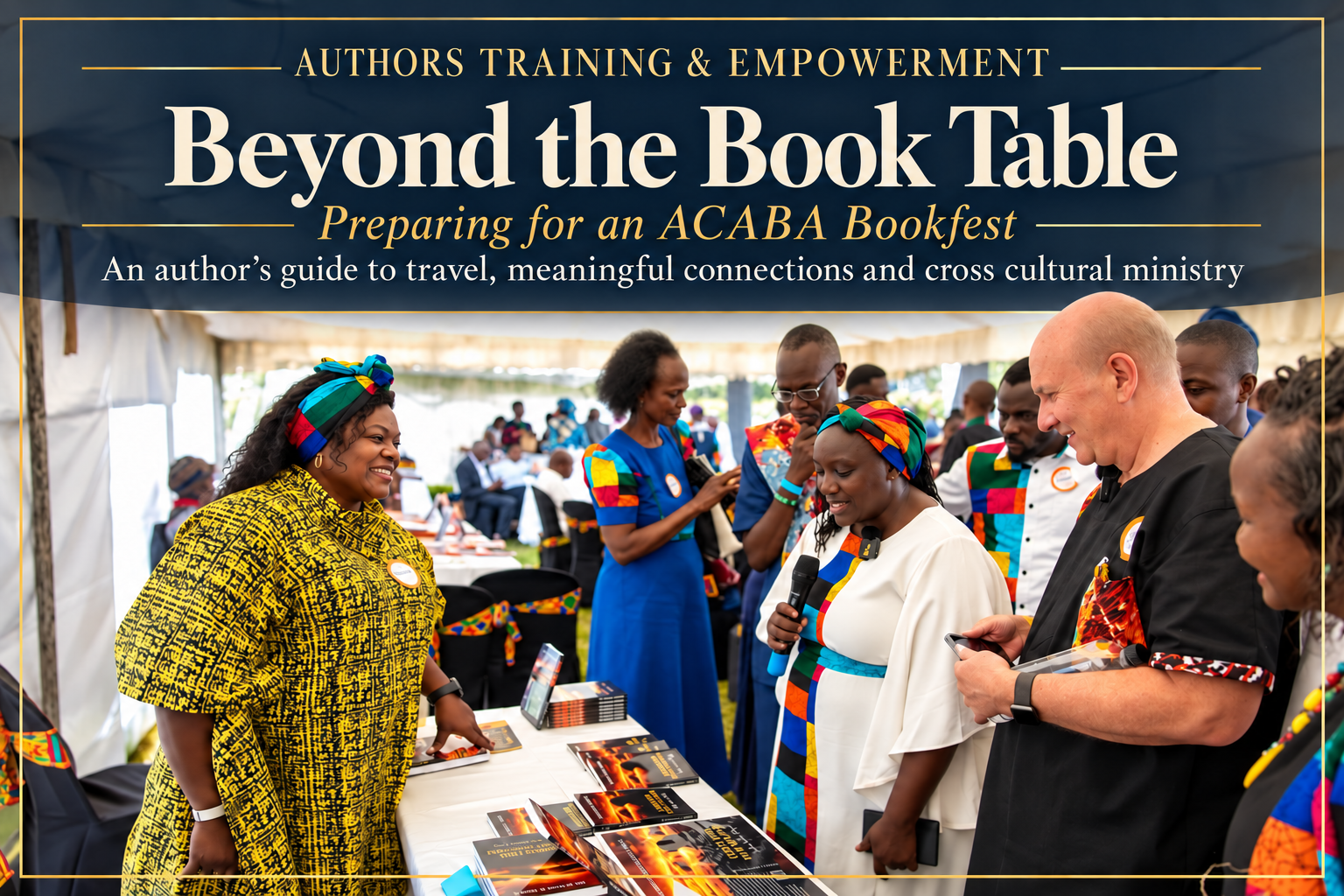
Prepare for an ACABA Bookfest with this practical guide for authors. Learn how to plan travel, accommodation, books, connectivity and cross cultural ministry while making meaningful connections across Africa.
-
CLC Kenya Published Authors Collaboration 2026
Discover CLC Kenya’s 2026 Published Authors Collaboration, featuring the inaugural Group Book Launch, Authors Yearbook, outdoor networking at Nairobi Arboretum, and an author book swap designed to strengthen relationships, partnerships and Christian publishing across Africa.
-
10e How to Handle Readers’ Feedback Well
Learn how to handle reader feedback with wisdom and discernment. Understand positive, constructive, personal preference, unfair and malicious reviews, and respond in ways that strengthen your writing without allowing criticism to derail your calling.
-
Custom Bookmark Printing at CLC Kenya
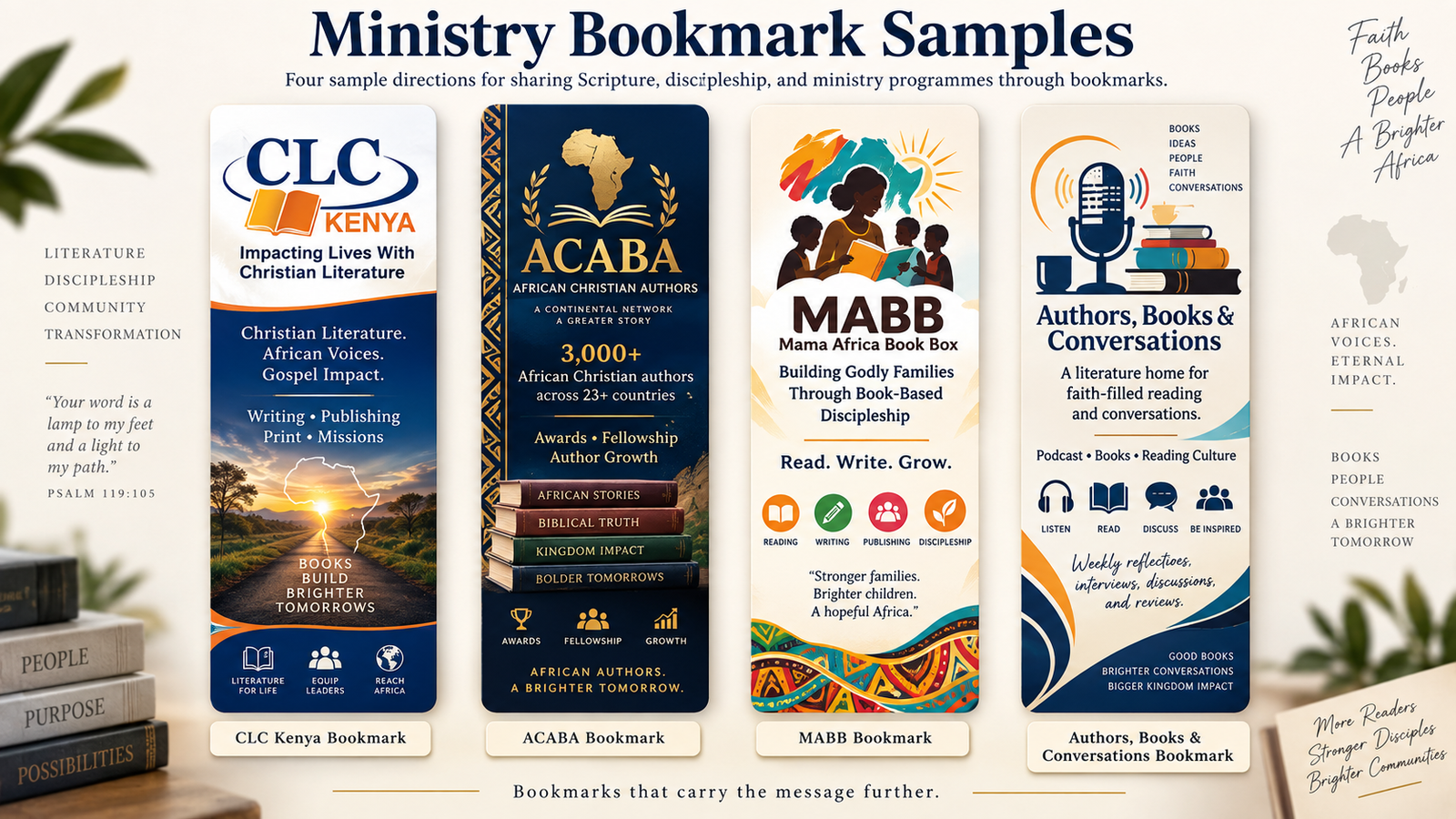
Design and print custom bookmarks for books, authors, ministries, events, schools and businesses in Nairobi, Kenya. Choose 2″ × 6″ or 2″ × 8″ sizes, with a minimum order of 240 pieces. Professional design, print setup and Nairobi delivery available.
-
2a-1a Poetry Foundations: Finding Your Voice and Mastering the Craft
Learn how Christian poets and spoken-word writers can interpret Scripture responsibly, distinguish biblical meaning from poetic imagination, and create faithful, powerful work rooted in God’s Word.
-
2a-1b Biblical Interpretation & Hermeneutics for Christian Poetry and Spoken Word
Learn how Christian poets and spoken-word writers can interpret Scripture responsibly, distinguish biblical meaning from poetic imagination, and create faithful, powerful work rooted in God’s Word.
-
Prepare Your Launch Team
Prepare your book launch team with practical steps for choosing the right people, assigning clear roles, inviting them personally, and equipping them to pray, share, review and recommend your book.
-
How to Build a Mailing List
Build your first author contact list with three simple assignments: identify interested readers, discover where genuine contacts can come from, and begin a permission-based mailing list.
-
How to Build an Author’s Visibility
Learn how to build an author’s visibility before publication by clarifying your message, sharing your writing journey and creating a simple, practical visibility plan.
-
CLC Kenya Onyx Writing Class 2026
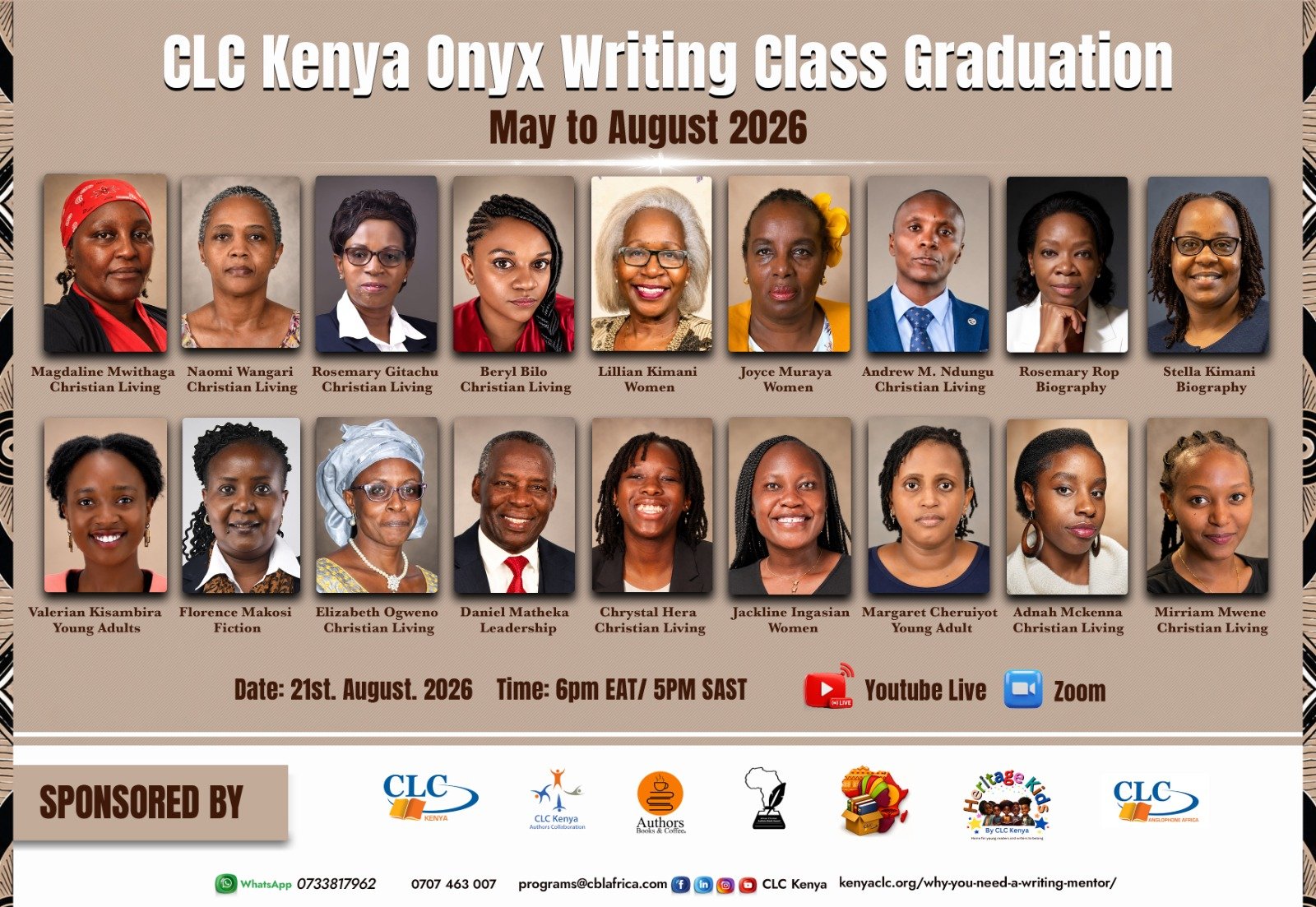
CLC Kenya celebrates 19 graduating writers from the Onyx Writing Class, recognising their growth in manuscript development across Christian living, biography, fiction, leadership, women and young adult literature.