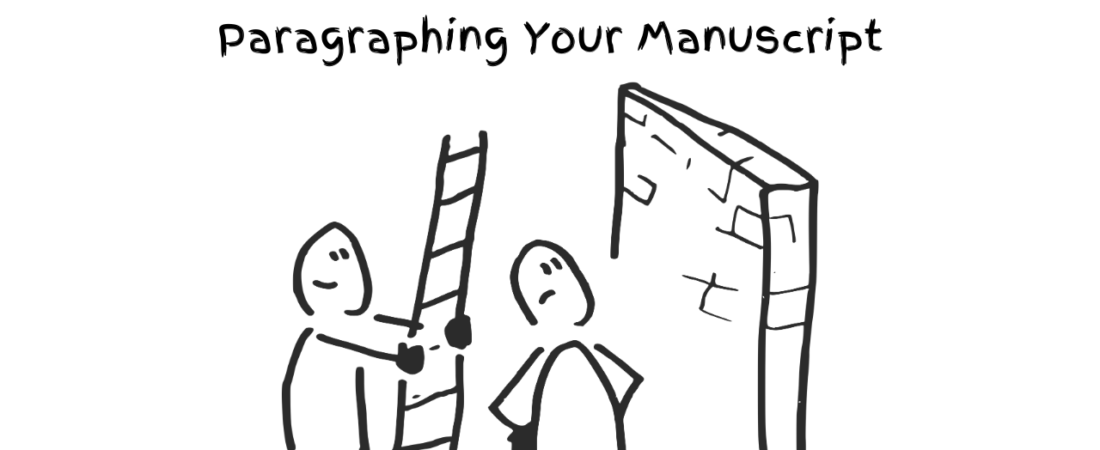
Good paragraphing makes a manuscript easier to read, easier to understand, and easier to enjoy. Many writers have good ideas but lose readers because they put too much into one block of text. A paragraph is not just a space on the page. It is a way of helping the reader follow your thought.
The simplest rule is this:
One paragraph, one main idea!
If you are writing about prayer, stay on prayer in that paragraph. If you move to fear, start a new paragraph. If you move to a Bible story, start a new paragraph. If you move to an application point, start a new paragraph. This keeps your writing clean and gentle on the eyes.
A paragraph should feel like one small basket carrying one type of fruit. Do not mix bananas, onions, tea leaves, and chapati dough in the same basket and expect the reader to smile.
Keep one paragraph focused
Every paragraph should carry one clear thought. That thought can be explained with one or two supporting sentences, but it should still feel like it belongs together.
Do not layer too many ideas in one paragraph. A writer may begin with forgiveness, then jump to childhood pain, then quote three scriptures, then add a testimony, then give marriage advice, all in one paragraph. That becomes heavy. The reader has to work too hard.
Instead, slow down. Separate the thoughts.
Break when the thought changes
Start a new paragraph when:
you begin a new idea
you shift from teaching to example
you move from story to lesson
you change from problem to solution
you introduce a new scripture emphasis
a paragraph starts feeling crowded
A paragraph break is like giving your reader a chair to sit on before continuing the journey.
Do not make paragraphs too long
Long paragraphs can scare readers, especially in devotionals, memoirs, articles, and Christian non-fiction. Even if the content is good, a long wall of words can make the page feel unfriendly.
Most paragraphs should be short to medium in length. Some can be one sentence for emphasis. Some can be three or four sentences. What matters most is clarity.
Do not break too quickly either
Very short paragraphs all the time can make writing feel choppy. So the goal is balance. Not every sentence needs to stand alone. Let connected thoughts stay together. Just do not force too much into one space.
Let the paragraph breathe
A good paragraph has room. It does not rush. It does not cram. It says what it needs to say and stops at the right place.
That is one of the easiest ways to improve a manuscript without changing the message.
A simple test for your paragraph
After writing a paragraph, ask:
What is this paragraph mainly about?
If the answer is, “It is about trusting God in suffering,” that is clear.
If the answer is, “It is about trusting God, my childhood, my pastor’s sermon, Hannah, financial struggle, and waiting for a husband,” then that paragraph needs help.
Example 1: Teaching paragraph
Too crowded:
When God calls us, we must obey quickly because delayed obedience can become disobedience, and many people in scripture suffered because they hesitated, and sometimes we also hesitate because of fear, insecurity, or family background, but Moses still went, and Esther still stood up, and today many believers are still hiding behind excuses when God is waiting for surrender.
Better:
When God calls us, He expects our response. Delayed obedience often becomes disobedience.
Many believers hesitate because of fear, insecurity, or their past. They know what God is saying, but they keep waiting for a more comfortable moment.
Scripture shows us a different path. Moses went. Esther stood up. God worked through those who chose to obey.
In the better version, each paragraph carries one movement of thought.
Example 2: Devotional writing
Too crowded:
Hannah prayed with deep pain, and many women today understand that kind of sorrow because waiting seasons can be lonely, especially when others seem to be moving ahead, and yet God remembered Hannah, which shows that delay is not denial, and we must also remember to pray with faith and not bitterness because bitterness can block what God wants to do in our hearts.
Better:
Hannah prayed from a place of deep pain. She brought her sorrow honestly before the Lord.
Many people understand that kind of waiting. Delayed seasons can feel lonely, especially when others seem to be moving ahead.
Yet God remembered Hannah. Her story reminds us that delay is not always denial.
In our own waiting seasons, we must guard our hearts. We can pray with faith without letting bitterness take root.
Example 3: Christian memoir or testimony
Too crowded:
When I lost my job, I felt ashamed and confused because I had served faithfully and did not understand why God would allow such a thing, and during that season I stopped answering calls, avoided people, struggled to pray, and yet through one scripture in Isaiah the Lord slowly restored my confidence and showed me that my identity was not in my title.
Better:
When I lost my job, I felt ashamed and confused. I had served faithfully, and I did not understand why God had allowed it.
That season affected me deeply. I stopped answering calls, avoided people, and struggled even to pray.
But the Lord met me through His Word. A passage in Isaiah began to rebuild what fear had broken.
Slowly, I understood that my identity was not in my title. It was in God.
Example 4: Christian fiction or story writing
Too crowded:
Mama Grace closed the Bible and looked at her son, and though she wanted to rebuke him for lying, she could see fear in his eyes, and she remembered her own childhood, and that memory softened her, so instead of shouting she asked him to sit down and tell the truth, because mercy often opens doors that anger closes.
Better:
Mama Grace closed the Bible and looked at her son.
She wanted to rebuke him for lying. But fear was already written all over his face.
For a moment, she remembered her own childhood. The memory softened her heart.
So instead of shouting, she asked him to sit down and tell the truth. Mercy can open doors that anger keeps shut.
Tips for Christian writers
- Christian writers often carry many beautiful thoughts at once—scripture, revelation, story, application, prayer, and instruction. That is a strength, but it can also become a weakness on the page.
- Resist the urge to pour everything into one paragraph.
- If you are writing about a Bible passage, you do not need to explain the verse, give three life lessons, add a testimony, and close with a prayer all in one paragraph. Give each part its own room.
That way, your writing becomes clearer, stronger, and more memorable.
Conclusion
Good paragraphing is not about sounding clever. It is about serving the reader well.
A clear manuscript shows kindness. It helps the reader receive the message without strain. And when your message carries truth, you do not want poor paragraphing to stand in the way.
Write simply. Break wisely. Keep each paragraph faithful to one thought.
That alone will improve your manuscript more than many writers realise.
How many sentences should a paragraph have?
There is no fixed number, but 2 to 5 sentences is a very safe range for most paragraphs.
What matters most is not the number of sentences. What matters is whether the paragraph carries one clear idea.
A paragraph can be:
- 1 sentence for emphasis
- 2–5 sentences for normal writing
- Longer if the thought still flows clearly
For Christian non-fiction, devotionals, blog articles, and memoir, shorter paragraphs usually work better because they feel warmer and easier to read.
For example:
Good short paragraph:
God often speaks in quiet ways. That is why we must learn to slow down and listen.
Also good:
Waiting can feel painful. We pray, we hope, and sometimes we wonder whether God has heard us. Yet Scripture reminds us that the Lord is never late. He works with purpose, even in silence.
A good rule is this: end the paragraph when the idea feels complete. If you start introducing another thought, begin a new paragraph.
Which words should not start a paragraph?
There are no forbidden words that must never start a paragraph. The real question is whether the opening word helps the paragraph begin clearly and naturally.
That said, some words make weak paragraph openings when overused.
Words that usually make a weak start
1. And
It can work sometimes, but if many paragraphs begin with And, the writing starts sounding loose or repetitive.
2. But
This is not wrong, but too many paragraphs starting with But can feel dramatic in an artificial way.
3. So
This can sound casual. It is fine in conversational writing, but not for every paragraph.
4. Because
A paragraph starting with Because can feel incomplete unless the sentence is shaped well.
5. Also
This often sounds like you are just adding another item, rather than beginning a fresh thought strongly.
6. Then
Useful in storytelling, but too much of it can make writing sound childish or mechanical.
What matters more than the word
A paragraph should begin with a word or sentence that gives direction. The reader should quickly sense what this paragraph is about.
For example, these are weak openings:
- And God is faithful in hard times.
- Also prayer changes things.
- But we must still trust Him.
These are stronger:
- God remains faithful in hard times.
- Prayer changes more than circumstances. It also changes us.
- Trust is still necessary, even when we do not understand what God is doing.
Good ways to start a paragraph
You can begin with:
- the main idea
- a key person
- a setting
- a question
- a contrast
- a short strong statement
For example, these often work well:
- Moses was afraid, but he still obeyed.
- Waiting seasons test both faith and character.
- Why do many believers struggle to trust God fully?
- Scripture shows that God often works through process, not speed.
A simple rule
- Do not worry too much about one single word. Worry about clarity, strength, and flow.
- A paragraph should not start with a word just because it sounds clever. It should start in a way that makes the reader want to continue.
- So the better question is not, “Which word is forbidden?” but, “Does this opening sentence lead the reader well?”
- For most manuscripts, avoid repeatedly starting paragraphs with:
And, But, So, Also, Then, Because unless they truly fit. - Used once in a while, they are fine. Used too often, they weaken the writing.
Getting Started: Publishing Books
Preparing to Write/Publish
No posts found!
Elementary Skills: Publishing Books
How to Write
No posts found!
Technical Skills: Publishing Books
Refining Your Manuscript
No posts found!
Advanced Skills: Publishing Books
Going the Extra Mile
No posts found!
Contractual Skills: Publishing Books
Be Informed (Not Legal Advice)
No posts found!