
An Author Resource for Writing a Satisfying Ending That Opens the Door to the Next Book
Ending a book that is meant to continue into a sequel requires a careful balance. The reader must feel that the book they have just finished was complete enough to justify their investment of time, emotion and money. At the same time, the ending should leave enough possibility, curiosity and unfinished development to make the next book desirable.
The purpose of a sequel ending is therefore not to leave the first book half-written. Rather, it is to complete the present story while showing that a larger story is still unfolding.
A strong ending allows the reader to say two things at once:
“That story was satisfying.”
and
“I really want to know what happens next.”
The following twelve principles can help authors achieve that balance.
1. Fulfil the Promise of Book One While Preserving the Larger Story
Every book makes a promise to its reader. In fiction, this promise often appears as a central question. Will the protagonist survive? Will the family reconcile? Will the mystery be solved? Will the main character achieve the goal that has driven the story?
In nonfiction, the promise may be different. The author may promise to help the reader understand a problem, learn a process, overcome a challenge or follow a particular journey. Whatever the promise is, the first book should honour it before attempting to sell the reader another book.
This is where it becomes helpful to distinguish between the conflict of the individual book and the conflict of the wider series.
The immediate conflict should normally reach a meaningful conclusion. The larger series conflict may remain open.
For example, imagine a story about a university student named Leah whose younger brother disappears. The whole of Book One follows Leah as she searches for him. By the end of the book, she finds and rescues her brother. That promise has been fulfilled.
However, during the rescue, Leah discovers documents suggesting that her brother’s disappearance was not an isolated kidnapping. Several other young people have vanished in similar circumstances.
Book One has answered:
Where is Leah’s brother, and can she save him?
But the series has now introduced a larger question:
Who is behind the disappearances, and why?
This gives the reader both completion and anticipation.
Before writing your final chapters, ask:
What question must this particular book answer before I introduce the question that belongs to the next book?
2. Give the Reader Both Plot Closure and Emotional Closure
Resolving the external problem is only part of a satisfying ending. Readers also need to see what the journey has done inside the character.
A character may begin the book frightened, bitter, proud, insecure, distrustful, spiritually distant or unwilling to forgive. The character does not necessarily need to become completely healed or mature by the final page, especially if several books are planned. However, there should normally be evidence of movement.
This is the difference between simply ending the action and completing an emotional journey.
Suppose Miriam begins a novel convinced that she cannot trust anyone because of a betrayal from her childhood. Throughout the story, she works alongside a colleague named Joseph but continually refuses his help.
At the climax, Miriam might solve the central crisis herself, but the emotional ending could show something quieter.
When another problem arises, Joseph asks:
“Do you want me to come with you?”
Earlier in the book, Miriam would have refused.
This time she answers:
“Yes.”
One word can demonstrate an entire character journey.
The reader does not need Miriam to have solved every wound from her past. It is enough to see that something has shifted.
The same principle works in Christian fiction. A character’s spiritual growth should feel genuine without suggesting that one encounter with God has permanently removed every struggle.
David defeated Goliath, but his life did not suddenly become trouble-free. Peter was restored by Christ, but his calling continued to require courage, obedience and growth.
A spiritually grounded ending can therefore communicate:
God has completed something in this season, but He is still working in this person’s life.
That creates an especially natural foundation for a sequel.
3. Create a Sequel Hook, Not an Unfinished Book
One of the greatest dangers when writing a sequel is confusing a cliffhanger with an incomplete ending.
A sequel hook creates curiosity about what comes next.
An unfinished ending simply refuses to finish what the current book began.
Imagine that a detective has spent an entire novel hunting for a murderer. In the final chapter, she discovers the killer’s location, approaches the house, raises her hand to knock on the door and then the book ends.
That may frustrate readers because the central promise of the book has not been fulfilled.
A stronger version would allow the detective to confront the murderer, solve the case and bring the investigation to a conclusion. Afterwards, while filing the evidence, she discovers something unexpected.
Perhaps there is a photograph showing the convicted murderer standing beside the police commissioner.
The photograph was taken only three months earlier.
Now the case is solved, but another mystery has opened.
That is much stronger.
The distinction is important:
A poor cliffhanger says:
“I refused to finish this story so you would have to buy another book.”
A good sequel hook says:
“I finished this story, but what happened here has revealed something bigger.”
Readers are much more likely to trust the second approach.
4. Leave Selected Threads Open, But Resolve Accidental Loose Ends
A series does not need to answer every question immediately. In fact, if every relationship, mystery, conflict and character arc is completely resolved in Book One, the sequel may struggle to find anything meaningful to continue.
The author should therefore intentionally decide which threads belong to the current book and which belong to future books.
An open thread might involve a secondary character whose motives remain uncertain, a family secret that has only partly been uncovered, an unresolved friendship, a developing romance, a prophecy, an unexplained letter, a spiritual struggle or the consequences of a major decision.
However, there is a crucial difference between an open thread and a loose end.
An open thread is deliberate.
A loose end is something the author forgot.
For example, suppose early in a novel we learn that Daniel’s sister Grace disappeared five years ago. If the entire book repeatedly hints that Grace’s disappearance is connected to a larger mystery that will be explored in Book Two, then her absence is an intentional open thread.
But if Grace is dramatically introduced in Chapter Two and is never mentioned again simply because the author became occupied with other parts of the story, that is a loose end.
During editing, examine each unresolved issue and ask:
Am I deliberately carrying this into the sequel?
If the answer is no, it probably needs attention before publication.
Use a Simple Series Tracker
A simple tracker can help you decide which story threads should be resolved in the current book and which ones should intentionally continue into future books.
| Story Thread | Book One | Future Book |
|---|---|---|
| Main robbery investigation | Resolve | No |
| Missing brother | Partly reveal | Book Two |
| Marriage tension | Show progress | Continue |
| Villain’s immediate scheme | Resolve | No |
| Mysterious organisation | Introduce | Book Two |
| Protagonist’s faith struggle | Show growth | Continue |
Give the reader a clear answer in this book.
Answer enough to satisfy while keeping a genuine question open.
Show meaningful movement without completing the entire arc.
Plant a thread intentionally for development in a later book.
This prevents accidental gaps while preserving intentional mystery. The writer knows which questions belong to this book and which ones are deliberately being carried forward.
5. Open the Door to Book Two Without Beginning Book Two Too Early
The closing pages of Book One should hint at what comes next without becoming several chapters of the sequel.
An author sometimes becomes excited about Book Two and begins introducing so much new information that Book One loses its ending altogether.
A sequel hook usually needs less explanation than the author imagines.
Consider this example.
Samuel has spent the entire book rebuilding his life after the death of his older brother. In the final scene, Samuel finally leaves their childhood home and drives towards a new job in another town.
His phone rings.
He answers.
A familiar voice says:
“Samuel, don’t hang up.”
He pulls the car to the side of the road.
He knows the voice.
It belongs to his brother.
The chapter can end there.
There is no need to spend another twenty pages explaining how the brother survived, where he has been or why he disappeared. Those questions belong to Book Two.
A good ending may simply turn on the light in the next room.
The reader does not need to enter the room yet.
This technique is especially effective when paired with earlier foreshadowing. Perhaps Samuel previously discovered inconsistencies in the death certificate or an unexplained bank withdrawal after his brother’s supposed death.
Then the final phone call feels surprising but believable.
The reader thinks:
“So that was what those clues meant!”
rather than:
“Where did this come from?”
6. Let the Consequences of Book One Naturally Produce Book Two
One of the best sources of a sequel is not a completely new problem but the consequences of solving the first problem.
Choices have consequences. Victories have consequences. Failure has consequences. Even answered prayers can lead to new responsibilities.
Suppose Ruth spends Book One fighting to prevent a children’s home from closing. By the end, she succeeds. A donor agrees to support the home, the property is secured and the children are safe.
That is a satisfying ending.
But success creates a new reality.
Ruth now has responsibility for forty children, a growing staff, financial accountability, government inspections and a donor whose motives may not be entirely clear.
The sequel can grow naturally from the victory itself.
This feels much stronger than suddenly introducing an unrelated crisis simply because another book is needed.
The same principle applies to relationships.
Perhaps two estranged brothers reconcile at the end of Book One. Book Two does not need to destroy that reconciliation immediately. Instead, it could explore what rebuilding trust actually requires.
Perhaps a pastor finally accepts a leadership position. The first book ends with his obedience. The sequel examines the cost of carrying the responsibility he prayed for.
Readers often appreciate this because it reflects real life. Reaching one destination often reveals the next assignment.
7. Choose the Kind of Ending That Best Serves Your Series
Not every sequel needs to end with danger. There are several ways of creating anticipation.
The Revelation Ending
Something previously unknown is revealed.
For example, after a family finally settles a long-running inheritance dispute, the youngest daughter discovers a second will hidden inside her grandmother’s Bible.
The immediate dispute is finished, but the revelation changes what everyone believed.
Five Ways to End One Story While Opening the Next
A sequel does not always need a dramatic cliffhanger. You can complete the main story while introducing a new assignment, threat, relationship shift, decision or unanswered detail that naturally creates the next book.
A character completes one mission and receives another.
A teacher successfully establishes a school in her rural community. During the final celebration, she receives a letter asking whether she would help establish another school across the border.
The hero defeats the immediate enemy but discovers that the enemy belonged to something larger.
A journalist exposes a corrupt businessman. In the final chapter, she learns that he was only one member of a network operating across several countries.
The circumstances of a relationship change, creating new possibilities and new tensions for the next story.
The protagonist makes a decision that directly creates the next story.
After refusing for years to return to the town where she grew up, Naomi buys a bus ticket home.
Nothing dramatic happens on the surface, but the reader notices something the characters do not.
Everyone leaves the wedding reception laughing.
After the room is empty, an unopened envelope slips from beneath the bride’s chair.
The book ends.
New mission
Larger danger
New dynamic
New decision
New question
Finish the promise of the current book before opening the door to the next one. A satisfying series ending gives the reader enough closure to feel rewarded while leaving one meaningful reason to keep reading.
8. Plant the Sequel Before the Final Chapter
The sequel should ideally feel as though it grew from Book One rather than being attached afterwards.
This means the author should plant small details throughout the story.
The clues do not have to be obvious. They simply need to make sense when readers look back.
Suppose the sequel will reveal that an apparently minor character named Mr Kato has been manipulating events from the beginning.
Book One might include small moments such as:
- Mr Kato appearing at places where he has no obvious reason to be;
- someone becoming uncomfortable when his name is mentioned;
- an old photograph showing him with the protagonist’s father;
- a phone call that abruptly ends when the protagonist enters the room;
- or a document bearing his signature.
None of these clues needs to reveal his role immediately.
When Book One ends with evidence pointing towards Mr Kato, the reader can mentally revisit earlier scenes.
This makes the sequel feel planned.
Foreshadowing can also be emotional rather than mysterious.
If Book Two will focus on a strained mother-daughter relationship, small tensions can appear in Book One even though that relationship is not yet the main conflict.
The seed is planted before the story needs it.
9. Give the Final Chapters Room to Breathe
Many authors spend most of the manuscript building towards the climax and then rush through the ending.
The villain is defeated on page 198.
The protagonist goes home on page 199.
Everyone hugs on page 200.
The end.
The problem is that readers often need time to process what has happened.
A Strong Sequel Ending Often Moves Through Five Stages
The final portion of a book can feel both satisfying and forward-looking when it moves through a clear sequence:
The main conflict reaches its decisive moment.
The reader sees what the climax has changed or cost.
The character processes what has happened internally.
We see what life now looks like after the main conflict.
A new question, assignment, threat or decision opens the next story.
Climax → Consequence → Emotional Resolution → New Normal → Sequel Door helps the current book feel complete before inviting the reader into the next one.
Consider a story in which Caleb has spent the book fighting to prove that his father was wrongly accused of fraud.
The climax may be the court hearing where new evidence clears his father’s name.
But the story should not necessarily end at the courthouse steps.
The reader may need to see Caleb return home with his father. Perhaps the father enters his bedroom for the first time in eight years. Perhaps Caleb apologises for having doubted him. Perhaps the family shares dinner.
Only after that emotional resolution might Caleb notice an unfamiliar name written repeatedly in his father’s old journal.
That name becomes the doorway to Book Two.
The action has finished.
The emotion has settled.
Life has begun to reorganise itself.
Then the next question arrives.
That sequence makes the ending feel earned.
10. Use the Final Sentence and Back Matter Strategically
The last sentence of a book carries unusual weight because it is the final voice the reader hears before closing the cover.
A good final line does not have to be dramatic. It simply needs to capture the emotional or narrative direction of the ending.
Use the Final Line to Leave the Reader Looking Ahead
A strong final line can close the emotional experience of the current book while quietly opening curiosity about what may happen next.
Tomorrow still carried questions, but for the first time, Amina was no longer afraid of the answers.
Three streets away, someone lowered the binoculars and made a phone call.
Then James recognised the handwriting.
At last, she understood why God had brought her back home.
At sunrise, they crossed the border.
The photograph had been taken seven years after her father died.
Use the Back Matter to Guide Readers Towards the Sequel
Once the story itself has ended, authors can use the pages after the final chapter to help interested readers discover the next book without weakening the fictional ending.
Let the story create curiosity first. Then use the back matter to help readers who want more find their way naturally to the next book.
Continue the Journey
Naomi’s story continues in Book Two of the Rivers of Grace Series.
If the next book is already substantially developed, the author may include a short preview, perhaps the first chapter.
This can work very well because the reader is already emotionally engaged.
End the story properly, then invite interested readers to continue the journey through the back matter.
“Want to know what happens? Buy Book Two!”
Avoid interrupting the final chapter with aggressive advertising.
Allow the story to earn the reader’s curiosity. The marketing should come after the storytelling.
11. Plan the Sequel Carefully Without Overpromising
Authors should think beyond Book One, but they should also be realistic about what has actually been written.
If Book Two exists only as an idea in a notebook, avoid confidently printing:
BOOK TWO COMING NEXT MONTH!
Writing schedules change. Editing takes time. Publishing delays happen. Life itself has a habit of editing our calendars without permission.
A safer statement might simply be:
The story continues in Book Two.
If Book Two is already written, edited or in production, a more specific announcement may be appropriate.
This is also where authors should remember a vital principle:
Write the ending of Book One with Book Two in mind, but keep your attention on the book currently in your hands.
Readers have not bought the sequel yet.
They are deciding whether they trust you enough to continue.
Book One therefore should never feel like a 250-page advertisement for Book Two.
For example, imagine a fantasy novel where the hero spends the entire story preparing to fight a dragon but never actually encounters it because the dragon battle has been saved for the sequel.
Readers may reasonably feel cheated.
But if the hero defeats the dragon and then discovers that the creature had been fleeing from something even more dangerous, the next book becomes intriguing without diminishing the first.
A sequel should be earned through the strength of the current book.
12. Test the Ending Before You Finish the Manuscript
Before submitting the manuscript to an editor, the author should examine the ending as both a conclusion and a bridge.
Ask whether the book is satisfying enough to stand on its own while still creating curiosity about what follows.
A useful final test is:
If the reader never obtains Book Two, will they still feel that Book One was worth reading?
If the answer is no, the ending may rely too heavily on the sequel.
Suppose a children’s adventure follows twelve-year-old Timo as he searches for a missing community trophy before an important celebration.
If Timo successfully finds the trophy, learns an important lesson about honesty and reconciles with the friend he wrongly accused, Book One has accomplished something meaningful.
The final pages might then reveal a strange map hidden inside the trophy case.
The reader can stop there and still feel satisfied.
But the map creates a reason to continue.
Before Finalising the Book
Use this checklist to test whether Book One feels complete while still creating a natural and satisfying pathway into the sequel.
A sequel hook should extend a satisfying story, not compensate for an unfinished one. Book One should reward the reader on its own while leaving a meaningful reason to continue.
The Golden Principle
A strong sequel ending should close the story that was promised while opening the door to the story still to come.
The reader should reach the final page with satisfaction about what has been completed and curiosity about what has not yet been revealed.
For Christian authors, there is an additional truth worth remembering. In Scripture, the completion of one assignment often becomes preparation for another. David’s victory over Goliath was a complete victory, but it was not the conclusion of David’s calling. Joseph’s journey from prison to Pharaoh’s court resolved one season while beginning another. Peter’s restoration by Jesus closed one painful chapter while opening the door to his future ministry.
Our stories can reflect that same truth.
A character may reach healing without having reached the end of their journey. A family may reconcile without having solved every future challenge. A ministry may experience breakthrough while receiving greater responsibility. A prayer may be answered while another season begins.
That is often where the best sequels begin.
Book One should have an ending. The series should still have somewhere meaningful to go.
Training by: Dr. Muthoni Mercy Omukhango
Dr. Muthoni Mercy Omukhango is a Christian publisher, author, trainer, and marketplace minister. She serves as National Director of CLC Kenya, Authors’ Manager at the African Christian Authors Book Award (ACABA), Convener of Mama Africa Book Box, and Patron of CLC Kids and Teens.
Through the Publishing in Africa Series, she equips authors, publishers, and literary entrepreneurs with practical strategies for developing, publishing, distributing, and growing African-authored literature.
Her ministry is centred on advancing God’s Kingdom through literature and helping more African voices to be written, published, distributed, and read.
Getting Started: Publishing Books
Preparing to Write/Publish
1-1a: Prepare Yourself to Get Published…
Are you ready to publish your book? Here is how you need to prepare. Have your manuscript ready and explore the oprions available today. If you are stuck in getting…
Read More1-1b: Let’s Talk About Publishing
The self-publishing landscape has changed considerably in the past two decades with new technologies such as the Internet, and the $1 billion markets continuing to change at a rapid pace….
Read More1-1d: Factors to Consider Before Self Publishing
Jesus, while talking to the disciples about following Him, asked them to count the cost. The same Scripture applies to authors today – you have to count the cost from…
Read More1-1e: Requirements for Self Publishing
Are you ready to be published? Use our 4 points check list and tick ‘Published Author’ box so you can move on to the next God-given assignment… #RaisingAfricanVoices
Read More1-1f: Publishing Steps – Review

Is your manuscript due for a review towards getting published? The major focus during manuscript review is the general quality of the book. It is important to establish the overall…
Read More1-1c: How Can We Become Effective Christian Authors?
Learn how to become an effective Christian author by writing under the guidance of the Holy Spirit, remaining rooted in Scripture, pursuing excellence, serving the right readers and trusting God…
Read MoreElementary Skills: Publishing Books
How to Write
2-2b: How to Write a Book Dedication
A book dedication is a way for you, the author to bestow a high honor on a person (or a group of people) you wish to praise or otherwise spotlight….
Read More2-3e: How to Write a Book’s Foreword
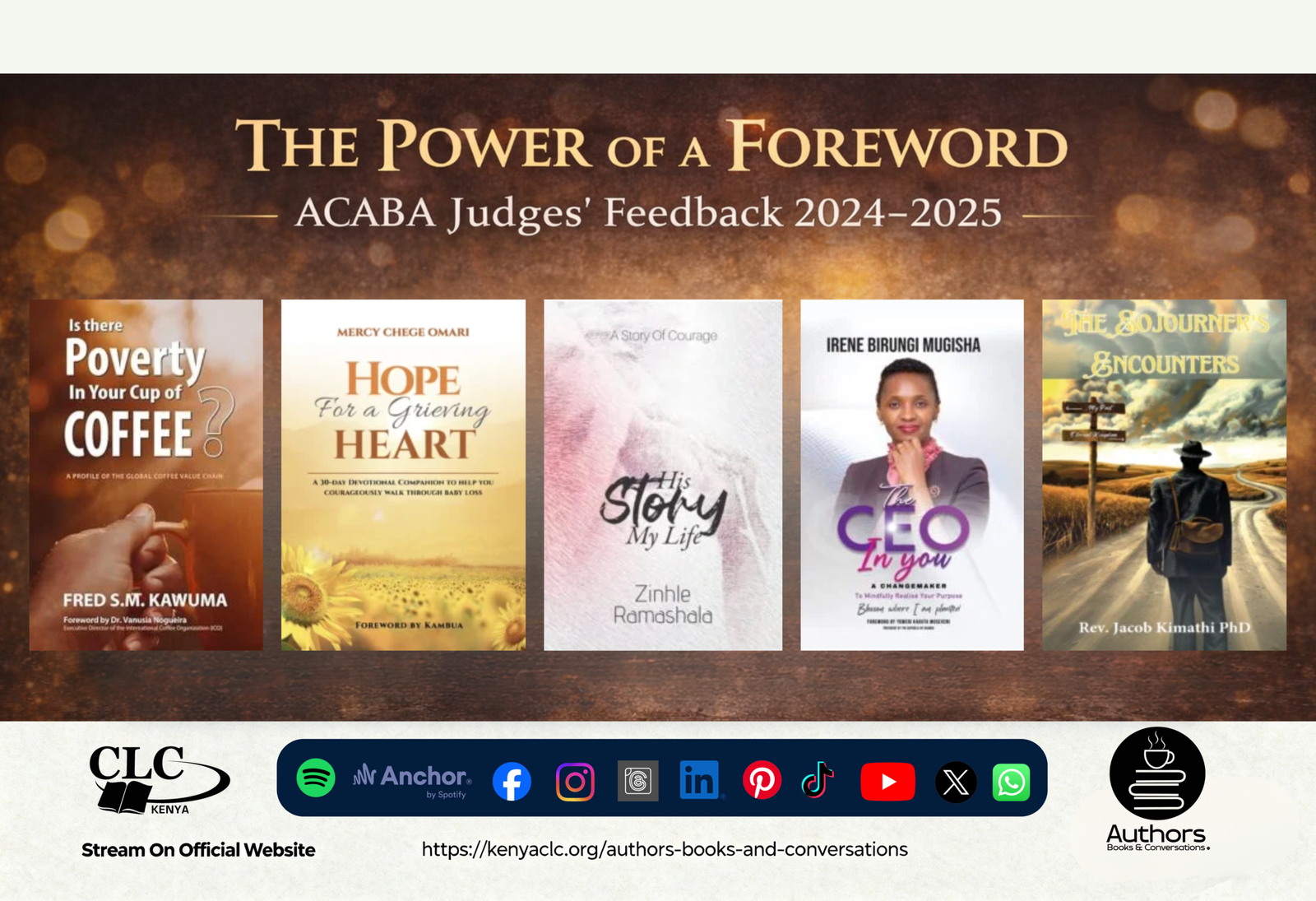
A well-written foreword can function as the ultimate third-party recommendation or endorsement for your book, generating interest and helping when it’s time to market your book. Here’s how to write…
Read More2-2e: How to Write a Book Introduction
Are you stuck on writing your book introduction? Here’s how to… Hook the reader right from the beginning with a personal story from your life, a funny story, a joke,…
Read More2-3a: How to Write a Book’s Conclusion
If your readers are in the conclusion chapter, it also means they read the whole book, they liked it, and now they want you to wrap it up. So don’t…
Read More2-2a: How to Write an Author’s Bio
People are looking for reasons why they should spend their time reading what you have written. You need to instill confidence in your readers that you are knowledgeable on the…
Read More2-3b: How to Write a Book’s Blurb
A blurb is a short yet descriptive account of the book that goes on the back cover or within the book sleeve of a hardcover book. It includes any information…
Read More2-2c: How to Write an Acknowledgement
An acknowledgment section in a book provides the space to go into lenghty details in thanking the people who were sources of inspiration and support for your book and life….
Read More2-3c: How to Write Table of Contents
A table of content shows the things that are held or included in something. In the book industry, it is a list of the chapters or sections given at the…
Read More2-3d: How to Differentiate Between a Foreword and Endorsement
Foreword vs endorsement: what’s the difference? Discover their purpose, placement, length, and how each builds credibility and helps readers choose your book.
Read More2-1a: How to Profile Your Target Reader
Learn how to profile your target reader so you can write with greater focus, choose the right tone and examples, address real needs, and market your book more effectively. This…
Read More2-2d: How to Start the First Sentence or Paragraph of Your Book
Learn how to start the first sentence or paragraph of your book without overthinking. Discover seven practical opening approaches, from personal stories and questions to bold statements, scenes and Scripture…
Read More2-1c: How to Do Proper Research Before or As You Write
Learn how to conduct proper research before or as you write. This practical Christian writing guide covers foundational and advanced research, credible sources, Scripture study, plagiarism, interviews, permissions, fact-checking and…
Read More2-1b. How to Create an Outline for Your Book
Learn how to create a clear and practical book outline that organises your ideas, strengthens your chapter flow and guides the writing process while remaining open to the leading of…
Read MoreTechnical Skills: Publishing Books
Refining Your Manuscript
3-3a: Why is Organising Your Non-Fiction Into Chapters Important?
Organising your non-fiction book into clear, well-structured chapters enhances readability, engagement, and comprehension for your audience. Chapters create a logical flow, making complex ideas easier to digest while guiding readers…
Read More3-3b: Why a Strong Chapter Structure Matters
A well-structured chapter helps your reader follow your message with ease. This simple guide shows writers how to build a chapter that flows from introduction to teaching, story, application, reflection,…
Read More3-7a: Why Self-Edit Your Book Before Submitting it for Publishing?
Self-editing is a crucial step before submitting your manuscript for publishing. It allows you to refine your ideas, correct errors, and enhance the overall quality of your work. A well-edited…
Read More3-7b: Train Your Ears to Edit: How African Writers Can Listen to Their Manuscripts Using MS Word Read Aloud

Learn how to use MS Word’s Read Aloud feature to listen to your manuscript, catch awkward sentences, improve flow, sharpen dialogue, and edit your writing more effectively as an African…
Read More3-1a: How to Write a Devotional
A devotional book is a literary work designed to provide spiritual inspiration, guidance, and reflection for readers seeking to deepen their faith and relationship with God. Get started here. #RaisingAfricanVoices
Read More3-1b: How to Write a Captivating Novel
A great novel is a complex interplay of various elements, but some key components often contribute to its greatness. Get started here. #RaisingAfricanVoices
Read More3-2c: How to Use Dialogue in Story Writing
Effective dialogue is characterized by authenticity, clarity, and relevance to the story. It should sound natural and believable, reflecting the unique voices and perspectives of the characters. Dialogue tags, such…
Read More3-2d: How to Use ‘Show Don’t Tell’ in Story Writing
“Show don’t tell” is a fundamental principle in storytelling that encourages writers to use descriptive language, actions, dialogue and scenes to reveal information to the reader, rather than simply telling…
Read More3-1c: How to Elevate a Non-fiction Christian Book to Make it Personal and Engaging
Transforming a flat non-fiction Christian book into an engaging and impactful read requires authenticity and connection. Share your personal testimony, use relatable real-life examples, and offer practical applications to make…
Read More3-6b: How to Ethically Use Other People’s Public Stories in a Non-fiction Christian Book
Using public stories in your Christian book requires integrity and respect for the individuals involved. Always seek permission where possible, give proper attribution, and ensure the story aligns with your…
Read More3-2e: How to overcome the challenge of mixed languages in writing a manuscript
Writing a manuscript with mixed languages can be both enriching and challenging. To overcome this, establish clear guidelines for when and how to incorporate multiple languages. Use translations sparingly and…
Read More3-6d: How to Ensure Diversity and Inclusion in Christian Writing
By embracing diverse voices, ensuring equitable access for underrepresented authors, and encouraging inclusive storytelling, authors and publishers can reflect the richness of God’s Kingdom. This includes actionable strategies to amplify…
Read More3-6a: How to Use External Source Excerpts with Footnotes and Endnotes
Many writers think footnotes and endnotes belong only in academic writing, yet they can strengthen memoir, Christian non-fiction, and reflective books too. Here is a simple guide for African writers,…
Read More3-6c: How Authors Should Mention Other People in Painful Stories
Learn how authors can write about real people in painful situations with wisdom, honesty, and grace. This post explores how to change names, stay objective, avoid slander, acknowledge personal responsibility,…
Read More3-1d: Why Consistency in Every Session Matters: Writing Workbooks Well
Learn practical workbook writing tips for African authors, with a focus on consistency in every session. Discover how clear structure, repeated formats, and reader expectations can make your workbook more…
Read More3-4d: How to Differentiate Repetition from Emphasis: Helping African Writers Strengthen Their Message Without Tiring the Reader
African writers must learn the difference between repetition and emphasis if they want to keep readers engaged. This training article explains how to emphasize key concepts with clarity, rhythm, imagery,…
Read More3-4c: How to Use Transition Paragraphs in Your Writing
Learn how to use transition paragraphs effectively in your writing. This concise guide for authors explains how to introduce a story smoothly, move from story to application, and end one…
Read More3-4b: How to Paragraph Your Manuscript Well
Learn how to paragraph your manuscript in a simple, clear way. This short guide teaches authors to keep one paragraph to one idea, avoid crowding thoughts, and use clean paragraph…
Read More3-5b: How to Handle Theology with Balance in Christian Writing
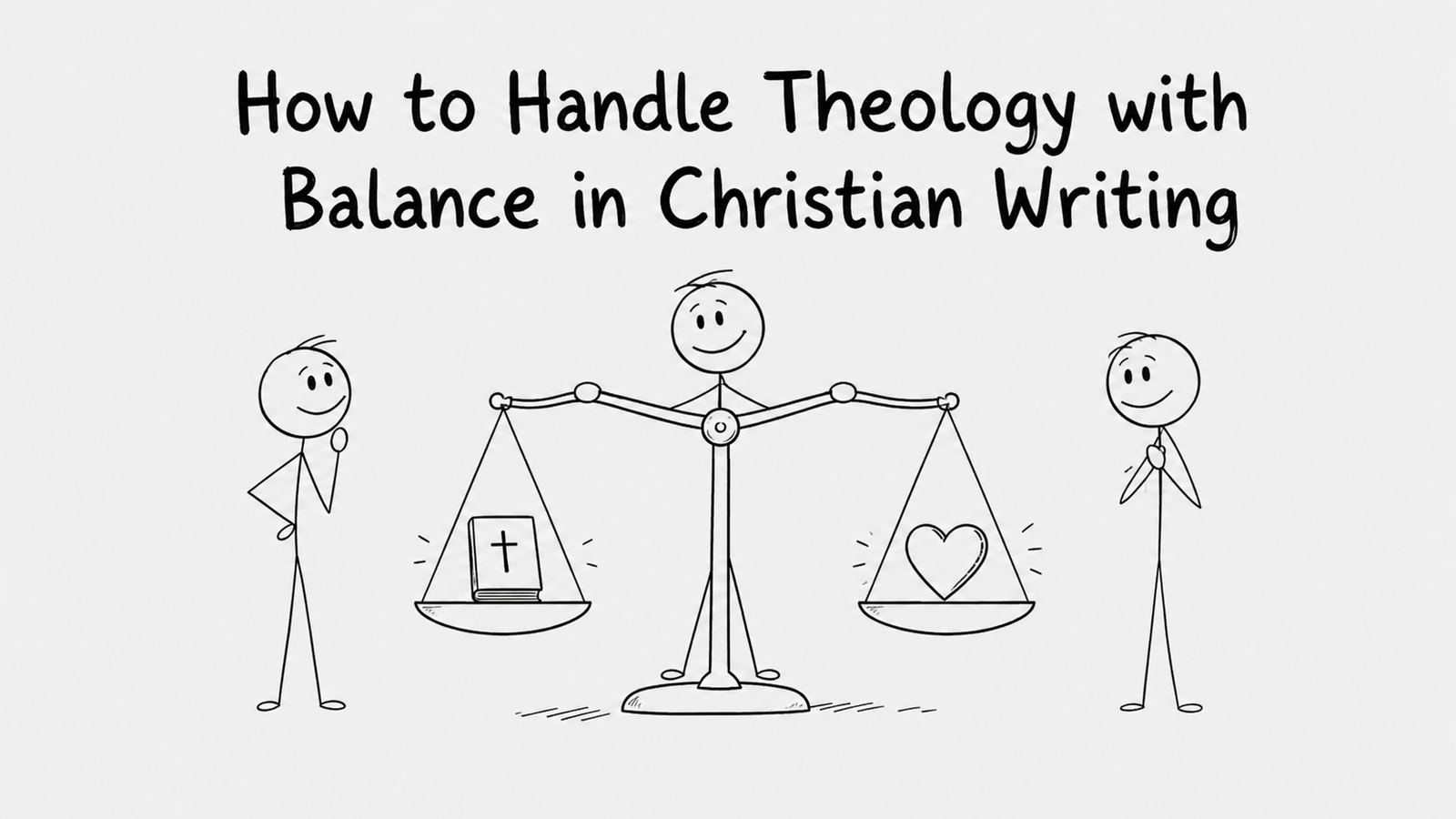
Christian authors must handle theology with both biblical truth and pastoral care. This article explains how to balance personal testimony, Scripture, exegesis, and reader application so Christian writing remains sound,…
Read More3-4a: Spoken vs Written Language: Helping Authors Refine Their Voice for Book Form
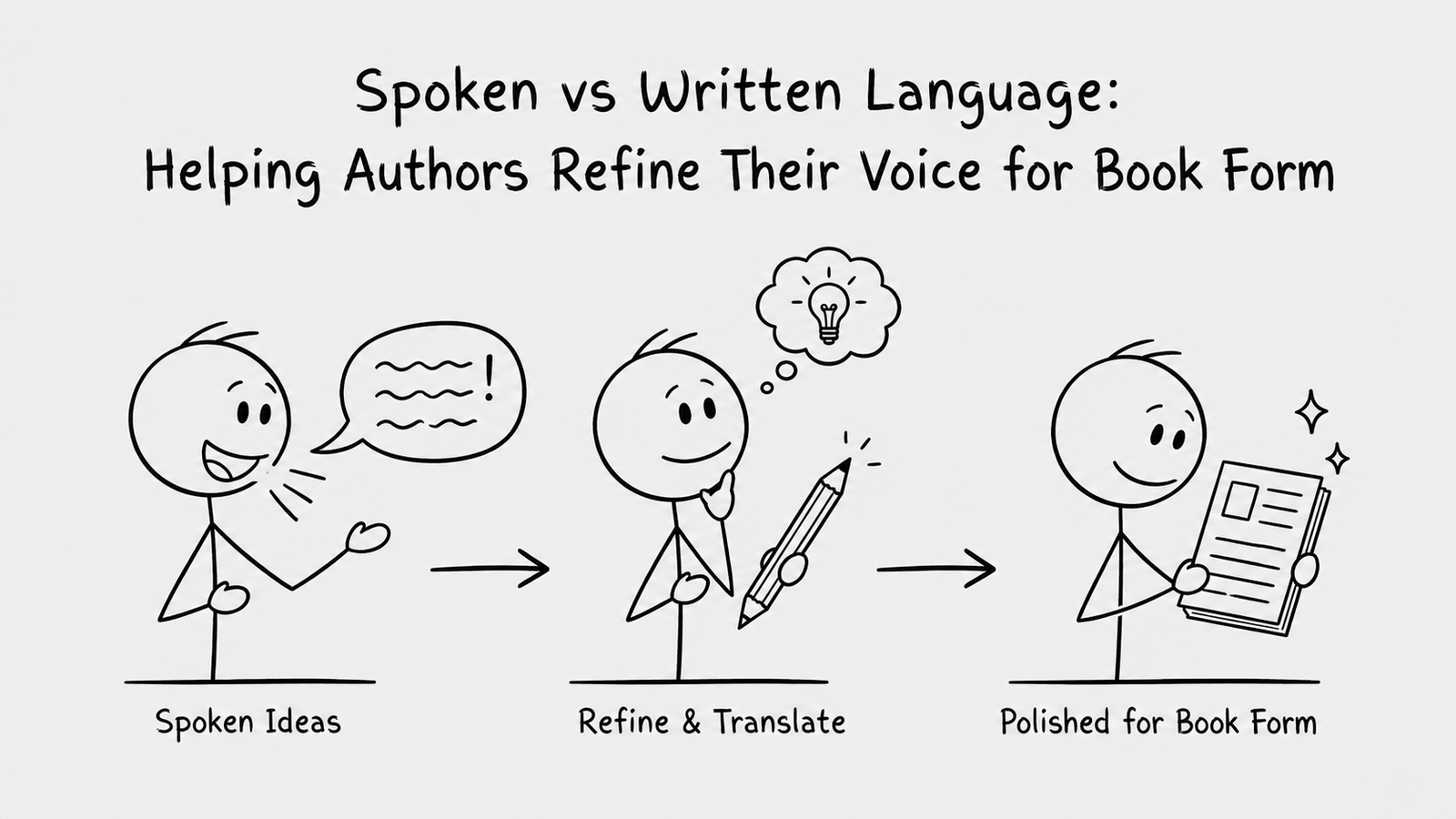
Many Christian manuscripts begin as sermons, testimonies, teachings, or spoken reflections. This article helps authors refine informal spoken language into clear, timeless book prose while preserving warmth, humour, personality, and…
Read More3-3c: Why Creative Non-Fiction and Non-Academic Books Should Not Be Too Long
Learn why creative non-fiction books should not be unnecessarily long. This practical guide helps authors improve focus, reduce repetition, lower production costs and write books that readers can afford, finish…
Read More3-5c: Balancing Biblical Facts, Historical Facts and Personal Interpretation in Christian Writing
Learn how Christian writers can balance biblical facts, historical context and personal interpretation without confusing imagination with Scripture. This practical guide explains how to distinguish what the Bible records, what…
Read More3-3d: Why Creating a Comfortable Reading Rhythm for Your Book is Important
Learn why creating a comfortable reading rhythm is important for your book and how balanced chapter lengths can improve flow, structure, clarity and the overall reading experience.
Read More3-5a. How to Place Scriptures in a Creative Book
Learn how to place Scriptures clearly and consistently in a creative Christian book, including Bible versions, inline quotations, highlighted verses, references, italics, and manuscript formatting.
Read More3-2a. How to Choose and Use Point of View in Creative Writing: First, Second and Third Person
Learn how to choose and use first, second and third person point of view in creative writing, maintain narrative consistency, manage narrative distance, avoid head-hopping, and select the perspective that…
Read More3-2b. How to Develop Primary and Secondary Characters in a Story
Learn how to develop compelling primary and secondary characters by defining clear goals, motivations, conflicts, strengths, weaknesses, relationships, distinct voices and believable character arcs that move your story forward.
Read MoreAdvanced Skills: Publishing Books
Going the Extra Mile
4-3a: Why Should a Non-Fiction Book Have a Subtitle?
A subtitle is a powerful tool for non-fiction books, offering clarity and appeal to potential readers. It provides additional context about the book’s content, target audience, and benefits, helping it…
Read More4-2a: How to Peer Review Fiction and Non-Fiction Christian Literature Manuscripts
Peer reviewing Christian literature requires a thoughtful approach to ensure the manuscript aligns with Biblical principles while engaging readers effectively. For fiction, focus on character development, plot consistency, and spiritual…
Read More4-4c: Why is The Art of the Author Photo Important? Essential Specs for a Professional and Polished Image
Professional photos on a book’s back page play a crucial role in an author’s branding and marketing strategy. Learn More Here. #RaisingAfricanVoices
Read More4-4b. Why Professional Layout Is Non-Negotiable for African Christian Authors: Publishing With Excellence
Why professional book layout is non-negotiable for African Christian authors. Learn how industry-standard layout protects your message, credibility, reader experience, and publishing excellence from manuscript to marketplace.
Read More4-4a: Book Covers: Why They Matter for Every Author
Your book cover is not decoration—it is your book’s first decision-maker. Discover why covers matter for trust, genre clarity, and sales, plus common mistakes authors can avoid and a practical…
Read More4-1c: How to Turn a True Story into Autobiographical Fiction: Practical Steps for Writing Painful Personal History Well
Learn practical ways to turn a painful true story into autobiographical fiction without losing its truth or lessons. This training article helps African writers change names, settings, timelines, and identifying…
Read More4-2b: Why Theological Editing Must Come Before Comprehensive Editing
Christian manuscripts need theological editing before comprehensive editing. This training explains how theological review identifies speculative interpretations, unsupported symbolism, inaccurate Scripture quotations, weak historical claims and unbalanced treatment of difficult…
Read More4-1a. How to Use Cyclic Structure: Connecting Different Parts of Your Story
Learn how to use cyclic structure in creative writing to connect different parts of a story through flashbacks, memories, recurring themes, parallel experiences and clear transitions between past and present.
Read More4-1b. How to End a Book When preparing for a Sequel
Learn how to end a book when preparing for a sequel. This practical author resource covers plot closure, emotional resolution, sequel hooks, open story threads, foreshadowing, cliffhangers, final chapters and…
Read MoreContractual Skills: Publishing Books
Be Informed (Not Legal Advice)
5-2a: Why Every Author Needs a Non-Disclosure Agreement (NDA)
Protect your intellectual property with a Non-Disclosure Agreement (NDA) in publishing! An NDA safeguards your manuscripts and creative ideas by establishing confidentiality between authors, publishers, and editors. It ensures your…
Read More5-1a: What to Include in the Copyright Page and Complete the Copyrighting Process
Copyright law gives creators of original material the exclusive right to further use and duplicate that material for a given amount of time, at which point the copyrighted item becomes…
Read More5-3a: Terms and Conditions for Traditional Publishing/Adapting Existing Books into Other Versions
Adapting existing books into new versions, such as translations, audiobooks, or special editions, requires clear terms and conditions in traditional publishing agreements. These terms outline rights, royalties, and responsibilities for…
Read More5-4a: How to Publish a Book with Multiple Stakeholders: Best Practices for Rights Ownership, Expenses and Recognition
Publishing a book with multiple stakeholders requires clear communication and well-defined agreements to ensure smooth collaboration. Establish ownership rights, allocate expenses transparently, and outline recognition for each contributor’s role. Best…
Read More5-1b: How to Get ISBN in Kenya and Other African Countries
Publishing a book with multiple stakeholders requires clear communication and well-defined agreements to ensure smooth collaboration. Establish ownership rights, allocate expenses transparently, and outline recognition for each contributor’s role. Best…
Read More5-2b. How to Write a Contributor Consent Form for a Memoir Book
Publishing a book with multiple stakeholders requires clear communication and well-defined agreements to ensure smooth collaboration. Establish ownership rights, allocate expenses transparently, and outline recognition for each contributor’s role. Best…
Read More5-2c: How to Ethically and Legally Use Free or Unpaid Images in Your Book
Learn how to use free images for your book ethically and legally by checking licences, reading the fine print on sites like Unsplash and Freepik, and knowing when paid or…
Read More