Strong stories are carried by strong characters. Readers may forget some details of a plot, but they often remember the people they met along the way: what those characters wanted, what stood in their way, the choices they made, and how they changed.
Character development is therefore more than giving a person a name, age, occupation and physical appearance. A well-developed character has a purpose in the story, a goal, a motivation, conflict, a recognisable personality and a believable response to what happens.
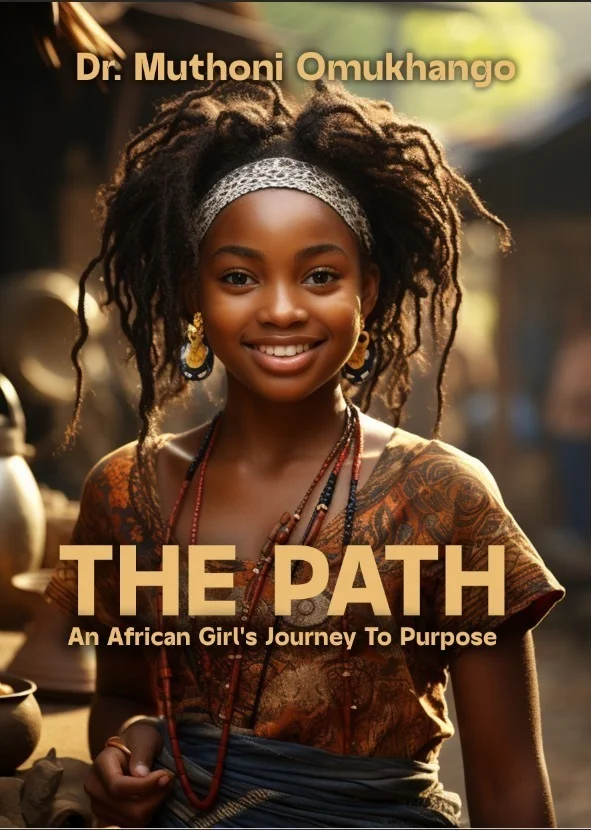
We will use The Path: An African Girl’s Journey to Purpose as our running example. Its central character, Neo, moves through childhood, faith, education, friendship, rebellion, motherhood and a continuing search for purpose. Around her are family members, friends, rivals and other people who influence the direction of her journey.
The Path: An African Girl’s Journey to Purpose
The Path: An African Girl’s Journey to Purpose follows Neo as she grows from an ambitious, spiritually sensitive girl into a young woman whose choices, relationships, conflicts and consequences gradually shape her understanding of purpose.
In character-development terms, Neo is the clear protagonist, while characters such as Tina, Kainos, Nyash, The Musketeers, Aamo, John, Jane, Frank and Benta each serve distinct functions in revealing, challenging or supporting her growth.
The story is especially useful for studying character development because Neo’s journey is driven by clear goals, strong motivations, internal and external conflict, changing relationships, consequences and a gradual growth arc rather than a sudden transformation.

1. Understand Primary and Secondary Characters
A primary character carries a major part of the story. The protagonist is usually the most important primary character because the central journey belongs to them.
A secondary character supports, challenges, influences, contrasts with or reveals something about the primary character.
In The Path, Neo is the protagonist. The book follows her experiences from childhood and her early spiritual calling through school, relationships, poor choices, motherhood and her journey towards understanding God’s purpose for her life.
Characters such as John, Jane, Dee, Kainos, Tina, Nyash, Aamo, David, Frank and Benta play different secondary roles.
For example, Tina becomes an important friend during Neo’s high-school years. The manuscript describes her as a close confidante whose wisdom and empathy supported Neo through school challenges.
Tina matters, but The Path does not suddenly become Tina’s life story. Her character helps us understand Neo’s high-school experience.
That is the distinction.
A secondary character should be developed enough to feel real without accidentally taking over the protagonist’s story.
2. Give Your Protagonist a Clear Goal
A protagonist should want something.
The goal gives the story direction.
Neo’s goals change as she grows. This is realistic because a character can have different immediate goals within one larger life journey.
As a young girl, Neo has a strong vision of herself in business. She imagines building something significant, even envisioning a bank called The Bullion Bank that could finance Christian mission work. She sees herself supporting missions financially rather than becoming a missionary herself.
So one early goal could be summarised as:
Neo wants to become a successful entrepreneur and use her success to support God’s work.
But another call is competing with that ambition: the prophecy that she will preach the Gospel to the nations.
This creates a stronger story because Neo is not simply wandering through events. She has a direction she wants for herself while the larger narrative keeps confronting her with another possible direction.
What does this person want at this point in the story?
Neo wants to succeed.
Neo wants to build a successful business life and believes entrepreneurship is the best way to use her gifts for God’s Kingdom.
The more specific the goal, the easier it becomes to create meaningful conflict around it.
3. Give the Character a Strong Motivation
A goal tells us what the character wants.
A motivation tells us why.
Neo’s interest in business is not random. She grows up in a business family and is intentionally prepared to participate in that world. She also recognises entrepreneurial ability within herself.
Therefore:
Goal:
Neo wants to become successful in business.
Motivation:
She has grown up around business, believes she is gifted in entrepreneurship and sees financial success as a legitimate way to support God’s work.
That motivation makes her resistance to the prophetic calling much more believable.
Without motivation, a reader may ask:
Why doesn’t she simply accept the prophecy?
With motivation, the reader understands that Neo believes she already has a meaningful, God-honouring plan for her life.
Good character motivation makes even questionable decisions understandable.
4. Understand the Antagonist
The antagonist is whatever opposes the protagonist’s goal or growth.
It does not always have to be one evil person.
In The Path, antagonistic forces change during different stages of Neo’s life.
The Antagonist Is Not Always One Villain
Nyash functions briefly as an opposing character during childhood. He competes with Neo academically and repeatedly picks on her until their rivalry leads to a physical fight.
Later, The Musketeers operate as a stronger antagonistic influence. Their values conflict with Neo’s established faith, and her desire to belong begins pulling her away from the convictions that previously shaped her life.
Neo Herself
Her ambition, desire for control, need for acceptance, rebellion and repeated attraction to relationships that weaken her convictions become internal obstacles.
The antagonist does not have to be one obviously bad person. Opposition can come from many different sources.
Do not automatically invent a villain when the real conflict is more complex.
5. Create Meaningful External and Internal Conflict
Conflict is what prevents a character from simply getting what they want.
External conflict
This comes from outside the character.
In Neo’s childhood, there is tension between the prophetic word spoken over her and the future already expected of her within the family business.
Later, The Musketeers introduce social pressure. They regard her Christian lifestyle as limiting and make her feel that she is missing out on “real living”.
Those are outside pressures.
Internal conflict
Internal conflict happens inside the character.
Neo wants acceptance from her new friends, but she also recognises that compromising her convictions is costing her something spiritually. The manuscript explicitly shows her wrestling with whether belonging to the group is worth weakening her faith.
That is strong internal conflict:
I want to belong, but I do not want to become someone I no longer recognise.
Earlier, another internal conflict appears after the prophecy. Neo feels called towards deeper spiritual purpose but also wants the freedom to be an ordinary child without carrying so much responsibility.
5. Create Meaningful External and Internal Conflict
Conflict is what prevents a character from simply getting what they want.
External conflict
This comes from outside the character.
In Neo’s childhood, there is tension between the prophetic word spoken over her and the future already expected of her within the family business.
Later, The Musketeers introduce social pressure. They regard her Christian lifestyle as limiting and make her feel that she is missing out on “real living”.
Those are outside pressures.
Internal conflict
Internal conflict happens inside the character.
Neo wants acceptance from her new friends, but she also recognises that compromising her convictions is costing her something spiritually. The manuscript explicitly shows her wrestling with whether belonging to the group is worth weakening her faith.
That is strong internal conflict:
I want to belong, but I do not want to become someone I no longer recognise.
Earlier, another internal conflict appears after the prophecy. Neo feels called towards deeper spiritual purpose but also wants the freedom to be an ordinary child without carrying so much responsibility.
Combine External and Internal Conflict
Strong character development often combines both forms of conflict. The character faces pressure from the outside while also wrestling with something inside.
People are pressuring Neo to fit in.
Neo wants their acceptance even though it conflicts with her values.
That combination gives a story emotional depth because the character is not only fighting what is happening around them, but also wrestling with what is happening within them.
6. Give Your Main Character Strengths and Weaknesses
Good characters are rarely completely strong or completely weak.
Neo has obvious strengths.
She is intelligent, ambitious, curious, academically capable, spiritually sensitive, a leader and willing to work hard.
For example, after struggling in boarding school, she eventually recovers academically, moving from the bottom of the class to excelling in many subjects. Her leadership qualities also become visible in school and Christian Union activities.
But some of the qualities that make Neo strong can also create problems.
Her confidence can become self-direction.
Her ambition can become impatience.
Her independence can make surrender difficult.
Her desire to explore can expose her to harmful influence.
Her desire for acceptance can lead her into compromise.
This makes her more believable.
Avoid:
Neo was intelligent, hardworking and a great leader.
That gives information but little character depth.
Instead, allow strengths and weaknesses to affect decisions.
For example:
Neo’s determination helps her recover academically.
Later:
The same determination to create her own path makes it difficult for her to surrender her plans.
The strongest character traits often have both advantages and dangers.
7. Give Secondary Characters a Job in the Story
Every important secondary character should contribute something.
They should not merely stand around the protagonist.
Consider several characters in The Path.
Give Every Secondary Character a Function
Secondary characters should not simply appear around the protagonist. Each one should reveal, support, challenge or change something in the central character’s journey.
Tina helps Neo navigate high school. Their friendship grows through study, shared interests, emotional support and mutual trust.
Kainos helps reveal Neo’s influence on others. She and her friends form a prayer group inspired by Neo’s example.
Kainos therefore helps the reader see that Neo’s leadership is not merely something the narrator claims. It produces visible influence.
Aamo’s birth changes Neo’s sense of responsibility. Motherhood grounds her and makes her realise that the consequences of her decisions will no longer affect only herself.
Later, Frank and Benta provide friendship, accountability and support as Neo rebuilds her life. Their involvement reduces her isolation and encourages growth in faith and responsibility.
Each secondary character has a function. That is what you want. If a character does not reveal, support, challenge, complicate or change something in the protagonist’s journey, reconsider why they are there.
8. Avoid Too Many Unnecessary Characters
A real life contains hundreds or thousands of people.
A story should not necessarily name all of them.
The Path covers many years, so naturally many people enter Neo’s life. The writer still has to decide:
Which people deserve names and development?
If a teacher appears once only to hand Neo a book, the reader may not need the teacher’s name, childhood history and family background.
Compare:
Neo entered the office. Mrs Wambui, the secretary, greeted her. Mr Kariuki, the accountant, walked past. Benson, the caretaker, opened a window.
with:
Neo entered the office. The secretary directed her to the chair beside the window.
If Mrs Wambui, Mr Kariuki and Benson never affect the story again, naming them creates unnecessary mental work for the reader.
Ask: If I Remove This Character, What Changes?
If I remove this character, what changes?
Nothing.
Then ask whether the character needs to be named, developed or included at all.
9. Give Important Characters Distinct Voices
Characters should not all sound alike.
A teenager, parent, close friend, preacher and child should not automatically use identical vocabulary, sentence patterns and expressions.
The Path gives useful opportunities to see this through dialogue.
Kainos excitedly tells Neo about forming a prayer group:
“Hey Neo. My friends and I formed a prayer group like yours!”
Her speech suits the excitement of a younger sister.
Later, during the humorous aftermath of breaking a fast with heavy food, Neo, Kainos and their friends speak in shorter, informal exchanges that suit teenagers dealing with stomach aches.
Character voice can be influenced by:
- age;
- personality;
- education;
- relationship;
- culture;
- confidence;
- mood;
- faith background;
- environment.
Give Characters Distinct Voices
Characters should not all sound like the same narrator. Their age, personality, relationship and emotional state should influence how they speak.
Neo: “I believe our digestive discomfort resulted from poor dietary decisions.”
Kainos: “I agree that our digestive discomfort resulted from poor dietary decisions.”
Both characters sound like the same narrator.
Neo groaned. “My stomach is staging a rebellion.”
Kainos grimaced. “We definitely overdid it.”
The meaning is similar, but the people sound more alive.
Do not only change the words. Let each character’s personality, age and emotional response shape the way they speak.
10. Reveal Character Through Action
Do not always tell readers what a character is like.
Let behaviour demonstrate it.
Show the Trait, Do Not Only Name It
Telling readers what a character is like can be useful, but scenes, choices and behaviour usually make the trait more convincing.
Neo was competitive.
The childhood scene with Nyash does more. The two repeatedly compete academically, eventually agree to settle their rivalry through a fight, and Neo refuses to back down.
Neo was influential.
Kainos forming a prayer group because of Neo’s example demonstrates influence.
Neo struggled with compromise.
The reader sees her move from active faith into relationships where she increasingly abandons the convictions she previously valued.
John was devastated by the business collapse.
The manuscript shows a once-vibrant man withdrawing from his family, closing businesses and struggling under the emotional weight of bankruptcy.
Action makes character visible. Whenever possible, let the reader discover the character through behaviour, choices, dialogue, reactions and consequences rather than relying only on description.
11. Use Relationships to Reveal Different Sides of the Character
One character can behave differently in different relationships without becoming inconsistent.
Neo with Tina is a friend and confidante.
Neo with Kainos is an older sister and spiritual influence.
Neo with Nyash is competitive and combative.
Neo with The Musketeers becomes vulnerable to peer pressure.
Neo with Aamo becomes a mother carrying new responsibility.
Neo with Frank and Benta becomes someone learning to receive support and accountability.
These relationships reveal different dimensions of the same person.
That is good character development.
A protagonist should not behave identically with:
- a parent;
- a child;
- a rival;
- a best friend;
- a stranger;
- a spouse;
- a spiritual mentor.
Relationships expose different fears, strengths, insecurities and desires.
12. Develop a Character Arc
A character arc is the meaningful change a character experiences across the story.
Neo’s arc in The Path is much larger than:
Girl grows up.
The deeper movement involves purpose, control, faith, rebellion, consequences and surrender.
Early Neo receives a prophetic calling but strongly identifies with a business future. She effectively sets the calling aside because entrepreneurship makes more sense to her.
Later, she seeks belonging in relationships that weaken her spiritual convictions. The manuscript describes this as a path of compromise that eventually contributes to serious consequences.
Motherhood introduces new responsibility. Aamo becomes part of what grounds Neo and forces her to recognise that her decisions now affect someone else.
Later still, Neo reaches a point where she deliberately asks God to bring her fully back and chooses complete commitment rather than remaining spiritually divided. The manuscript identifies this as a turning point from which she does not look back.
That is a character arc.
Let the Character Change Through the Story
A character arc shows how the protagonist changes as a result of choices, conflict, consequences and turning points.
I know the path I want.
My choices are taking me away from what I once believed.
The life I am building is not producing what I expected.
I must choose what I truly want to follow.
I begin surrendering control and walking deliberately towards purpose.
An arc gives the events meaning. The story is not simply a sequence of things that happen. The experiences gradually shape who the character becomes.
13. Let Character Change Happen Gradually
A believable character should not transform instantly without sufficient cause.
Neo’s journey demonstrates this well because her movement away from faith is gradual, and her restoration is also a process.
She first encounters influences that challenge her convictions. She wants to fit in. Compromise grows. Her spiritual life weakens. Later, at university, similar patterns continue and deepen.
Likewise, restoration does not simply appear from nowhere.
There are consequences, motherhood, renewed spiritual hunger, supportive relationships, accountability and eventually a decisive surrender.
That progression makes change believable.
Weak character arc
Neo lived rebelliously for years. One morning she woke up and never struggled again.
Stronger arc
Show:
- the first compromise;
- increasing consequences;
- awareness that something is wrong;
- resistance;
- a crisis or turning point;
- help from others;
- new choices;
- evidence of changed behaviour.
Readers believe transformation when they have travelled through it with the character.
14. Give Secondary Characters Their Own Humanity
Secondary characters should serve the main story without feeling like cardboard tools.
John, for example, is Neo’s father, but the manuscript gives him a recognisable experience of his own when the family business collapses. His identity and emotional state change dramatically under bankruptcy, and his eventual recovery contributes to the family’s larger journey.
Jane likewise becomes more than “Neo’s mother”. When John is overwhelmed, she takes on greater responsibility in holding the family together.
This gives secondary characters depth.
But their stories still connect to the world in which Neo is developing.
That is the balance.
15. Do Not Give Every Character a Full Biography
Character development does not mean telling readers everything you know about everyone.
Imagine if Tina is introduced and the story stops to explain:
Tina was born on a Tuesday in 1984. She had attended three primary schools. Her favourite colour was green. Her grandfather owned seven cows. She disliked pumpkin. Her first cousin lived in Nakuru…
Unless these facts eventually matter, the reader does not need them.
What does matter about Tina?
The manuscript establishes that she is thoughtful, focused, intellectually compatible with Neo and eventually becomes a trusted friend.
That information helps us understand her role.
Include background when it helps explain:
- present behaviour;
- motivation;
- conflict;
- relationships;
- an important decision;
- the plot.
Otherwise, leave it in your private character notes.
16. Make Secondary Characters Affect the Plot or the Protagonist
A useful secondary character should create some effect.
What Changes If This Character Is Removed?
Consider what happens if we remove certain characters from The Path. This helps reveal whether each secondary character is performing a meaningful role in the story.
Neo loses an important picture of healthy friendship during high school.
A major influence driving Neo towards compromise disappears.
We lose an example of Neo’s influence as an older sister.
We remove one of the most significant shifts in Neo’s sense of responsibility.
We weaken the later picture of accountability, community and supportive relationships.
A secondary character does not necessarily need to change the entire plot. But they should usually affect something meaningful in the protagonist’s journey.
If they affect nothing, reconsider their role. A named character should earn their place by influencing the story, the protagonist, or the reader’s understanding in some meaningful way.
17. Use Contrast Characters
Secondary characters can reveal the protagonist by being different from them.
Tina is useful partly because she represents a healthier form of friendship.
The Musketeers represent another kind of company.
Compare what happens around each relationship.
With Tina, Neo finds companionship, intellectual connection and mutual support.
With The Musketeers, Neo becomes increasingly conflicted about her faith and desire for acceptance.
That contrast communicates one of the book’s themes without requiring a long lecture:
Company matters.
Characters can therefore embody different possibilities available to the protagonist.
18. Allow Supporting Characters to Help Produce Growth
Supporting characters should not always solve the protagonist’s problems.
Sometimes their role is to create the environment in which the protagonist can grow.
Frank and Benta are a good example. They share meals, friendship, faith and practical support with Neo. Their presence creates accountability and reduces the isolation in which poor decisions had previously flourished.
Notice the distinction.
Weak supporting character:
Benta fixed Neo’s life.
Stronger:
Benta helped create a supportive relationship in which Neo could make healthier choices.
The protagonist should still remain responsible for the central decisions in their own story.
19. Let Consequences Develop Character
Choices should matter.
One of the strongest ways to develop character is to allow decisions to produce consequences.
Neo’s attraction to unhealthy company does not remain a harmless social choice. It contributes to spiritual compromise and begins redirecting her life.
Later, when Aamo is born, responsibility becomes more immediate because Neo recognises that her choices now affect her daughter as well.
Consequences force characters to respond.
Ask What Changes After the Character Makes a Decision
Important choices should create consequences. Use these questions to test whether a character’s decisions are genuinely moving the story forward.
After this decision, what becomes harder?
What does the character lose?
What do they learn?
What new choice must they make?
If nothing changes after major decisions, your plot may feel weightless. Choices should cost something, reveal something, create a new problem or force the character to respond differently.
20. Test Your Main Character With Five Questions
Use Neo as the example.
Test Your Main Character With Five Questions
Use Neo from The Path as the example. These five questions help you test whether your protagonist has enough depth, motivation, conflict and growth.
At different stages, Neo wants success, independence, acceptance, education, meaningful relationships and eventually alignment with God’s purpose.
Her motivations include family upbringing, ambition, natural ability, desire for significance, spiritual calling and the need to belong.
External pressures, relationships, family circumstances, financial difficulties and opposing influences all matter.
She repeatedly experiences tension between the life she wants to design for herself and the path she increasingly believes God is calling her towards.
The story moves her from a strong confidence in her own chosen path through conflict and consequences towards increasing surrender, responsibility and purpose.
If you can answer these five questions for your protagonist, you are already developing a much stronger character.
A Character Map from The Path
Here is a simple way beginner writers can map characters before or during editing. Start with the protagonist and identify what they want, what helps them, what weakens them, what conflicts shape them and how they change.
Confidently designing her own path
Rebellion and consequences
Greater responsibility
Surrender to God’s purpose
A useful character map should help you see the protagonist as a complete person: what they want, what they carry, what works against them and how the story changes them.
Tina: Supporting Friend
Role: Healthy companion
Function: Shows positive friendship, emotional safety and mutual support.
Effect on Neo: Helps her navigate high school and provides a meaningful relationship during transition.
Kainos: Younger Sister
Role: Family and influence character
Function: Demonstrates Neo’s impact on others.
Effect on Neo: Helps reveal that Neo’s faith and leadership are influencing people close to her.
Nyash: Childhood Rival
Role: Temporary opposing character
Function: Creates competition and conflict.
Effect on Neo: Reveals competitiveness, courage and willingness to confront a problem directly.
The Musketeers: Antagonistic Group
Role: Negative peer influence
Function: Introduces pressure to compromise.
Effect on Neo: Tests her values and contributes to her movement away from her earlier convictions.
Aamo: Turning-Point Character
Role: Daughter
Function: Raises the stakes of Neo’s choices.
Effect on Neo: Introduces responsibility beyond herself and becomes part of her movement towards stability.
Frank and Benta: Restorative Supporting Characters
Role: Friends and accountability community
Function: Represent healthy relationship and support.
Effect on Neo: Encourage responsibility, faith and healthier patterns.
John and Jane: Family Characters
Role: Parents
Function: Provide family context, expectations, support and their own examples of hardship and resilience.
Effect on Neo: Help shape the world in which her ambitions, faith and understanding of responsibility develop.
Test Every Named Character in Your Manuscript
Take every named character in your manuscript and write five short answers. This helps you see whether the character has a clear role, meaningful purpose and enough reason to remain in the story.
Tina is Neo’s close high-school friend.
She values meaningful friendship, learning and mutual support.
She gives Neo companionship during a difficult transition.
The reader sees Neo experience healthy friendship rather than isolation.
Part of Neo’s high-school emotional journey and the contrast between healthy and unhealthy relationships would disappear.
If you cannot answer Questions 3, 4 or 5, reconsider whether the character needs the amount of space you have given them.
A character should not remain in the manuscript simply because they existed in real life or appeared in an early draft. Their presence should contribute something meaningful to the story.
Final Principle
Character development is not about creating elaborate biographies for everyone who appears in your book.
It is about creating people whose desires, motivations, relationships, conflicts, choices and consequences help move the story forward.
The Path gives us a useful model because Neo remains at the centre while different characters perform different functions around her. Tina offers companionship. Kainos reveals influence. Nyash creates rivalry. The Musketeers introduce harmful pressure. Aamo raises the stakes. Frank and Benta demonstrate supportive community. John and Jane contribute family context and their own experiences of resilience.
The central question for every writer remains:
Why is this character in my story, and what changes because they are there?
If the answer is clear, the character has a reason to stay.
Training by: Dr. Muthoni Mercy Omukhango
Dr. Muthoni Mercy Omukhango is a Christian publisher, author, trainer, and marketplace minister. She serves as National Director of CLC Kenya, Authors’ Manager at the African Christian Authors Book Award (ACABA), Convener of Mama Africa Book Box, and Patron of CLC Kids and Teens.
Through the Publishing in Africa Series, she equips authors, publishers, and literary entrepreneurs with practical strategies for developing, publishing, distributing, and growing African-authored literature.
Her ministry is centred on advancing God’s Kingdom through literature and helping more African voices to be written, published, distributed, and read.
Getting Started: Publishing Books
Preparing to Write/Publish
1-1a: Prepare Yourself to Get Published…
Are you ready to publish your book? Here is how you need to prepare. Have your manuscript ready and explore the oprions available today. If you are stuck in getting…
Read More1-1b: Let’s Talk About Publishing
The self-publishing landscape has changed considerably in the past two decades with new technologies such as the Internet, and the $1 billion markets continuing to change at a rapid pace….
Read More1-1d: Factors to Consider Before Self Publishing

Jesus, while talking to the disciples about following Him, asked them to count the cost. The same Scripture applies to authors today – you have to count the cost from…
Read More1-1e: Requirements for Self Publishing

Are you ready to be published? Use our 4 points check list and tick ‘Published Author’ box so you can move on to the next God-given assignment… #RaisingAfricanVoices
Read More1-1f: Publishing Steps – Review
Is your manuscript due for a review towards getting published? The major focus during manuscript review is the general quality of the book. It is important to establish the overall…
Read More1-1c: How Can We Become Effective Christian Authors?
Learn how to become an effective Christian author by writing under the guidance of the Holy Spirit, remaining rooted in Scripture, pursuing excellence, serving the right readers and trusting God…
Read MoreElementary Skills: Publishing Books
How to Write
2-2b: How to Write a Book Dedication
A book dedication is a way for you, the author to bestow a high honor on a person (or a group of people) you wish to praise or otherwise spotlight….
Read More2-3e: How to Write a Book’s Foreword
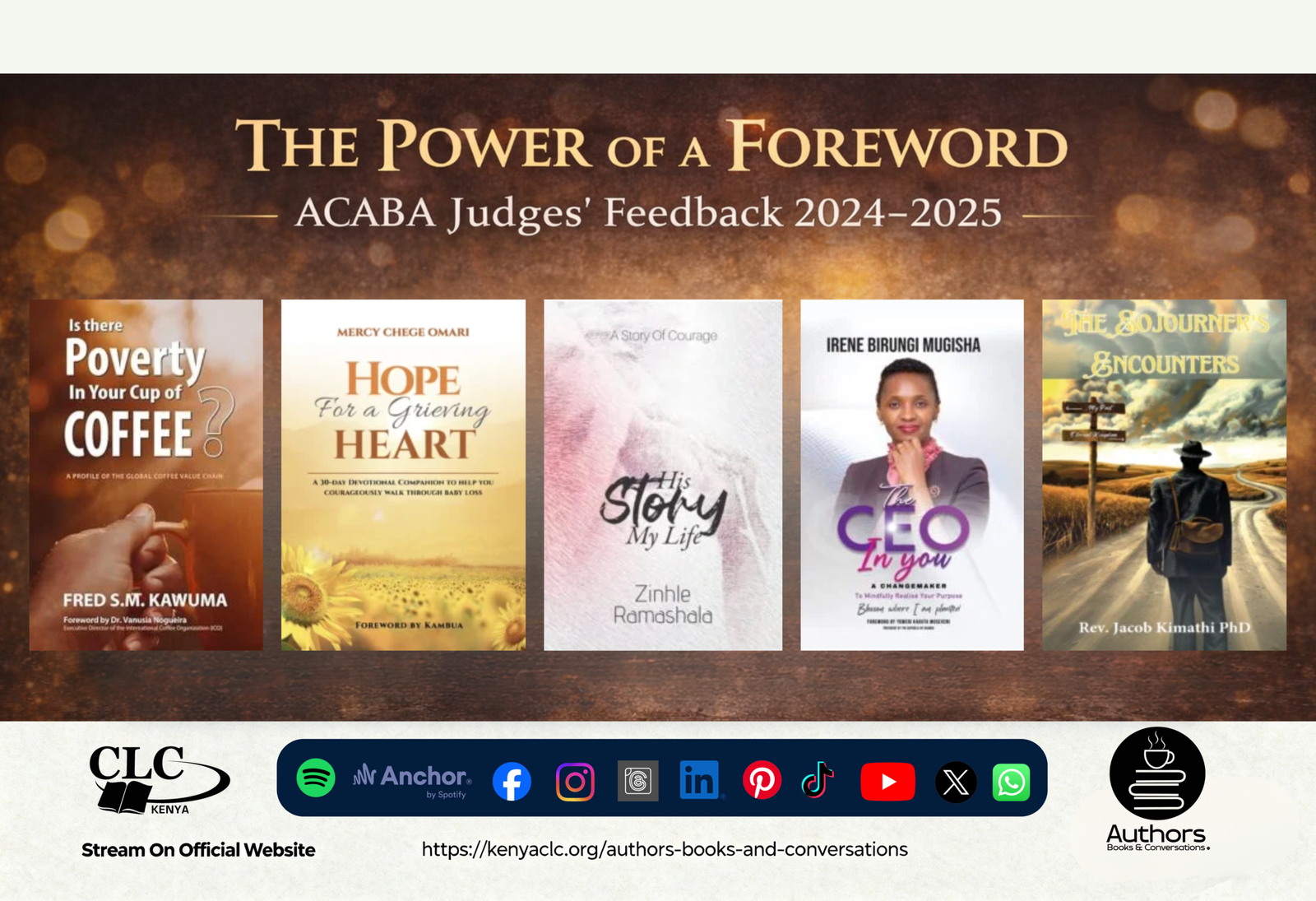
A well-written foreword can function as the ultimate third-party recommendation or endorsement for your book, generating interest and helping when it’s time to market your book. Here’s how to write…
Read More2-2e: How to Write a Book Introduction
Are you stuck on writing your book introduction? Here’s how to… Hook the reader right from the beginning with a personal story from your life, a funny story, a joke,…
Read More2-3a: How to Write a Book’s Conclusion
If your readers are in the conclusion chapter, it also means they read the whole book, they liked it, and now they want you to wrap it up. So don’t…
Read More2-2a: How to Write an Author’s Bio
People are looking for reasons why they should spend their time reading what you have written. You need to instill confidence in your readers that you are knowledgeable on the…
Read More2-3b: How to Write a Book’s Blurb
A blurb is a short yet descriptive account of the book that goes on the back cover or within the book sleeve of a hardcover book. It includes any information…
Read More2-2c: How to Write an Acknowledgement
An acknowledgment section in a book provides the space to go into lenghty details in thanking the people who were sources of inspiration and support for your book and life….
Read More2-3c: How to Write Table of Contents
A table of content shows the things that are held or included in something. In the book industry, it is a list of the chapters or sections given at the…
Read More2-3d: How to Differentiate Between a Foreword and Endorsement
Foreword vs endorsement: what’s the difference? Discover their purpose, placement, length, and how each builds credibility and helps readers choose your book.
Read More2-1a: How to Profile Your Target Reader
Learn how to profile your target reader so you can write with greater focus, choose the right tone and examples, address real needs, and market your book more effectively. This…
Read More2-2d: How to Start the First Sentence or Paragraph of Your Book
Learn how to start the first sentence or paragraph of your book without overthinking. Discover seven practical opening approaches, from personal stories and questions to bold statements, scenes and Scripture…
Read More2-1c: How to Do Proper Research Before or As You Write
Learn how to conduct proper research before or as you write. This practical Christian writing guide covers foundational and advanced research, credible sources, Scripture study, plagiarism, interviews, permissions, fact-checking and…
Read More2-1b. How to Create an Outline for Your Book
Learn how to create a clear and practical book outline that organises your ideas, strengthens your chapter flow and guides the writing process while remaining open to the leading of…
Read MoreTechnical Skills: Publishing Books
Refining Your Manuscript
3-3a: Why is Organising Your Non-Fiction Into Chapters Important?
Organising your non-fiction book into clear, well-structured chapters enhances readability, engagement, and comprehension for your audience. Chapters create a logical flow, making complex ideas easier to digest while guiding readers…
Read More3-3b: Why a Strong Chapter Structure Matters
A well-structured chapter helps your reader follow your message with ease. This simple guide shows writers how to build a chapter that flows from introduction to teaching, story, application, reflection,…
Read More3-7a: Why Self-Edit Your Book Before Submitting it for Publishing?
Self-editing is a crucial step before submitting your manuscript for publishing. It allows you to refine your ideas, correct errors, and enhance the overall quality of your work. A well-edited…
Read More3-7b: Train Your Ears to Edit: How African Writers Can Listen to Their Manuscripts Using MS Word Read Aloud
Learn how to use MS Word’s Read Aloud feature to listen to your manuscript, catch awkward sentences, improve flow, sharpen dialogue, and edit your writing more effectively as an African…
Read More3-1a: How to Write a Devotional
A devotional book is a literary work designed to provide spiritual inspiration, guidance, and reflection for readers seeking to deepen their faith and relationship with God. Get started here. #RaisingAfricanVoices
Read More3-1b: How to Write a Captivating Novel
A great novel is a complex interplay of various elements, but some key components often contribute to its greatness. Get started here. #RaisingAfricanVoices
Read More3-2c: How to Use Dialogue in Story Writing
Effective dialogue is characterized by authenticity, clarity, and relevance to the story. It should sound natural and believable, reflecting the unique voices and perspectives of the characters. Dialogue tags, such…
Read More3-2d: How to Use ‘Show Don’t Tell’ in Story Writing
“Show don’t tell” is a fundamental principle in storytelling that encourages writers to use descriptive language, actions, dialogue and scenes to reveal information to the reader, rather than simply telling…
Read More3-1c: How to Elevate a Non-fiction Christian Book to Make it Personal and Engaging
Transforming a flat non-fiction Christian book into an engaging and impactful read requires authenticity and connection. Share your personal testimony, use relatable real-life examples, and offer practical applications to make…
Read More3-6b: How to Ethically Use Other People’s Public Stories in a Non-fiction Christian Book
Using public stories in your Christian book requires integrity and respect for the individuals involved. Always seek permission where possible, give proper attribution, and ensure the story aligns with your…
Read More3-2e: How to overcome the challenge of mixed languages in writing a manuscript
Writing a manuscript with mixed languages can be both enriching and challenging. To overcome this, establish clear guidelines for when and how to incorporate multiple languages. Use translations sparingly and…
Read More3-6d: How to Ensure Diversity and Inclusion in Christian Writing
By embracing diverse voices, ensuring equitable access for underrepresented authors, and encouraging inclusive storytelling, authors and publishers can reflect the richness of God’s Kingdom. This includes actionable strategies to amplify…
Read More3-6a: How to Use External Source Excerpts with Footnotes and Endnotes
Many writers think footnotes and endnotes belong only in academic writing, yet they can strengthen memoir, Christian non-fiction, and reflective books too. Here is a simple guide for African writers,…
Read More3-6c: How Authors Should Mention Other People in Painful Stories
Learn how authors can write about real people in painful situations with wisdom, honesty, and grace. This post explores how to change names, stay objective, avoid slander, acknowledge personal responsibility,…
Read More3-1d: Why Consistency in Every Session Matters: Writing Workbooks Well
Learn practical workbook writing tips for African authors, with a focus on consistency in every session. Discover how clear structure, repeated formats, and reader expectations can make your workbook more…
Read More3-4d: How to Differentiate Repetition from Emphasis: Helping African Writers Strengthen Their Message Without Tiring the Reader
African writers must learn the difference between repetition and emphasis if they want to keep readers engaged. This training article explains how to emphasize key concepts with clarity, rhythm, imagery,…
Read More3-4c: How to Use Transition Paragraphs in Your Writing
Learn how to use transition paragraphs effectively in your writing. This concise guide for authors explains how to introduce a story smoothly, move from story to application, and end one…
Read More3-4b: How to Paragraph Your Manuscript Well
Learn how to paragraph your manuscript in a simple, clear way. This short guide teaches authors to keep one paragraph to one idea, avoid crowding thoughts, and use clean paragraph…
Read More3-5b: How to Handle Theology with Balance in Christian Writing
Christian authors must handle theology with both biblical truth and pastoral care. This article explains how to balance personal testimony, Scripture, exegesis, and reader application so Christian writing remains sound,…
Read More3-4a: Spoken vs Written Language: Helping Authors Refine Their Voice for Book Form
Many Christian manuscripts begin as sermons, testimonies, teachings, or spoken reflections. This article helps authors refine informal spoken language into clear, timeless book prose while preserving warmth, humour, personality, and…
Read More3-3c: Why Creative Non-Fiction and Non-Academic Books Should Not Be Too Long
Learn why creative non-fiction books should not be unnecessarily long. This practical guide helps authors improve focus, reduce repetition, lower production costs and write books that readers can afford, finish…
Read More3-5c: Balancing Biblical Facts, Historical Facts and Personal Interpretation in Christian Writing
Learn how Christian writers can balance biblical facts, historical context and personal interpretation without confusing imagination with Scripture. This practical guide explains how to distinguish what the Bible records, what…
Read More3-3d: Why Creating a Comfortable Reading Rhythm for Your Book is Important
Learn why creating a comfortable reading rhythm is important for your book and how balanced chapter lengths can improve flow, structure, clarity and the overall reading experience.
Read More3-5a. How to Place Scriptures in a Creative Book
Learn how to place Scriptures clearly and consistently in a creative Christian book, including Bible versions, inline quotations, highlighted verses, references, italics, and manuscript formatting.
Read More3-2a. How to Choose and Use Point of View in Creative Writing: First, Second and Third Person
Learn how to choose and use first, second and third person point of view in creative writing, maintain narrative consistency, manage narrative distance, avoid head-hopping, and select the perspective that…
Read More3-2b. How to Develop Primary and Secondary Characters in a Story
Learn how to develop compelling primary and secondary characters by defining clear goals, motivations, conflicts, strengths, weaknesses, relationships, distinct voices and believable character arcs that move your story forward.
Read MoreAdvanced Skills: Publishing Books
Going the Extra Mile
4-3a: Why Should a Non-Fiction Book Have a Subtitle?
A subtitle is a powerful tool for non-fiction books, offering clarity and appeal to potential readers. It provides additional context about the book’s content, target audience, and benefits, helping it…
Read More4-2a: How to Peer Review Fiction and Non-Fiction Christian Literature Manuscripts
Peer reviewing Christian literature requires a thoughtful approach to ensure the manuscript aligns with Biblical principles while engaging readers effectively. For fiction, focus on character development, plot consistency, and spiritual…
Read More4-4c: Why is The Art of the Author Photo Important? Essential Specs for a Professional and Polished Image
Professional photos on a book’s back page play a crucial role in an author’s branding and marketing strategy. Learn More Here. #RaisingAfricanVoices
Read More4-4b. Why Professional Layout Is Non-Negotiable for African Christian Authors: Publishing With Excellence
Why professional book layout is non-negotiable for African Christian authors. Learn how industry-standard layout protects your message, credibility, reader experience, and publishing excellence from manuscript to marketplace.
Read More4-4a: Book Covers: Why They Matter for Every Author
Your book cover is not decoration—it is your book’s first decision-maker. Discover why covers matter for trust, genre clarity, and sales, plus common mistakes authors can avoid and a practical…
Read More4-1c: How to Turn a True Story into Autobiographical Fiction: Practical Steps for Writing Painful Personal History Well
Learn practical ways to turn a painful true story into autobiographical fiction without losing its truth or lessons. This training article helps African writers change names, settings, timelines, and identifying…
Read More4-2b: Why Theological Editing Must Come Before Comprehensive Editing
Christian manuscripts need theological editing before comprehensive editing. This training explains how theological review identifies speculative interpretations, unsupported symbolism, inaccurate Scripture quotations, weak historical claims and unbalanced treatment of difficult…
Read More4-1a. How to Use Cyclic Structure: Connecting Different Parts of Your Story
Learn how to use cyclic structure in creative writing to connect different parts of a story through flashbacks, memories, recurring themes, parallel experiences and clear transitions between past and present.
Read More4-1b. How to End a Book When preparing for a Sequel
Learn how to end a book when preparing for a sequel. This practical author resource covers plot closure, emotional resolution, sequel hooks, open story threads, foreshadowing, cliffhangers, final chapters and…
Read MoreContractual Skills: Publishing Books
Be Informed (Not Legal Advice)
5-2a: Why Every Author Needs a Non-Disclosure Agreement (NDA)
Protect your intellectual property with a Non-Disclosure Agreement (NDA) in publishing! An NDA safeguards your manuscripts and creative ideas by establishing confidentiality between authors, publishers, and editors. It ensures your…
Read More5-1a: What to Include in the Copyright Page and Complete the Copyrighting Process
Copyright law gives creators of original material the exclusive right to further use and duplicate that material for a given amount of time, at which point the copyrighted item becomes…
Read More5-3a: Terms and Conditions for Traditional Publishing/Adapting Existing Books into Other Versions
Adapting existing books into new versions, such as translations, audiobooks, or special editions, requires clear terms and conditions in traditional publishing agreements. These terms outline rights, royalties, and responsibilities for…
Read More5-4a: How to Publish a Book with Multiple Stakeholders: Best Practices for Rights Ownership, Expenses and Recognition
Publishing a book with multiple stakeholders requires clear communication and well-defined agreements to ensure smooth collaboration. Establish ownership rights, allocate expenses transparently, and outline recognition for each contributor’s role. Best…
Read More5-1b: How to Get ISBN in Kenya and Other African Countries
Publishing a book with multiple stakeholders requires clear communication and well-defined agreements to ensure smooth collaboration. Establish ownership rights, allocate expenses transparently, and outline recognition for each contributor’s role. Best…
Read More5-2b. How to Write a Contributor Consent Form for a Memoir Book
Publishing a book with multiple stakeholders requires clear communication and well-defined agreements to ensure smooth collaboration. Establish ownership rights, allocate expenses transparently, and outline recognition for each contributor’s role. Best…
Read More5-2c: How to Ethically and Legally Use Free or Unpaid Images in Your Book
Learn how to use free images for your book ethically and legally by checking licences, reading the fine print on sites like Unsplash and Freepik, and knowing when paid or…
Read More