What Self-Editing Typically Includes
Self-editing is more than correcting spelling and punctuation. It is a careful review of your manuscript’s message, structure, clarity, consistency and presentation before you submit it for professional editing or publishing.
Review the Manuscript From the Big Picture to the Small Details
Begin by examining the strength and organisation of the content before concentrating on grammar, formatting and individual sentences. There is little benefit in polishing a paragraph that may later need to be removed or completely rewritten.
Content Review
Verify facts, data, quotations and references to ensure that the information is correct and current.
Check whether ideas are communicated clearly. Explain complex concepts in language the intended reader can understand.
Ensure that every section and chapter supports the book’s central message. Remove material that is interesting but off-topic.
Structure and Organisation
Assess the logical progression of the message and whether each chapter transitions naturally into the next.
Confirm that the chapters build upon one another and collectively support the book’s purpose and intended outcome.
Make sure headings accurately reflect the sections beneath them and help readers navigate the manuscript easily.
Style and Tone
Check that the voice, tone and writing style remain consistent throughout the manuscript and suit the intended reader.
Evaluate whether the writing maintains interest. Strengthen weak openings, vague examples and sections that feel flat or overly academic.
Grammar and Syntax
Correct grammatical mistakes, punctuation errors, awkward word usage and problems with sentence construction.
Ensure that sentences are clear and logically arranged. Simplify sentences that are unnecessarily long or difficult to follow.
Formatting
Use consistent font sizes, paragraph spacing, indentation, heading styles, lists and chapter-opening formats.
Check citations, footnotes, endnotes and bibliographies against the chosen style guide and apply the same format throughout.
Redundancy and Conciseness
Identify repeated ideas, illustrations and explanations. Ensure that every section contributes something meaningful and new.
Remove unnecessary words, weak phrases and overly long explanations so the writing becomes clearer and more impactful.
Self-Editing Strengthens the Manuscript Before Professional Editing
Self-editing does not replace a professional editor. It helps you submit a cleaner, more focused manuscript so the editor can concentrate on strengthening the book rather than correcting problems the author could reasonably have addressed beforehand.
Why Self-Edit Your Book Before Submitting It for Publishing?
A publisher will still edit your manuscript professionally, but this does not remove the author’s responsibility to review and strengthen the work before submission. Self-editing prepares the manuscript for a more productive and effective professional editing process.
Self-Editing Helps the Publisher Begin With a Stronger Manuscript
Professional editing should strengthen, refine and prepare your message for publication. It should not begin with correcting every avoidable mistake the author could have addressed before submission.
Shows Professionalism
A well-edited manuscript demonstrates to publishers that you are serious about your work and have taken time to polish it. It shows discipline, commitment and respect for the publishing process.
A carefully prepared submission is also more likely to stand out positively and make a strong first impression.
Saves Time and Money
Although the publisher will still edit the manuscript, self-editing reduces the number of basic corrections and unnecessary revisions the professional editor must make.
This may shorten the editing process and reduce editing costs, benefiting both the author and the publisher.
Reduces Overwhelm
Publishers and editors often work with many manuscripts at the same time. A manuscript filled with basic errors, repetition and structural problems can be difficult and time-consuming to assess.
Self-editing helps streamline the process so the editor can focus on the manuscript’s more substantial needs.
Improves Manuscript Quality
Self-editing gives you an opportunity to address problems with clarity, structure, organisation, consistency and style before professional editing begins.
The publisher can then refine and strengthen the manuscript rather than spending most of the process rebuilding it.
Clarifies Your Vision
Reviewing your manuscript helps you confirm that the book communicates the intended message and remains faithful to its central purpose.
It also helps you maintain a consistent voice, tone and style, making it easier for the professional editor to understand and enhance your vision.
Enhances Readability
Correcting problems with grammar, punctuation, sentence construction and organisation makes the manuscript easier to read and understand.
The professional editor can then concentrate on higher-level improvements instead of being distracted by avoidable errors.
Strengthens Your Submission
A carefully edited manuscript makes a stronger impression on publishers, literary agents and manuscript reviewers.
It may help the reviewer understand the book more quickly, reduce unnecessary delays and increase the likelihood of the manuscript being considered seriously.
Increases Confidence
Self-editing helps you become more familiar with the strengths and weaknesses of your manuscript. You submit the work knowing that you have made a genuine effort to prepare it well.
This confidence can also help you receive professional feedback and revisions with greater openness and maturity.
Self-Editing and Professional Editing Serve Different Purposes
The author reviews the manuscript for obvious weaknesses, unnecessary repetition, unclear ideas, grammatical errors, inconsistencies and structural problems.
The editor brings an independent and trained perspective, strengthens the manuscript, identifies issues the author may not recognise and prepares the work for publication.
Submit the Strongest Manuscript You Can Produce
Do not submit a careless manuscript simply because the publisher will edit it again. The publisher’s editing process is most effective when it begins with an author who has already taken responsibility for reviewing, refining and strengthening the work.
Formatting Guidelines
Formatting your manuscript correctly before submitting it to a publisher is essential. It presents your work professionally, improves readability and helps ensure that the manuscript meets the publisher’s submission standards.
Prepare a Clean, Consistent and Editor-Friendly Manuscript
Your manuscript does not need to look like a finished book at the submission stage. It should, however, be clean, readable and consistently formatted so the editor can review it without being distracted by unnecessary design elements or formatting errors.
General Formatting
Use a standard, readable font such as Times New Roman or Arial. Avoid decorative fonts in the main manuscript.
Set the main body text to 12-point unless the publisher gives different instructions.
Use 1.5 line spacing throughout the manuscript. This makes the text easier for editors to read, comment on and mark up.
Set the top, bottom, left and right margins to one inch, which is approximately 2.54 centimetres.
Justify the main body text so it aligns evenly along both the left and right margins.
Include page numbers in the header or footer of every page. Page numbers are commonly placed in the top-right corner.
Title Page
Centre the book title in the upper half of the title page. The title should be clearly visible without excessive decoration.
Where applicable, place the subtitle directly beneath the main title.
Centre the author’s name beneath the title or subtitle.
Include your name, postal or physical address, telephone number and email address near the bottom of the title page.
Chapter Headings
Begin every chapter on a new page. Use a page break rather than repeatedly pressing the Enter key.
Centre the chapter number or title near the top of the page. You may use bold text or a slightly larger font size, provided the same style is used throughout the manuscript.
Use subheadings to divide longer chapters into clear sections. Format all subheadings consistently and make them easy to distinguish from the main body text.
Text Formatting
Do not indent the first line of each paragraph. Do not add extra blank lines or additional spacing between ordinary paragraphs unless the publisher requests a different style.
In fiction and narrative non-fiction, begin a new paragraph whenever the speaker changes. Use standard double quotation marks around spoken words.
Use italics for emphasis rather than underlining. Reserve bold text mainly for headings or occasional situations where stronger emphasis is necessary.
Formatting Scripture
Verses Presented Separately From the Paragraph
- Copy and paste the verse from a reliable online Bible source instead of typing it manually.
- Confirm the wording, punctuation and spelling against the Bible translation being cited.
- Place the Scripture in a separate paragraph.
- Centre and italicise the verse.
- Place the Bible reference at the end of the verse or on the following line.
- Identify the Bible translation where required by the publisher.
“And my God will meet all your needs according to the riches of his glory in Christ Jesus.”Philippians 4:19
Verses Included Within a Sentence or Paragraph
- Introduce the Scripture naturally within the author’s sentence.
- Use appropriate punctuation before the Scripture quotation.
- Enclose the quoted Scripture in double quotation marks.
- Begin the quoted Scripture with a capital letter where grammatically appropriate.
- Italicise the Scripture text.
- Place the Scripture reference in parentheses after the quotation.
Paul assured the Philippian church, “And my God will meet all your needs according to the riches of his glory in Christ Jesus” (Philippians 4:19).
Use one Bible translation consistently unless there is a clear reason to use several. Record the translation abbreviation and confirm whether copyright acknowledgement or permission is required for the number of verses quoted.
Special Elements
Use superscript numbers in the body text. Place footnotes at the bottom of the relevant page or endnotes in a clearly labelled section at the end of the chapter or manuscript.
Position tables and figures as close as possible to the section where they are mentioned. Number, label and caption each item clearly.
Refer to every table, chart, photograph or figure within the manuscript so the editor understands where it belongs.
Submission Requirements
Save and submit the manuscript as a Microsoft Word document, normally using the .docx file format.
Attach the Word document to your submission email unless the publisher provides a website portal or another submission method.
Include a professional cover letter introducing the book, its intended readership and any other information requested by the publisher.
Give the document a clear file name containing the book title and the author’s name rather than using a vague name such as “manuscript final”.
Proofreading Before Submission
Read through the complete manuscript before submission and correct typographical, grammatical, punctuation and spelling errors.
Confirm that headings, fonts, line spacing, paragraph spacing, references and chapter openings follow the same format throughout.
Open the saved document and check that no text, tables, page breaks or special elements shifted during saving.
Review the publisher’s submission requirements carefully. Where their instructions differ from these general guidelines, follow the publisher’s specific requirements.
Consistency Is More Important Than Decorative Formatting
Avoid designing the manuscript as though it were already a printed book. Do not add elaborate borders, decorative fonts, complicated page layouts or unnecessary colours. Submit a simple and consistently formatted manuscript that allows the publisher and editor to focus on the strength of your message.
Edit in Layers: From Rough Draft to First Draft Manuscript
This practical exercise uses the introduction and opening section of Jesus Killed My Business to demonstrate how a manuscript can be strengthened through four separate editing rounds. Each round addresses a different level of the manuscript so that the author does not attempt to correct everything at once.
The Rough Draft
The draft contains useful material, but it also includes tracked notes, repetition, inconsistent capitalisation, punctuation problems, awkward wording, duplicated headings and formatting issues.
Introduction
I have added new content here. It’s tracked.
“I want you to close your business and join your husband in ministry work.” God’s voice said.
I have added more content.
“But Lord, you gave me this business, and you, you Lord, have made me successful in it.” I countered.
“Besides, the provision in it releases my husband to serve you wholly without worrying about his family,” I continued in my counter-argument.
Oftentimes, when God gives man instructions to guide him through his life on earth, man counter-argues because we are in a constant battle for control. This was my situation in my early thirties. Looking back, I see my life’s pattern in the life of Jacob.
Jacob, too, wrestled with God for control and tried to manipulate his circumstances. He struggled with surrendering his own plans and desires to fully trust in God’s guidance. Just like Jacob, I had to learn the hard way that true success and fulfilment come from aligning my life with God’s purpose rather than relying on my own understanding.
I wrote this book to encourage believers to let go of their need for control and surrender to God’s plan. Through personal anecdotes and Biblical teachings, I hope to show readers the freedom and peace that come from trusting in God’s guidance.
Chapter One: Anointed From Birth
God’s hand is upon every one of us from the very beginning, shaping and moulding us for His purpose. From the moment of birth, everyone is meant for something greater.
The younger shall rule the older
Now these are the records of the descendants of Isaac, Abraham’s son: Abraham was the father of Isaac…
My PastMy prophecy
In the 1960s and 1970s’, there was a Pentecostal explosion in Kenya, which reached its climax in 1980s…
Accuracy, Clarity and Relevance
In this round, the author examines the substance of the writing. The question is not yet whether every comma is correct, but whether the material is true, understandable and necessary.
Verify Historical and Biblical Claims
In the 1960s and 1970s’, there was a Pentecostal explosion in Kenya, which reached its climax in 1980s.
Confirm the dates, terminology and historical sources. Add citations where necessary and remove unsupported claims.
Simplify Confusing Sentences
Oftentimes, when God gives man instructions to guide him through his life on earth, man counter-argues because we are in a constant battle for control.
Often, when God gives us instructions, we resist because we want to remain in control.
Keep Material Connected to the Chapter
The chapter introduces Jacob’s calling, the prophecy over his birth and the author’s own early spiritual background.
Retain historical background only where it helps explain the author’s family, church formation and understanding of divine calling.
The Message Becomes Focused
Editorial notes are removed, unverifiable statements are flagged, complex sentences are simplified and material that does not support the central message is shortened or deleted.
Flow, Chapter Order and Headings
This round examines how the manuscript is organised. The author checks whether ideas appear in the right order and whether headings guide the reader through the argument.
The introduction now progresses from the defining conversation, to the struggle for control, to the purpose of the book and finally to an invitation to the reader.
Chapter One begins with a concise statement about divine purpose before moving into the Genesis passage and the author’s personal history.
Capitalisation is standardised and the duplicated heading “My PastMy prophecy” is corrected to “My Prophecy”.
The Reader Can Follow the Journey
The material now appears in a logical order, transitions are clearer and headings accurately describe the content that follows.
Voice, Grammar, Syntax and Repetition
With the message and structure settled, the author can now concentrate on sentence-level improvements without wasting time polishing paragraphs that might later be removed.
“I want you to close your business and join your husband in ministry work.” God’s voice said.
“I want you to close your business and join your husband in ministry work,” God’s voice said.
“But Lord, you gave me this business, and you, you Lord, have made me successful in it.”
“But Lord, You gave me this business, and You made me successful in it.”
When God gives man instructions to guide him through his life, man counter-argues because we are in a constant battle for control.
Often, when God gives us instructions, we resist because we are in a constant struggle for control.
Looking back, I see my life’s pattern in the life of Jacob.
Looking back, I see the pattern of my life reflected in Jacob’s story.
Through personal anecdotes and Biblical teachings, I hope to show readers the freedom and peace that come from trusting in God’s guidance.
Through personal stories and biblical teaching, I hope to show readers the freedom that comes from trusting God.
The Writing Becomes Clearer and More Natural
Grammar is corrected, unnecessary repetition is removed, sentences are tightened and the author’s voice remains consistent throughout the introduction and chapter.
Formatting, References and Final Consistency
The final editing round prepares the manuscript for professional review, layout or publication. The focus is now on presentation and consistency across the entire document.
Chapter Titles
Apply one consistent style to chapter numbers, chapter titles and introductory headings.
Subheadings
Standardise capitalisation so that headings such as “The Younger Shall Rule the Older” and “My Prophecy” follow the same style.
Scripture Presentation
Separate the Scripture passage visually, identify the Bible version and format the reference consistently.
Paragraphs
Check paragraph spacing, indentation and page breaks so that the manuscript remains easy to read.
References
Confirm footnotes, historical references and source details, including the note attached to the Pentecostal history section.
Consistency
Check British English, divine-pronoun capitalisation, biblical terminology, punctuation and spelling throughout the manuscript.
Chapter One: Anointed From Birth
The younger shall rule the older
Genesis 25:19-26
My PastMy prophecy
Anointed From Birth
The Younger Shall Rule the Older
Genesis 25:19–26
My Prophecy
The Manuscript Looks Consistent and Professional
The document now uses a clear hierarchy of headings, consistent references, standard punctuation and uniform formatting.
The Edited and Formatted Manuscript
After the four editing rounds, the manuscript is clearer, better organised and professionally presented.
INTRODUCTION
“I want you to close your business and join your husband in ministry work,” God’s voice said.
“But Lord, You gave me this business, and You made me successful in it,” I countered.
“Besides, the provision it brings releases my husband to serve You wholly without worrying about his family,” I continued in my counter-argument.
Often, when God gives us instructions to guide us through life, we resist because we are in a constant struggle for control. This was my situation in my early thirties. Looking back, I see the pattern of my life reflected in Jacob’s story.
Jacob also wrestled with God for control and tried to manipulate his circumstances. He struggled to surrender his plans and trust God’s guidance. Like Jacob, I had to learn that true success and fulfilment come from aligning my life with God’s purpose rather than relying on my own understanding.
In my years as a business consultant working with business owners, and as a publisher working with hundreds of Christian authors and ministers of the Gospel, I have seen that this struggle affects many of God’s children. We want more control over our lives.
I wrote this book to encourage believers to release their need for control and surrender to God’s plan. Through personal stories and biblical teaching, I hope to show readers the freedom and peace that come from trusting God.
Join me on this journey as we surrender to God’s path and discover the blessings that await us. In letting go, we gain far more than we could ever imagine.
Anointed From Birth
God’s hand is upon each of us from the beginning, shaping and moulding us for His purpose. From birth, every person is meant for something greater. Each of us has a calling from God and a divine purpose. As we surrender to His will, we can step into our true identity and experience the fulfilment that comes from living out that purpose.
The Younger Shall Rule the Older
Isaac prayed to the Lord for his wife because she was unable to conceive, and the Lord answered his prayer. Rebekah conceived twins, but the children struggled within her. When she enquired of the Lord, He revealed that two nations were in her womb and that the older would serve the younger.
Genesis 25:19–26This passage describes the prophecy given to Rebekah concerning her twin sons, Esau and Jacob. It foretold that two nations would come from her descendants and that the older brother would serve the younger.
Even at birth, the twins displayed different characteristics. Esau was reddish and hairy, while Jacob emerged holding Esau’s heel. These details foreshadowed their different paths and the future relationship between their descendants.
My Prophecy
My parents, John and Jane Munene, attended the Full Gospel Church. This spiritual environment formed part of the foundation through which I began to understand Christian faith, calling and service.
The central theme of surrender became clearer.
The introduction and chapter now follow a logical progression.
Grammar, dialogue, repetition and awkward wording were corrected.
Headings, references and page elements were standardised.
Do Not Try to Correct Everything at Once
Begin with the message, then examine the structure, improve the language and finish with presentation. Editing in layers makes the process more manageable and helps the author give proper attention to every level of the manuscript.
The Rough Draft
The draft contains useful material, but it also includes tracked notes, repetition, inconsistent capitalisation, punctuation problems, awkward wording, duplicated headings and formatting issues.
Introduction
I have added new content here. It’s tracked.
“I want you to close your business and join your husband in ministry work.” God’s voice said.
I have added more content.
“But Lord, you gave me this business, and you, you Lord, have made me successful in it.” I countered.
“Besides, the provision in it releases my husband to serve you wholly without worrying about his family,” I continued in my counter-argument.
Oftentimes, when God gives man instructions to guide him through his life on earth, man counter-argues because we are in a constant battle for control. This was my situation in my early thirties. Looking back, I see my life’s pattern in the life of Jacob.
Jacob, too, wrestled with God for control and tried to manipulate his circumstances. He struggled with surrendering his own plans and desires to fully trust in God’s guidance. Just like Jacob, I had to learn the hard way that true success and fulfilment come from aligning my life with God’s purpose rather than relying on my own understanding.
I wrote this book to encourage believers to let go of their need for control and surrender to God’s plan. Through personal anecdotes and Biblical teachings, I hope to show readers the freedom and peace that come from trusting in God’s guidance.
Chapter One: Anointed From Birth
God’s hand is upon every one of us from the very beginning, shaping and moulding us for His purpose. From the moment of birth, everyone is meant for something greater.
The younger shall rule the older
Now these are the records of the descendants of Isaac, Abraham’s son: Abraham was the father of Isaac…
My PastMy prophecy
In the 1960s and 1970s’, there was a Pentecostal explosion in Kenya, which reached its climax in 1980s…
Accuracy, Clarity and Relevance
In this round, the author examines the substance of the writing. The question is not yet whether every comma is correct, but whether the material is true, understandable and necessary.
Verify Historical and Biblical Claims
In the 1960s and 1970s’, there was a Pentecostal explosion in Kenya, which reached its climax in 1980s.
Confirm the dates, terminology and historical sources. Add citations where necessary and remove unsupported claims.
Simplify Confusing Sentences
Oftentimes, when God gives man instructions to guide him through his life on earth, man counter-argues because we are in a constant battle for control.
Often, when God gives us instructions, we resist because we want to remain in control.
Keep Material Connected to the Chapter
The chapter introduces Jacob’s calling, the prophecy over his birth and the author’s own early spiritual background.
Retain historical background only where it helps explain the author’s family, church formation and understanding of divine calling.
The Message Becomes Focused
Editorial notes are removed, unverifiable statements are flagged, complex sentences are simplified and material that does not support the central message is shortened or deleted.
Flow, Chapter Order and Headings
This round examines how the manuscript is organised. The author checks whether ideas appear in the right order and whether headings guide the reader through the argument.
The introduction now progresses from the defining conversation, to the struggle for control, to the purpose of the book and finally to an invitation to the reader.
Chapter One begins with a concise statement about divine purpose before moving into the Genesis passage and the author’s personal history.
Capitalisation is standardised and the duplicated heading “My PastMy prophecy” is corrected to “My Prophecy”.
The Reader Can Follow the Journey
The material now appears in a logical order, transitions are clearer and headings accurately describe the content that follows.
Voice, Grammar, Syntax and Repetition
With the message and structure settled, the author can now concentrate on sentence-level improvements without wasting time polishing paragraphs that might later be removed.
“I want you to close your business and join your husband in ministry work.” God’s voice said.
“I want you to close your business and join your husband in ministry work,” God’s voice said.
“But Lord, you gave me this business, and you, you Lord, have made me successful in it.”
“But Lord, You gave me this business, and You made me successful in it.”
When God gives man instructions to guide him through his life, man counter-argues because we are in a constant battle for control.
Often, when God gives us instructions, we resist because we are in a constant struggle for control.
Looking back, I see my life’s pattern in the life of Jacob.
Looking back, I see the pattern of my life reflected in Jacob’s story.
Through personal anecdotes and Biblical teachings, I hope to show readers the freedom and peace that come from trusting in God’s guidance.
Through personal stories and biblical teaching, I hope to show readers the freedom that comes from trusting God.
The Writing Becomes Clearer and More Natural
Grammar is corrected, unnecessary repetition is removed, sentences are tightened and the author’s voice remains consistent throughout the introduction and chapter.
Formatting, References and Final Consistency
The final editing round prepares the manuscript for professional review, layout or publication. The focus is now on presentation and consistency across the entire document.
Chapter Titles
Apply one consistent style to chapter numbers, chapter titles and introductory headings.
Subheadings
Standardise capitalisation so that headings such as “The Younger Shall Rule the Older” and “My Prophecy” follow the same style.
Scripture Presentation
Separate the Scripture passage visually, identify the Bible version and format the reference consistently.
Paragraphs
Check paragraph spacing, indentation and page breaks so that the manuscript remains easy to read.
References
Confirm footnotes, historical references and source details, including the note attached to the Pentecostal history section.
Consistency
Check British English, divine-pronoun capitalisation, biblical terminology, punctuation and spelling throughout the manuscript.
Chapter One: Anointed From Birth
The younger shall rule the older
Genesis 25:19-26
My PastMy prophecy
Anointed From Birth
The Younger Shall Rule the Older
Genesis 25:19–26
My Prophecy
The Manuscript Looks Consistent and Professional
The document now uses a clear hierarchy of headings, consistent references, standard punctuation and uniform formatting.
The Edited and Formatted Manuscript
After the four editing rounds, the manuscript is clearer, better organised and professionally presented.
INTRODUCTION
“I want you to close your business and join your husband in ministry work,” God’s voice said.
“But Lord, You gave me this business, and You made me successful in it,” I countered.
“Besides, the provision it brings releases my husband to serve You wholly without worrying about his family,” I continued in my counter-argument.
Often, when God gives us instructions to guide us through life, we resist because we are in a constant struggle for control. This was my situation in my early thirties. Looking back, I see the pattern of my life reflected in Jacob’s story.
Jacob also wrestled with God for control and tried to manipulate his circumstances. He struggled to surrender his plans and trust God’s guidance. Like Jacob, I had to learn that true success and fulfilment come from aligning my life with God’s purpose rather than relying on my own understanding.
In my years as a business consultant working with business owners, and as a publisher working with hundreds of Christian authors and ministers of the Gospel, I have seen that this struggle affects many of God’s children. We want more control over our lives.
I wrote this book to encourage believers to release their need for control and surrender to God’s plan. Through personal stories and biblical teaching, I hope to show readers the freedom and peace that come from trusting God.
Join me on this journey as we surrender to God’s path and discover the blessings that await us. In letting go, we gain far more than we could ever imagine.
Anointed From Birth
God’s hand is upon each of us from the beginning, shaping and moulding us for His purpose. From birth, every person is meant for something greater. Each of us has a calling from God and a divine purpose. As we surrender to His will, we can step into our true identity and experience the fulfilment that comes from living out that purpose.
The Younger Shall Rule the Older
Isaac prayed to the Lord for his wife because she was unable to conceive, and the Lord answered his prayer. Rebekah conceived twins, but the children struggled within her. When she enquired of the Lord, He revealed that two nations were in her womb and that the older would serve the younger.
Genesis 25:19–26This passage describes the prophecy given to Rebekah concerning her twin sons, Esau and Jacob. It foretold that two nations would come from her descendants and that the older brother would serve the younger.
Even at birth, the twins displayed different characteristics. Esau was reddish and hairy, while Jacob emerged holding Esau’s heel. These details foreshadowed their different paths and the future relationship between their descendants.
My Prophecy
My parents, John and Jane Munene, attended the Full Gospel Church. This spiritual environment formed part of the foundation through which I began to understand Christian faith, calling and service.
The central theme of surrender became clearer.
The introduction and chapter now follow a logical progression.
Grammar, dialogue, repetition and awkward wording were corrected.
Headings, references and page elements were standardised.
The Rough Draft
The draft contains useful material, but it also includes tracked notes, repetition, inconsistent capitalisation, punctuation problems, awkward wording, duplicated headings and formatting issues.
Introduction
I have added new content here. It’s tracked.
“I want you to close your business and join your husband in ministry work.” God’s voice said.
I have added more content.
“But Lord, you gave me this business, and you, you Lord, have made me successful in it.” I countered.
“Besides, the provision in it releases my husband to serve you wholly without worrying about his family,” I continued in my counter-argument.
Oftentimes, when God gives man instructions to guide him through his life on earth, man counter-argues because we are in a constant battle for control. This was my situation in my early thirties. Looking back, I see my life’s pattern in the life of Jacob.
Jacob, too, wrestled with God for control and tried to manipulate his circumstances. He struggled with surrendering his own plans and desires to fully trust in God’s guidance. Just like Jacob, I had to learn the hard way that true success and fulfilment come from aligning my life with God’s purpose rather than relying on my own understanding.
I wrote this book to encourage believers to let go of their need for control and surrender to God’s plan. Through personal anecdotes and Biblical teachings, I hope to show readers the freedom and peace that come from trusting in God’s guidance.
Chapter One: Anointed From Birth
God’s hand is upon every one of us from the very beginning, shaping and moulding us for His purpose. From the moment of birth, everyone is meant for something greater.
The younger shall rule the older
Now these are the records of the descendants of Isaac, Abraham’s son: Abraham was the father of Isaac…
My PastMy prophecy
In the 1960s and 1970s’, there was a Pentecostal explosion in Kenya, which reached its climax in 1980s…
Accuracy, Clarity and Relevance
In this round, the author examines the substance of the writing. The question is not yet whether every comma is correct, but whether the material is true, understandable and necessary.
Verify Historical and Biblical Claims
In the 1960s and 1970s’, there was a Pentecostal explosion in Kenya, which reached its climax in 1980s.
Confirm the dates, terminology and historical sources. Add citations where necessary and remove unsupported claims.
Simplify Confusing Sentences
Oftentimes, when God gives man instructions to guide him through his life on earth, man counter-argues because we are in a constant battle for control.
Often, when God gives us instructions, we resist because we want to remain in control.
Keep Material Connected to the Chapter
The chapter introduces Jacob’s calling, the prophecy over his birth and the author’s own early spiritual background.
Retain historical background only where it helps explain the author’s family, church formation and understanding of divine calling.
The Message Becomes Focused
Editorial notes are removed, unverifiable statements are flagged, complex sentences are simplified and material that does not support the central message is shortened or deleted.
Flow, Chapter Order and Headings
This round examines how the manuscript is organised. The author checks whether ideas appear in the right order and whether headings guide the reader through the argument.
The introduction now progresses from the defining conversation, to the struggle for control, to the purpose of the book and finally to an invitation to the reader.
Chapter One begins with a concise statement about divine purpose before moving into the Genesis passage and the author’s personal history.
Capitalisation is standardised and the duplicated heading “My PastMy prophecy” is corrected to “My Prophecy”.
The Reader Can Follow the Journey
The material now appears in a logical order, transitions are clearer and headings accurately describe the content that follows.
Voice, Grammar, Syntax and Repetition
With the message and structure settled, the author can now concentrate on sentence-level improvements without wasting time polishing paragraphs that might later be removed.
“I want you to close your business and join your husband in ministry work.” God’s voice said.
“I want you to close your business and join your husband in ministry work,” God’s voice said.
“But Lord, you gave me this business, and you, you Lord, have made me successful in it.”
“But Lord, You gave me this business, and You made me successful in it.”
When God gives man instructions to guide him through his life, man counter-argues because we are in a constant battle for control.
Often, when God gives us instructions, we resist because we are in a constant struggle for control.
Looking back, I see my life’s pattern in the life of Jacob.
Looking back, I see the pattern of my life reflected in Jacob’s story.
Through personal anecdotes and Biblical teachings, I hope to show readers the freedom and peace that come from trusting in God’s guidance.
Through personal stories and biblical teaching, I hope to show readers the freedom that comes from trusting God.
The Writing Becomes Clearer and More Natural
Grammar is corrected, unnecessary repetition is removed, sentences are tightened and the author’s voice remains consistent throughout the introduction and chapter.
Formatting, References and Final Consistency
The final editing round prepares the manuscript for professional review, layout or publication. The focus is now on presentation and consistency across the entire document.
Chapter Titles
Apply one consistent style to chapter numbers, chapter titles and introductory headings.
Subheadings
Standardise capitalisation so that headings such as “The Younger Shall Rule the Older” and “My Prophecy” follow the same style.
Scripture Presentation
Separate the Scripture passage visually, identify the Bible version and format the reference consistently.
Paragraphs
Check paragraph spacing, indentation and page breaks so that the manuscript remains easy to read.
References
Confirm footnotes, historical references and source details, including the note attached to the Pentecostal history section.
Consistency
Check British English, divine-pronoun capitalisation, biblical terminology, punctuation and spelling throughout the manuscript.
Chapter One: Anointed From Birth
The younger shall rule the older
Genesis 25:19-26
My PastMy prophecy
Anointed From Birth
The Younger Shall Rule the Older
Genesis 25:19–26
My Prophecy
The Manuscript Looks Consistent and Professional
The document now uses a clear hierarchy of headings, consistent references, standard punctuation and uniform formatting.
The Edited and Formatted Manuscript
After the four editing rounds, the manuscript is clearer, better organised and professionally presented.
INTRODUCTION
“I want you to close your business and join your husband in ministry work,” God’s voice said.
“But Lord, You gave me this business, and You made me successful in it,” I countered.
“Besides, the provision it brings releases my husband to serve You wholly without worrying about his family,” I continued in my counter-argument.
Often, when God gives us instructions to guide us through life, we resist because we are in a constant struggle for control. This was my situation in my early thirties. Looking back, I see the pattern of my life reflected in Jacob’s story.
Jacob also wrestled with God for control and tried to manipulate his circumstances. He struggled to surrender his plans and trust God’s guidance. Like Jacob, I had to learn that true success and fulfilment come from aligning my life with God’s purpose rather than relying on my own understanding.
In my years as a business consultant working with business owners, and as a publisher working with hundreds of Christian authors and ministers of the Gospel, I have seen that this struggle affects many of God’s children. We want more control over our lives.
I wrote this book to encourage believers to release their need for control and surrender to God’s plan. Through personal stories and biblical teaching, I hope to show readers the freedom and peace that come from trusting God.
Join me on this journey as we surrender to God’s path and discover the blessings that await us. In letting go, we gain far more than we could ever imagine.
Anointed From Birth
God’s hand is upon each of us from the beginning, shaping and moulding us for His purpose. From birth, every person is meant for something greater. Each of us has a calling from God and a divine purpose. As we surrender to His will, we can step into our true identity and experience the fulfilment that comes from living out that purpose.
The Younger Shall Rule the Older
Isaac prayed to the Lord for his wife because she was unable to conceive, and the Lord answered his prayer. Rebekah conceived twins, but the children struggled within her. When she enquired of the Lord, He revealed that two nations were in her womb and that the older would serve the younger.
Genesis 25:19–26This passage describes the prophecy given to Rebekah concerning her twin sons, Esau and Jacob. It foretold that two nations would come from her descendants and that the older brother would serve the younger.
Even at birth, the twins displayed different characteristics. Esau was reddish and hairy, while Jacob emerged holding Esau’s heel. These details foreshadowed their different paths and the future relationship between their descendants.
My Prophecy
My parents, John and Jane Munene, attended the Full Gospel Church. This spiritual environment formed part of the foundation through which I began to understand Christian faith, calling and service.
The central theme of surrender became clearer.
The introduction and chapter now follow a logical progression.
Grammar, dialogue, repetition and awkward wording were corrected.
Headings, references and page elements were standardised.
The Rough Draft
The draft contains useful material, but it also includes tracked notes, repetition, inconsistent capitalisation, punctuation problems, awkward wording, duplicated headings and formatting issues.
Introduction
I have added new content here. It’s tracked.
“I want you to close your business and join your husband in ministry work.” God’s voice said.
I have added more content.
“But Lord, you gave me this business, and you, you Lord, have made me successful in it.” I countered.
“Besides, the provision in it releases my husband to serve you wholly without worrying about his family,” I continued in my counter-argument.
Oftentimes, when God gives man instructions to guide him through his life on earth, man counter-argues because we are in a constant battle for control.
Chapter One: Anointed From Birth
The younger shall rule the older
Now these are the records of the descendants of Isaac, Abraham’s son: Abraham was the father of Isaac…
My PastMy prophecy
Accuracy, Clarity and Relevance
In this round, the author examines the substance of the writing. The question is not yet whether every comma is correct, but whether the material is true, understandable and necessary.
Verify Historical and Biblical Claims
In the 1960s and 1970s’, there was a Pentecostal explosion in Kenya, which reached its climax in 1980s.
Confirm the dates, terminology and historical sources. Add citations where necessary and remove unsupported claims.
Simplify Confusing Sentences
Oftentimes, when God gives man instructions to guide him through his life on earth, man counter-argues because we are in a constant battle for control.
Often, when God gives us instructions, we resist because we want to remain in control.
Keep Material Connected to the Chapter
The chapter introduces Jacob’s calling, the prophecy over his birth and the author’s early spiritual background.
Retain historical background where it helps explain the author’s family, church formation and understanding of divine calling.
The Message Becomes Focused
Editorial notes are removed, factual claims are checked, complex sentences are clarified and material that does not support the central message is shortened or deleted.
Flow, Chapter Order and Headings
This round examines how the manuscript is organised. The author checks whether ideas appear in the right order and whether headings guide the reader through the message.
The introduction progresses from the defining conversation to the struggle for control, the purpose of the book and an invitation to the reader.
Chapter One begins with divine purpose before moving into the Genesis passage and the author’s personal history.
Capitalisation is standardised and “My PastMy prophecy” is corrected to “My Prophecy”.
The Reader Can Follow the Journey
The material appears in a logical order, transitions are clearer and headings accurately describe the content that follows.
Voice, Grammar and Repetition
With the message and structure settled, the author can now work at sentence level. This round strengthens grammar, punctuation, clarity, consistency and conciseness while preserving the author’s natural voice.
“I want you to close your business and join your husband in ministry work.” God’s voice said.
“I want you to close your business and join your husband in ministry work,” God’s voice said.
“But Lord, you gave me this business, and you, you Lord, have made me successful in it.”
“But Lord, You gave me this business, and You made me successful in it.”
When God gives man instructions to guide him through his life, man counter-argues because we are in a constant battle for control.
Often, when God gives us instructions to guide us through life, we resist because we are in a constant battle for control.
Looking back, I see my life’s pattern in the life of Jacob.
Looking back, I see my life’s pattern reflected in the life of Jacob.
He struggled with surrendering his own plans and desires to fully trust in God’s guidance.
He struggled to surrender his plans and desires and fully trust God’s guidance.
Through personal anecdotes and Biblical teachings, I hope to show readers the freedom and peace that come from trusting in God’s guidance.
Through personal anecdotes and biblical teachings, I hope to show readers the freedom and peace that come from trusting God’s guidance.
Use forms such as fulfilment, moulding, organisation and emphasise consistently.
Set the manuscript language to British English and check that American and British spelling have not been mixed.
Through personal anecdotes and Biblical teachings…
Through personal anecdotes and biblical teachings…
In the 1960s and 1970s’, there was a Pentecostal explosion in Kenya.
In the 1960s and 1970s, there was a Pentecostal explosion in Kenya.
Their respective roles in history-Esau became a wandering hunter, while Jacob was a shepherd.
Their respective roles in history—Esau became a wandering hunter, while Jacob was a shepherd.
✓ Correct dialogue punctuation.
✓ Remove unnecessary repetition.
✓ Keep pronouns and point of view consistent.
✓ Simplify awkward or overly long sentences.
✓ Apply British English consistently.
✓ Correct apostrophes, dashes and capitalisation.
The Writing Becomes Clearer and More Natural
Grammar, punctuation and syntax are corrected. Repetition and unnecessary words are removed, awkward expressions are refined and the author’s voice remains consistent throughout the manuscript.
Formatting and Consistency
The final editing round prepares the manuscript for professional review, layout or publication. The focus is on visual presentation and consistency across the document.
Chapter Titles
Apply one consistent style to chapter numbers, titles and introduction headings.
Subheadings
Standardise capitalisation for headings such as “The Younger Shall Rule the Older” and “My Prophecy”.
Scripture Presentation
Separate Scripture passages visually and format references consistently.
Paragraphs
Check spacing, indentation, alignment, page breaks and paragraph flow.
References
Confirm footnotes, historical references and complete source details.
Consistency
Check British English, punctuation, terminology and typography throughout the manuscript.
Chapter One: Anointed From Birth
The younger shall rule the older
Genesis 25:19-26
My PastMy prophecy
Anointed From Birth
The Younger Shall Rule the Older
Genesis 25:19–26
My Prophecy
The Manuscript Looks Consistent and Professional
The document now uses a clear hierarchy of headings, consistent references, uniform spacing and professional page presentation.
Clean and Publication-Ready
The final manuscript combines the improvements made during all four rounds: a focused message, logical structure, polished language and consistent professional formatting.
INTRODUCTION
“I want you to close your business and join your husband in ministry work.” God’s voice said.
“But Lord, you gave me this business, and you, you Lord, have made me successful in it.” I countered.
“Besides, the provision in it releases my husband to serve you wholly without worrying about his family,” I continued in my counter-argument.
Oftentimes, when God gives man instructions to guide him through his life on earth, man counter-argues because we are in a constant battle for control. This was my situation in my early thirties. Looking back, I see my life’s pattern in the life of Jacob.
Jacob, too, wrestled with God for control and tried to manipulate his circumstances. He struggled with surrendering his own plans and desires to fully trust in God’s guidance. Just like Jacob, I had to learn the hard way that true success and fulfilment come from aligning my life with God’s purpose rather than relying on my own understanding.
In my years as a business consultant, working with business owners, and as a publisher working with hundreds of Christian authors and ministers of the Gospel, I reckon the struggle cuts across all children of God. We want more control over our lives.
I wrote this book to encourage believers to let go of their need for control and surrender to God’s plan. Through personal
xianecdotes and Biblical teachings, I hope to show readers the freedom and peace that come from trusting in God’s guidance. By sharing my own journey of surrender, I aim to inspire others to release their own plans and desires, allowing God to lead them towards true success and fulfilment.
Join me on this journey as you and I surrender to God’s path and discover the abundant blessings that await us. Together, we can experience the joy and fulfilment that come from aligning our lives with God’s perfect will. Let us embark on this transformative journey of surrender, knowing that in letting go, we gain so much more than we could ever imagine.
Anointed From
Birth
God’s hand is upon every one of us from the very beginning, shaping and moulding us for His purpose. From the moment of birth, everyone is meant for something greater. Each of us has a special calling from God and a divine purpose in store for us. As we surrender to His will, we can step into our true identity and experience the fulfilment that comes from living out our purpose.
The Younger Shall Rule the Older
Now these are the records of the descendants of Isaac, Abraham’s son: Abraham was the father of Isaac. Isaac was forty years old when he married Rebekah, the daughter of Bethuel the Aramean (Syrian) of Paddan-aram, the sister of Laban the Aramean. Isaac prayed to the Lord for his wife, because she was unable to conceive children; and the Lord granted his prayer and Rebekah his wife conceived [twins].
“[The founders of] two nations are in your womb;
And the separation of two nations has begun in your body;
The one people shall be stronger than the other;
And the older shall serve the younger.”
When her days to be delivered were fulfilled, behold, there were twins in her womb. The first came out reddish all over like a hairy garment; and they named him Esau. Afterwards his brother came out, and his hand grasped Esau’s heel, so he was named Jacob.
Genesis 25:19–26This passage from Genesis describes the prophecy given to Rebekah about her twin sons, Esau and Jacob. It foretells that the two nations will come from her descendants and that the older brother will serve the younger.
Rebekah eventually gives birth to the twins, with Esau being born first, followed by Jacob who is holding onto Esau’s heel.
Despite being twins, they were already displaying distinct characteristics at birth. Esau was born with a reddish complexion and was hairy, while Jacob was born holding onto Esau’s heel.
My Prophecy
In the 1960s and 1970s, there was a Pentecostal explosion in Kenya, which reached its climax in the 1980s.
2The theme of surrendering control to God is clear and focused.
The introduction and chapter follow a logical progression.
Grammar, dialogue, repetition and awkward wording have been reviewed.
Headings, page numbers, Scripture passages and references are consistently formatted.
Polish the Language After the Message and Structure Are Settled
Sentence-level editing becomes more effective once you know that the material belongs in the manuscript and appears in the correct place. This prevents you from spending valuable time perfecting paragraphs that may later need to be moved, rewritten or removed.
The Rough Draft
The draft contains useful material, but it also includes tracked notes, repetition, inconsistent capitalisation, punctuation problems, awkward wording, duplicated headings and formatting issues.
Introduction
I have added new content here. It’s tracked.
“I want you to close your business and join your husband in ministry work.” God’s voice said.
I have added more content.
“But Lord, you gave me this business, and you, you Lord, have made me successful in it.” I countered.
“Besides, the provision in it releases my husband to serve you wholly without worrying about his family,” I continued in my counter-argument.
Oftentimes, when God gives man instructions to guide him through his life on earth, man counter-argues because we are in a constant battle for control. This was my situation in my early thirties. Looking back, I see my life’s pattern in the life of Jacob.
Jacob, too, wrestled with God for control and tried to manipulate his circumstances. He struggled with surrendering his own plans and desires to fully trust in God’s guidance. Just like Jacob, I had to learn the hard way that true success and fulfilment come from aligning my life with God’s purpose rather than relying on my own understanding.
I wrote this book to encourage believers to let go of their need for control and surrender to God’s plan. Through personal anecdotes and Biblical teachings, I hope to show readers the freedom and peace that come from trusting in God’s guidance.
Chapter One: Anointed From Birth
God’s hand is upon every one of us from the very beginning, shaping and moulding us for His purpose. From the moment of birth, everyone is meant for something greater.
The younger shall rule the older
Now these are the records of the descendants of Isaac, Abraham’s son: Abraham was the father of Isaac…
My PastMy prophecy
In the 1960s and 1970s’, there was a Pentecostal explosion in Kenya, which reached its climax in 1980s…
Accuracy, Clarity and Relevance
In this round, the author examines the substance of the writing. The question is not yet whether every comma is correct, but whether the material is true, understandable and necessary.
Verify Historical and Biblical Claims
In the 1960s and 1970s’, there was a Pentecostal explosion in Kenya, which reached its climax in 1980s.
Confirm the dates, terminology and historical sources. Add citations where necessary and remove unsupported claims.
Simplify Confusing Sentences
Oftentimes, when God gives man instructions to guide him through his life on earth, man counter-argues because we are in a constant battle for control.
Often, when God gives us instructions, we resist because we want to remain in control.
Keep Material Connected to the Chapter
The chapter introduces Jacob’s calling, the prophecy over his birth and the author’s own early spiritual background.
Retain historical background only where it helps explain the author’s family, church formation and understanding of divine calling.
The Message Becomes Focused
Editorial notes are removed, unverifiable statements are flagged, complex sentences are simplified and material that does not support the central message is shortened or deleted.
Flow, Chapter Order and Headings
This round examines how the manuscript is organised. The author checks whether ideas appear in the right order and whether headings guide the reader through the argument.
The introduction now progresses from the defining conversation, to the struggle for control, to the purpose of the book and finally to an invitation to the reader.
Chapter One begins with a concise statement about divine purpose before moving into the Genesis passage and the author’s personal history.
Capitalisation is standardised and the duplicated heading “My PastMy prophecy” is corrected to “My Prophecy”.
The Reader Can Follow the Journey
The material now appears in a logical order, transitions are clearer and headings accurately describe the content that follows.
Voice, Grammar, Syntax and Repetition
With the message and structure settled, the author can now concentrate on sentence-level improvements without wasting time polishing paragraphs that might later be removed.
“I want you to close your business and join your husband in ministry work.” God’s voice said.
“I want you to close your business and join your husband in ministry work,” God’s voice said.
“But Lord, you gave me this business, and you, you Lord, have made me successful in it.”
“But Lord, You gave me this business, and You made me successful in it.”
When God gives man instructions to guide him through his life, man counter-argues because we are in a constant battle for control.
Often, when God gives us instructions, we resist because we are in a constant struggle for control.
Looking back, I see my life’s pattern in the life of Jacob.
Looking back, I see the pattern of my life reflected in Jacob’s story.
Through personal anecdotes and Biblical teachings, I hope to show readers the freedom and peace that come from trusting in God’s guidance.
Through personal stories and biblical teaching, I hope to show readers the freedom that comes from trusting God.
The Writing Becomes Clearer and More Natural
Grammar is corrected, unnecessary repetition is removed, sentences are tightened and the author’s voice remains consistent throughout the introduction and chapter.
Formatting and Consistency
The final editing round prepares the manuscript for professional review, layout or publication. The focus is now on how the document looks, how its parts are presented and whether the same formatting decisions have been applied throughout.
Chapter Titles
Apply one consistent style to chapter numbers, chapter titles and introduction headings.
Subheadings
Standardise capitalisation so headings such as “The Younger Shall Rule the Older” and “My Prophecy” follow the same style.
Scripture Presentation
Separate the Scripture passage visually, identify the Bible version and format the reference consistently.
Paragraphs
Check paragraph spacing, indentation, alignment and page breaks so the manuscript remains easy to read.
References
Confirm footnotes, historical references and source details, including the note attached to the Pentecostal history section.
Consistency
Check British English, divine-pronoun capitalisation, biblical terminology, punctuation and spelling throughout the manuscript.
Chapter One: Anointed From Birth
The younger shall rule the older
Genesis 25:19-26
My PastMy prophecy
Anointed From Birth
The Younger Shall Rule the Older
Genesis 25:19–26
My Prophecy
The Manuscript Looks Consistent and Professional
The document now uses a clear hierarchy of headings, consistent references, standard punctuation, uniform spacing and a coherent presentation throughout.
The Edited and Formatted Manuscript
After the four editing rounds, the manuscript is clearer, better organised and professionally presented.
INTRODUCTION
“I want you to close your business and join your husband in ministry work,” God’s voice said.
“But Lord, You gave me this business, and You made me successful in it,” I countered.
“Besides, the provision it brings releases my husband to serve You wholly without worrying about his family,” I continued in my counter-argument.
Often, when God gives us instructions to guide us through life, we resist because we are in a constant struggle for control. This was my situation in my early thirties. Looking back, I see the pattern of my life reflected in Jacob’s story.
Jacob also wrestled with God for control and tried to manipulate his circumstances. He struggled to surrender his plans and trust God’s guidance. Like Jacob, I had to learn that true success and fulfilment come from aligning my life with God’s purpose rather than relying on my own understanding.
In my years as a business consultant working with business owners, and as a publisher working with hundreds of Christian authors and ministers of the Gospel, I have seen that this struggle affects many of God’s children. We want more control over our lives.
I wrote this book to encourage believers to release their need for control and surrender to God’s plan. Through personal stories and biblical teaching, I hope to show readers the freedom and peace that come from trusting God.
Join me on this journey as we surrender to God’s path and discover the blessings that await us. In letting go, we gain far more than we could ever imagine.
Anointed From Birth
God’s hand is upon each of us from the beginning, shaping and moulding us for His purpose. From birth, every person is meant for something greater. Each of us has a calling from God and a divine purpose. As we surrender to His will, we can step into our true identity and experience the fulfilment that comes from living out that purpose.
The Younger Shall Rule the Older
Isaac prayed to the Lord for his wife because she was unable to conceive, and the Lord answered his prayer. Rebekah conceived twins, but the children struggled within her. When she enquired of the Lord, He revealed that two nations were in her womb and that the older would serve the younger.
Genesis 25:19–26This passage describes the prophecy given to Rebekah concerning her twin sons, Esau and Jacob. It foretold that two nations would come from her descendants and that the older brother would serve the younger.
Even at birth, the twins displayed different characteristics. Esau was reddish and hairy, while Jacob emerged holding Esau’s heel. These details foreshadowed their different paths and the future relationship between their descendants.
My Prophecy
My parents, John and Jane Munene, attended the Full Gospel Church. This spiritual environment formed part of the foundation through which I began to understand Christian faith, calling and service.
The central theme of surrender became clearer.
The introduction and chapter now follow a logical progression.
Grammar, dialogue, repetition and awkward wording were corrected.
Headings, references and page elements were standardised.
The Rough Draft
The draft contains useful material, but it also includes tracked notes, repetition, inconsistent capitalisation, punctuation problems, awkward wording, duplicated headings and formatting issues.
Introduction
I have added new content here. It’s tracked.
“I want you to close your business and join your husband in ministry work.” God’s voice said.
I have added more content.
“But Lord, you gave me this business, and you, you Lord, have made me successful in it.” I countered.
“Besides, the provision in it releases my husband to serve you wholly without worrying about his family,” I continued in my counter-argument.
Oftentimes, when God gives man instructions to guide him through his life on earth, man counter-argues because we are in a constant battle for control.
Chapter One: Anointed From Birth
The younger shall rule the older
Now these are the records of the descendants of Isaac, Abraham’s son: Abraham was the father of Isaac…
My PastMy prophecy
Accuracy, Clarity and Relevance
In this round, the author examines the substance of the writing. The question is not yet whether every comma is correct, but whether the material is true, understandable and necessary.
Verify Historical and Biblical Claims
In the 1960s and 1970s’, there was a Pentecostal explosion in Kenya, which reached its climax in 1980s.
Confirm the dates, terminology and historical sources. Add citations where necessary and remove unsupported claims.
Simplify Confusing Sentences
Oftentimes, when God gives man instructions to guide him through his life on earth, man counter-argues because we are in a constant battle for control.
Often, when God gives us instructions, we resist because we want to remain in control.
Keep Material Connected to the Chapter
The chapter introduces Jacob’s calling, the prophecy over his birth and the author’s early spiritual background.
Retain historical background where it helps explain the author’s family, church formation and understanding of divine calling.
The Message Becomes Focused
Editorial notes are removed, factual claims are checked, complex sentences are clarified and material that does not support the central message is shortened or deleted.
Flow, Chapter Order and Headings
This round examines how the manuscript is organised. The author checks whether ideas appear in the right order and whether headings guide the reader through the message.
The introduction progresses from the defining conversation to the struggle for control, the purpose of the book and an invitation to the reader.
Chapter One begins with divine purpose before moving into the Genesis passage and the author’s personal history.
Capitalisation is standardised and “My PastMy prophecy” is corrected to “My Prophecy”.
The Reader Can Follow the Journey
The material appears in a logical order, transitions are clearer and headings accurately describe the content that follows.
Voice, Grammar, Syntax and Repetition
With the message and structure settled, the author can concentrate on sentence-level improvements without polishing paragraphs that may later be removed.
“I want you to close your business and join your husband in ministry work.” God’s voice said.
“I want you to close your business and join your husband in ministry work,” God’s voice said.
“But Lord, you gave me this business, and you, you Lord, have made me successful in it.”
“But Lord, You gave me this business, and You made me successful in it.”
When God gives man instructions to guide him through his life, man counter-argues because we are in a constant battle for control.
Often, when God gives us instructions, we resist because we are in a constant struggle for control.
Looking back, I see my life’s pattern in the life of Jacob.
Looking back, I see my life’s pattern reflected in the life of Jacob.
Through personal anecdotes and Biblical teachings, I hope to show readers the freedom and peace that come from trusting in God’s guidance.
Through personal anecdotes and biblical teachings, I hope to show readers the freedom and peace that come from trusting God’s guidance.
The Writing Becomes Clearer and More Natural
Grammar is corrected, unnecessary repetition is removed, sentences are tightened and the author’s voice remains consistent.
Formatting and Consistency
The final editing round prepares the manuscript for professional review, layout or publication. The focus is on visual presentation and consistency across the document.
Chapter Titles
Apply one consistent style to chapter numbers, titles and introduction headings.
Subheadings
Standardise capitalisation for headings such as “The Younger Shall Rule the Older” and “My Prophecy”.
Scripture Presentation
Separate Scripture passages visually and format references consistently.
Paragraphs
Check spacing, indentation, alignment, page breaks and paragraph flow.
References
Confirm footnotes, historical references and complete source details.
Consistency
Check British English, punctuation, terminology and typography throughout the manuscript.
Chapter One: Anointed From Birth
The younger shall rule the older
Genesis 25:19-26
My PastMy prophecy
Anointed From Birth
The Younger Shall Rule the Older
Genesis 25:19–26
My Prophecy
The Manuscript Looks Consistent and Professional
The document now uses a clear hierarchy of headings, consistent references, uniform spacing and professional page presentation.
Clean and Publication-Ready
The final manuscript combines the improvements made during all four rounds: a focused message, logical structure, polished language and consistent professional formatting.
INTRODUCTION
“I want you to close your business and join your husband in ministry work.” God’s voice said.
“But Lord, you gave me this business, and you, you Lord, have made me successful in it.” I countered.
“Besides, the provision in it releases my husband to serve you wholly without worrying about his family,” I continued in my counter-argument.
Oftentimes, when God gives man instructions to guide him through his life on earth, man counter-argues because we are in a constant battle for control. This was my situation in my early thirties. Looking back, I see my life’s pattern in the life of Jacob.
Jacob, too, wrestled with God for control and tried to manipulate his circumstances. He struggled with surrendering his own plans and desires to fully trust in God’s guidance. Just like Jacob, I had to learn the hard way that true success and fulfilment come from aligning my life with God’s purpose rather than relying on my own understanding.
In my years as a business consultant, working with business owners, and as a publisher working with hundreds of Christian authors and ministers of the Gospel, I reckon the struggle cuts across all children of God. We want more control over our lives.
I wrote this book to encourage believers to let go of their need for control and surrender to God’s plan. Through personal
xianecdotes and Biblical teachings, I hope to show readers the freedom and peace that come from trusting in God’s guidance. By sharing my own journey of surrender, I aim to inspire others to release their own plans and desires, allowing God to lead them towards true success and fulfilment.
Join me on this journey as you and I surrender to God’s path and discover the abundant blessings that await us. Together, we can experience the joy and fulfilment that come from aligning our lives with God’s perfect will. Let us embark on this transformative journey of surrender, knowing that in letting go, we gain so much more than we could ever imagine.
Anointed From
Birth
God’s hand is upon every one of us from the very beginning, shaping and moulding us for His purpose. From the moment of birth, everyone is meant for something greater. Each of us has a special calling from God and a divine purpose in store for us. As we surrender to His will, we can step into our true identity and experience the fulfilment that comes from living out our purpose.
The Younger Shall Rule the Older
Now these are the records of the descendants of Isaac, Abraham’s son: Abraham was the father of Isaac. Isaac was forty years old when he married Rebekah, the daughter of Bethuel the Aramean (Syrian) of Paddan-aram, the sister of Laban the Aramean. Isaac prayed to the Lord for his wife, because she was unable to conceive children; and the Lord granted his prayer and Rebekah his wife conceived [twins]. But the children struggled together within her [kicking and shoving one another]; and she said, “If it is so [that the Lord has heard our prayer], why then am I this way?” So she went to inquire of the Lord [praying for an answer]. The Lord said to her,
“[The founders of] two nations are in your womb;
And the separation of two nations has begun in your body;
The one people shall be stronger than the other;
And the older shall serve the younger.”
When her days to be delivered were fulfilled, behold, there were twins in her womb. The first came out reddish all over like a hairy garment; and they named him Esau (hairy). Afterward his brother came out, and his hand grasped Esau’s heel, so he was named Jacob (one who grabs by the heel, supplanter). Isaac was sixty years old when Rebekah gave birth to them.
Genesis 25:19–26This passage from Genesis describes the prophecy given to Rebekah about her twin sons, Esau and Jacob. It foretells that the two nations will come from her descendants and that the older brother will serve the younger.
Rebekah eventually gives birth to the twins, with Esau being born first, followed by Jacob who is holding onto Esau’s heel. This prophecy foreshadows the conflict between the descendants of Esau and Jacob, who would become the nations of Edom and Israel respectively.
Despite being twins, they were already displaying distinct characteristics at birth. Esau was born with a reddish complexion and was hairy, while Jacob was born holding onto Esau’s heel.
These physical traits would later symbolise their respective roles in history—Esau became a wandering hunter, while Jacob was a shepherd.
My Prophecy
In the 1960s and 1970s’, there was a Pentecostal explosion in Kenya, which reached its climax in 1980s, and the nine protestant missionary societies that were operating in the colonial Kenya (1887–1963) and post-colonial Kenya (1963–2021),
2like modern African Pentecostalism, attempted to display some elements of evangelical Christianity.
Although Billy Graham (an American Baptist) and TL Osborn were not necessarily the founders of Pentecostalism in Kenya, their elaborate activities, especially the healing rallies, had huge impacts that largely overshadowed the previous ones and eventually fuelled African Pentecostalism as we know it today. Additionally, the fact that the duo received elaborate press coverage, hitherto unknown in Kenya’s Pentecostal historiography, was an added advantage in this endeavour.1
My parents, John and Jane Munene, attended the Full Gospel Church. The term Full Gospel or Fourfold Gospel was coined by the Canadian pastor Albert Benjamin Simpson, founder of the Alliance World Fellowship, a denomination that teaches a form of Keswickian theology.
According to him, this concept represents the four aspects of the ministry of Jesus Christ; Christ the Saviour, Sanctifier, Healer, and King who will soon return (that is, the four Gospel aspects of salvation, sanctification, faith healing and Second Coming of Christ). It has been used in various Christian traditions, including Keswickian, Pentecostal, Anabaptist, and Baptist denominations.
Full Gospel Churches of Kenya was founded in 1949 in Kisumu District by missionaries from Finland. The Church’s membership is estimated at slightly over a million members’ country wide. The church is divided into 12 administrative units called Regions.
The shifting landscape of African-Pentecostalism in Kenya. Julius M. Gathogo. Published: 13 January 2022.
The theme of surrendering control to God is clear and focused.
The introduction and chapter follow a logical progression.
Grammar, dialogue, repetition and awkward wording have been reviewed.
Headings, page numbers, Scripture passages and references are consistently formatted.
The Finished Manuscript Reflects Every Editing Layer
A publication-ready manuscript is not produced by correcting spelling alone. Its message has been tested, its structure organised, its language refined and its presentation made consistent before it reaches the reader.
Introduction
I have added new content here. Its tracked. It’s tracked.
“I want you to close your business and join your husband in ministry work .” ,” God’s voice said.
I have added more content.
“But Lord , you gave me this business, and you, you Lord , have made me successful in it .” ,” I countered.
“Besides , the provision in it releases my husband to serve you You wholly , without worrying about his family ”, ,” I continued in my counter argument counter-argument .
Often times Oftentimes , when God gives man instructions to guide him through his life on earth , man counter argues counter-argues because we are in a constant battle for control. This was my situation , in my early thirty’s thirties .
Looking back , I see my lifes life’s pattern in the life of Jacob. Jacob too , too, wrestled with God for control , and tried to manipulate his circumstances. He struggled with surrendering his own plans and desires to fully trusting fully trust in Gods God’s guidance.
Just like Jacob , I had to learn the hard way , that true success and fulfillment fulfilment comes come from aligning my life with Gods God’s purpose rather then rather than relying on my own understanding.
In my years as a business consultant working with business owners and as a publisher , working with hundreds of Christian authors and ministers of the gospel Gospel . I reckon , I reckon the struggle cut cuts across all children of God. We want more control over our lifes lives .
I wrote this book to encourage believers to let go off of their need for control , and surrender to Gods God’s plan. Through personal antidotes anecdotes and Biblical biblical teachings , I hope to show readers , the freedom and peace that comes come from trusting in God’s guidance.
By sharing my own journey of surrender, I aim to inspire others to release there their own plans and desires , allowing God to lead them towards true success and fulfilment.
Join me on this journey , as you and I surrenders surrender to God’s path and discover the abundant blessings which awaits that await us. Together , we can experience the joy and fulfilment that comes come from aligning our lives with Gods God’s perfect will.
Let us embark on this transformative journey of surrender . Knowing , knowing that in letting go , we gain so much more then than we could of ever imagined could ever have imagined .
Chapter One: Anointed from birth Anointed from Birth
Gods God’s hand is upon everyone every one of us from the very begining beginning , shaping and moulding us for His purposes purpose . From the moment of birth , everyone are is meant for something greater.
Each of us have has a special calling from God , and a divine purpose in store for us. As we surrender to his His will, we can step into our true identity and experiences experience the fulfilment that come comes from living out our purpose.
The Younger Shall Rules Rule the Older
Now these are the records of the descendants of Isaac , Abraham’s son , : Abraham was the father of Isaac.
Isaac was forty-years-old forty years old when he married Rebekah , the daughter of Bethuel the Aramean , Syrian, (Syrian) of Paddan aram Paddan-aram , the sister of Laban the Aramean.
Isaac prayed to the Lord for his wife because she was unable to conceive children and ; the Lord granted his prayer , and Rebekah his wife conceived twins.
But the children struggled together within her kicking and shoving one another and [kicking and shoving one another]; and she said, “If it is so , that the Lord has heard our prayer [that the Lord has heard our prayer] , why then am I this way ”. ?”
So she went to enquire inquire of the Lord , praying for an answer [praying for an answer] .
The Lord said to her ; ,
“[The founders of] two nations is are in your womb;
And the separation of two nations have has begun in your body;
The one people shall be stronger then than the other;
And the older shall serve the younger.”When her days to be delivered was were fulfilled , behold , there were twins in her womb.
The first came out reddish all over , like a hairy garment and ; and they named him Esau , hairy (hairy) . Afterwards Afterward his brother came out , and his hand grasped Esau’s heal heel , so he was named Jacob , one who grabs by the heel, supplanter (one who grabs by the heel, supplanter) .
Isaac was sixty years old , when Rebekah gave birth to them.
Genesis 25:19–26
This passage from Genesis describe describes the prophecy given to Rebekah about her twin son’s sons, Esau and Jacob. It foretells that the two nation’s two nations will come from her descendants , and that the older brother will serve the younger.
Rebekah eventually give gave birth to the twins , with Esau being born first , followed by Jacob , who is holding was holding onto Esau Esau’s heel. This prophecy forshadows foreshadows the conflicts conflict between the descendants of Esau and Jacob, who would become the nations of Edom and Israel respectfully respectively .
Despite being twins , they was were already displaying distinct characteristics at birth. Esau was born with a reddish complexion and was hairy , while Jacob , was born holding onto Esau’s heel.
These physical traits would later symbolize symbolise their respective roles in history – — Esau became a wondering wandering hunter, while Jacob was a shepherd.
My PastMy Prophecy My Past, My Prophecy
In the 1960’s 1960s and 1970s , there was a Pentecostal explosion in Kenya , which reached it’s its climax in 1980s the 1980s . And the The nine Protestant missionary society’s societies that was were operating in the colonial Kenya colonial Kenya (1887–1963) and post colonial post-colonial Kenya (1963–2021), like modern African pentecostalism Pentecostalism , attempted to display some elements of Evangelical Christianity evangelical Christianity .
Although Billy Graham , an American baptist (an American Baptist) and TL Osborn T. L. Osborn was were not necessarily the founder’s founders of Pentecostalism in Kenya, their elaborate activities , especially the healing rally’s rallies , had huge impact a huge impact that largely overshadowed the previous ones , and eventually fuelled African Pentecostalism as we know them it today.
Additionally , the fact that the duo recieved received elaborate press coverage , hitherto unknown in Kenya’s Pentecostal historiography , was an added advantage , in this endevour endeavour .
My parents , John and Jane Munene , attended the Full Gospel church Church .
The term Full Gospel or Four Fold Fourfold Gospel were was coined by the Canadian Pastor pastor Albert Benjamin Simpson , founder of the Alliance World Fellowship . A , a denomination that teaches a form of Keswickian Theology theology .
According to him , this concept represent represents the four aspects of the ministry of Jesus Christ , : Christ the saviour Saviour , Sanctifier , healer Healer and King who will soon return. That is, (That is, the four gospel Gospel aspects of salvation , sanctification, faith healing , and second coming the Second Coming of Christ . ).
It have has been used in various Christian traditions , including Keswickian, Pentecostal, Anabaptist and baptist Baptist denomination’s denominations .
Dr. Muthoni Mercy Omukhango
Dr. Muthoni Mercy Omukhango is a Christian publisher, author, trainer, and marketplace minister. She serves as National Director of CLC Kenya, Authors’ Manager at the African Christian Authors Book Award, Convener of Mama Africa Book Box, and Patron of CLC Kids and Teens.
Through the Publishing in Africa Series, she equips authors, publishers, and literary entrepreneurs with practical strategies for developing, publishing, distributing, and growing African-authored literature.
Getting Started: Publishing Books
Preparing to Write/Publish

1-1a: Prepare Yourself to Get Published…
Are you ready to publish your book? Here is how you need to prepare. Have your manuscript ready and explore the oprions available today. If you are stuck in getting…
Read More
1-1b: Let’s Talk About Publishing
The self-publishing landscape has changed considerably in the past two decades with new technologies such as the Internet, and the $1 billion markets continuing to change at a rapid pace….
Read More
1-1d: Factors to Consider Before Self Publishing
Jesus, while talking to the disciples about following Him, asked them to count the cost. The same Scripture applies to authors today – you have to count the cost from…
Read More
1-1e: Requirements for Self Publishing
Are you ready to be published? Use our 4 points check list and tick ‘Published Author’ box so you can move on to the next God-given assignment… #RaisingAfricanVoices
Read More
1-1f: Publishing Steps – Review
Is your manuscript due for a review towards getting published? The major focus during manuscript review is the general quality of the book. It is important to establish the overall…
Read More1-1c: How Can We Become Effective Christian Authors?
Learn how to become an effective Christian author by writing under the guidance of the Holy Spirit, remaining rooted in Scripture, pursuing excellence, serving the right readers and trusting God…
Read MoreElementary Skills: Publishing Books
How to Write
2-2b: How to Write a Book Dedication
A book dedication is a way for you, the author to bestow a high honor on a person (or a group of people) you wish to praise or otherwise spotlight….
Read More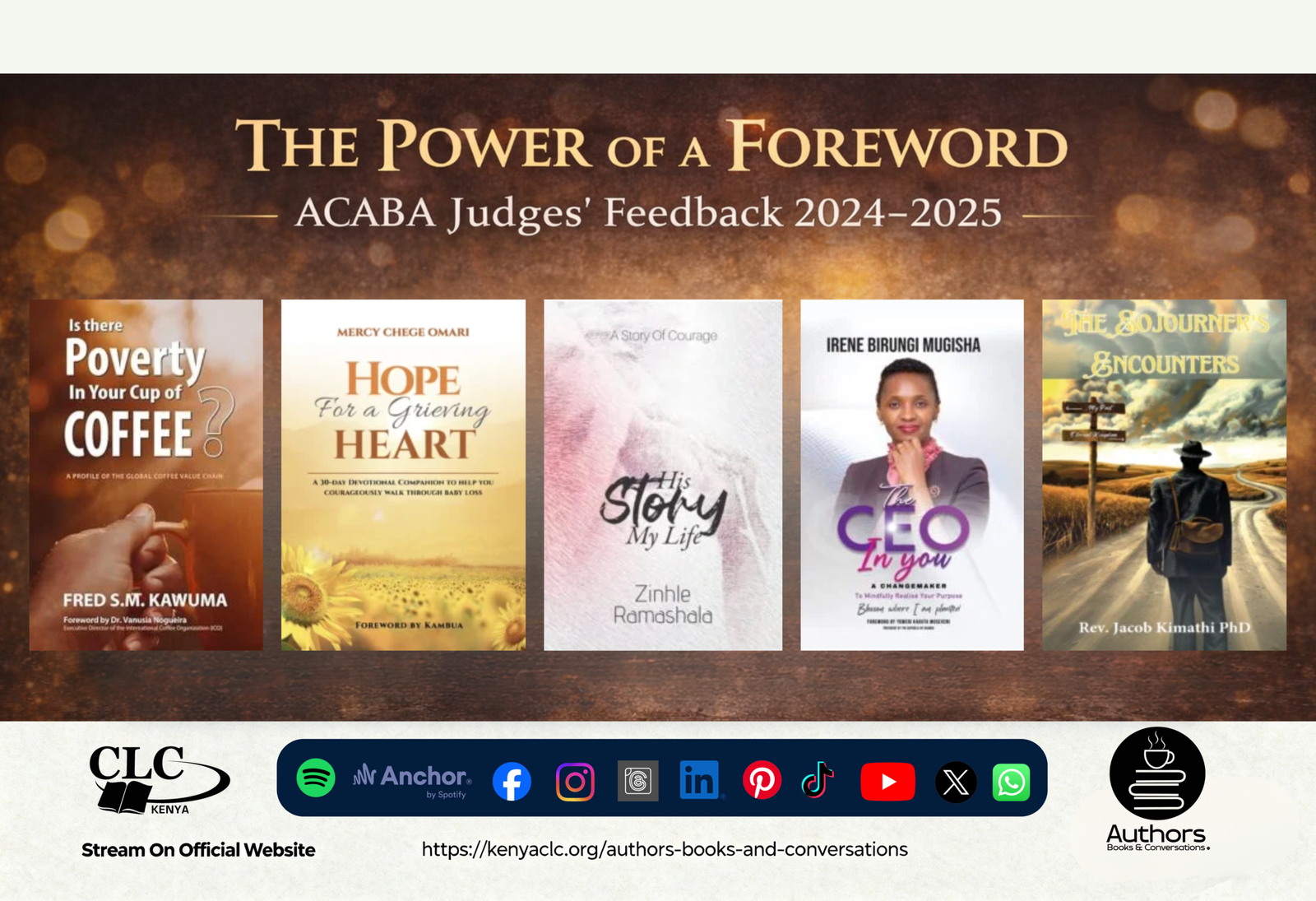
2-3e: How to Write a Book’s Foreword
A well-written foreword can function as the ultimate third-party recommendation or endorsement for your book, generating interest and helping when it’s time to market your book. Here’s how to write…
Read More2-2e: How to Write a Book Introduction
Are you stuck on writing your book introduction? Here’s how to… Hook the reader right from the beginning with a personal story from your life, a funny story, a joke,…
Read More2-3a: How to Write a Book’s Conclusion
If your readers are in the conclusion chapter, it also means they read the whole book, they liked it, and now they want you to wrap it up. So don’t…
Read More2-2a: How to Write an Author’s Bio
People are looking for reasons why they should spend their time reading what you have written. You need to instill confidence in your readers that you are knowledgeable on the…
Read More2-3b: How to Write a Book’s Blurb
A blurb is a short yet descriptive account of the book that goes on the back cover or within the book sleeve of a hardcover book. It includes any information…
Read More2-2c: How to Write an Acknowledgement
An acknowledgment section in a book provides the space to go into lenghty details in thanking the people who were sources of inspiration and support for your book and life….
Read More2-3c: How to Write Table of Contents
A table of content shows the things that are held or included in something. In the book industry, it is a list of the chapters or sections given at the…
Read More2-3d: How to Differentiate Between a Foreword and Endorsement
Foreword vs endorsement: what’s the difference? Discover their purpose, placement, length, and how each builds credibility and helps readers choose your book.
Read More2-1a: How to Profile Your Target Reader
Learn how to profile your target reader so you can write with greater focus, choose the right tone and examples, address real needs, and market your book more effectively. This…
Read More2-2d: How to Start the First Sentence or Paragraph of Your Book
Learn how to start the first sentence or paragraph of your book without overthinking. Discover seven practical opening approaches, from personal stories and questions to bold statements, scenes and Scripture…
Read More2-1c: How to Do Proper Research Before or As You Write
Learn how to conduct proper research before or as you write. This practical Christian writing guide covers foundational and advanced research, credible sources, Scripture study, plagiarism, interviews, permissions, fact-checking and…
Read More2-1b. How to Create an Outline for Your Book
Learn how to create a clear and practical book outline that organises your ideas, strengthens your chapter flow and guides the writing process while remaining open to the leading of…
Read MoreTechnical Skills: Publishing Books
Refining Your Manuscript
3-3a: Why is Organising Your Non-Fiction Into Chapters Important?
Organising your non-fiction book into clear, well-structured chapters enhances readability, engagement, and comprehension for your audience. Chapters create a logical flow, making complex ideas easier to digest while guiding readers…
Read More
3-3b: Why a Strong Chapter Structure Matters
A well-structured chapter helps your reader follow your message with ease. This simple guide shows writers how to build a chapter that flows from introduction to teaching, story, application, reflection,…
Read More
3-7a: Why Self-Edit Your Book Before Submitting it for Publishing?
Self-editing is a crucial step before submitting your manuscript for publishing. It allows you to refine your ideas, correct errors, and enhance the overall quality of your work. A well-edited…
Read More
3-7b: Train Your Ears to Edit: How African Writers Can Listen to Their Manuscripts Using MS Word Read Aloud
Learn how to use MS Word’s Read Aloud feature to listen to your manuscript, catch awkward sentences, improve flow, sharpen dialogue, and edit your writing more effectively as an African…
Read More3-1a: How to Write a Devotional
A devotional book is a literary work designed to provide spiritual inspiration, guidance, and reflection for readers seeking to deepen their faith and relationship with God. Get started here. #RaisingAfricanVoices
Read More3-1b: How to Write a Captivating Novel
A great novel is a complex interplay of various elements, but some key components often contribute to its greatness. Get started here. #RaisingAfricanVoices
Read More3-2c: How to Use Dialogue in Story Writing
Effective dialogue is characterized by authenticity, clarity, and relevance to the story. It should sound natural and believable, reflecting the unique voices and perspectives of the characters. Dialogue tags, such…
Read More3-2d: How to Use ‘Show Don’t Tell’ in Story Writing
“Show don’t tell” is a fundamental principle in storytelling that encourages writers to use descriptive language, actions, dialogue and scenes to reveal information to the reader, rather than simply telling…
Read More3-1c: How to Elevate a Non-fiction Christian Book to Make it Personal and Engaging
Transforming a flat non-fiction Christian book into an engaging and impactful read requires authenticity and connection. Share your personal testimony, use relatable real-life examples, and offer practical applications to make…
Read More3-6b: How to Ethically Use Other People’s Public Stories in a Non-fiction Christian Book
Using public stories in your Christian book requires integrity and respect for the individuals involved. Always seek permission where possible, give proper attribution, and ensure the story aligns with your…
Read More3-2e: How to overcome the challenge of mixed languages in writing a manuscript
Writing a manuscript with mixed languages can be both enriching and challenging. To overcome this, establish clear guidelines for when and how to incorporate multiple languages. Use translations sparingly and…
Read More3-6d: How to Ensure Diversity and Inclusion in Christian Writing
By embracing diverse voices, ensuring equitable access for underrepresented authors, and encouraging inclusive storytelling, authors and publishers can reflect the richness of God’s Kingdom. This includes actionable strategies to amplify…
Read More3-6a: How to Use External Source Excerpts with Footnotes and Endnotes
Many writers think footnotes and endnotes belong only in academic writing, yet they can strengthen memoir, Christian non-fiction, and reflective books too. Here is a simple guide for African writers,…
Read More3-6c: How Authors Should Mention Other People in Painful Stories
Learn how authors can write about real people in painful situations with wisdom, honesty, and grace. This post explores how to change names, stay objective, avoid slander, acknowledge personal responsibility,…
Read More3-1d: Why Consistency in Every Session Matters: Writing Workbooks Well
Learn practical workbook writing tips for African authors, with a focus on consistency in every session. Discover how clear structure, repeated formats, and reader expectations can make your workbook more…
Read More3-4d: How to Differentiate Repetition from Emphasis: Helping African Writers Strengthen Their Message Without Tiring the Reader
African writers must learn the difference between repetition and emphasis if they want to keep readers engaged. This training article explains how to emphasize key concepts with clarity, rhythm, imagery,…
Read More3-4c: How to Use Transition Paragraphs in Your Writing
Learn how to use transition paragraphs effectively in your writing. This concise guide for authors explains how to introduce a story smoothly, move from story to application, and end one…
Read More
3-4b: How to Paragraph Your Manuscript Well
Learn how to paragraph your manuscript in a simple, clear way. This short guide teaches authors to keep one paragraph to one idea, avoid crowding thoughts, and use clean paragraph…
Read More
3-5b: How to Handle Theology with Balance in Christian Writing
Christian authors must handle theology with both biblical truth and pastoral care. This article explains how to balance personal testimony, Scripture, exegesis, and reader application so Christian writing remains sound,…
Read More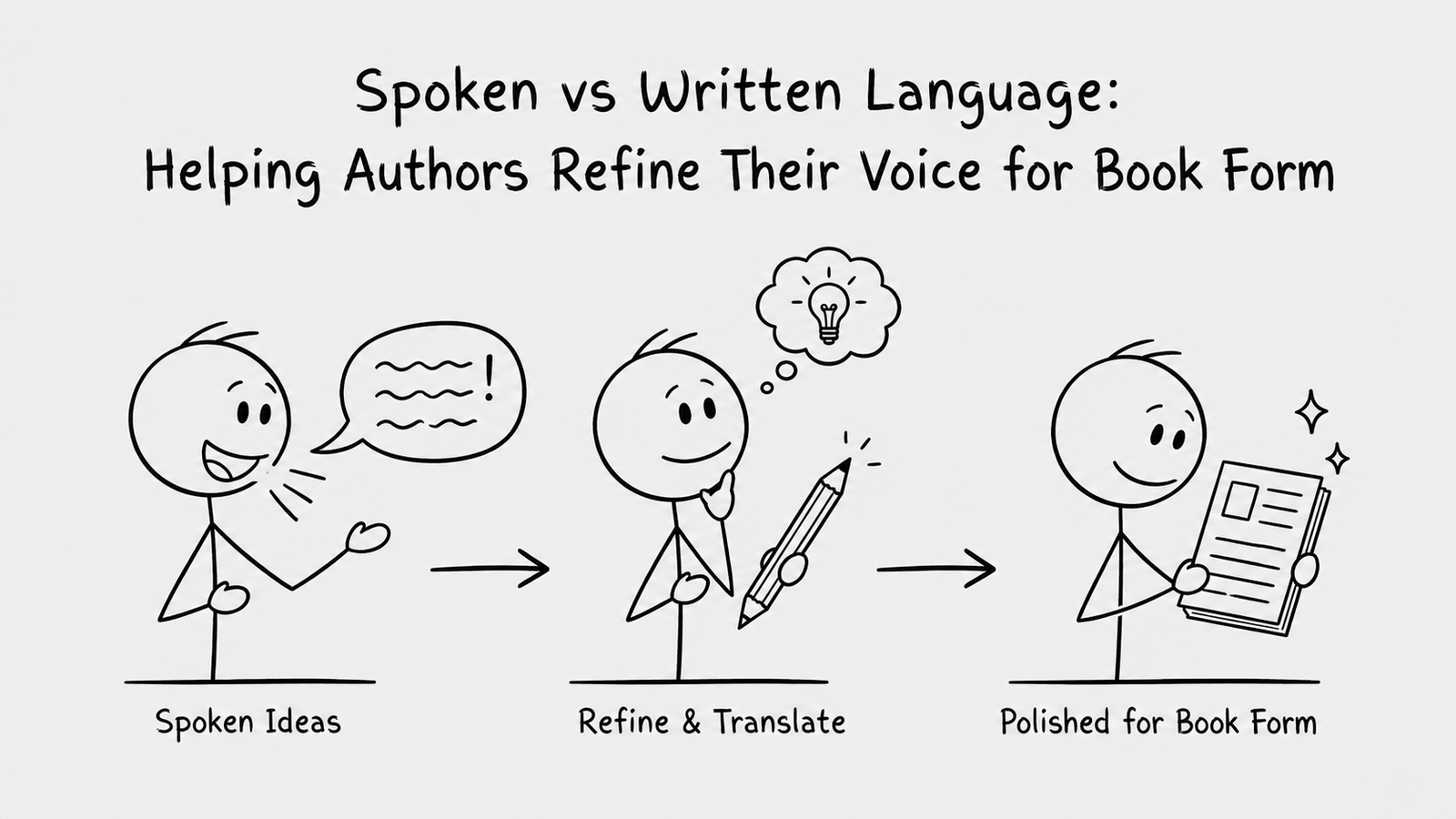
3-4a: Spoken vs Written Language: Helping Authors Refine Their Voice for Book Form
Many Christian manuscripts begin as sermons, testimonies, teachings, or spoken reflections. This article helps authors refine informal spoken language into clear, timeless book prose while preserving warmth, humour, personality, and…
Read More3-3c: Why Creative Non-Fiction and Non-Academic Books Should Not Be Too Long
Learn why creative non-fiction books should not be unnecessarily long. This practical guide helps authors improve focus, reduce repetition, lower production costs and write books that readers can afford, finish…
Read More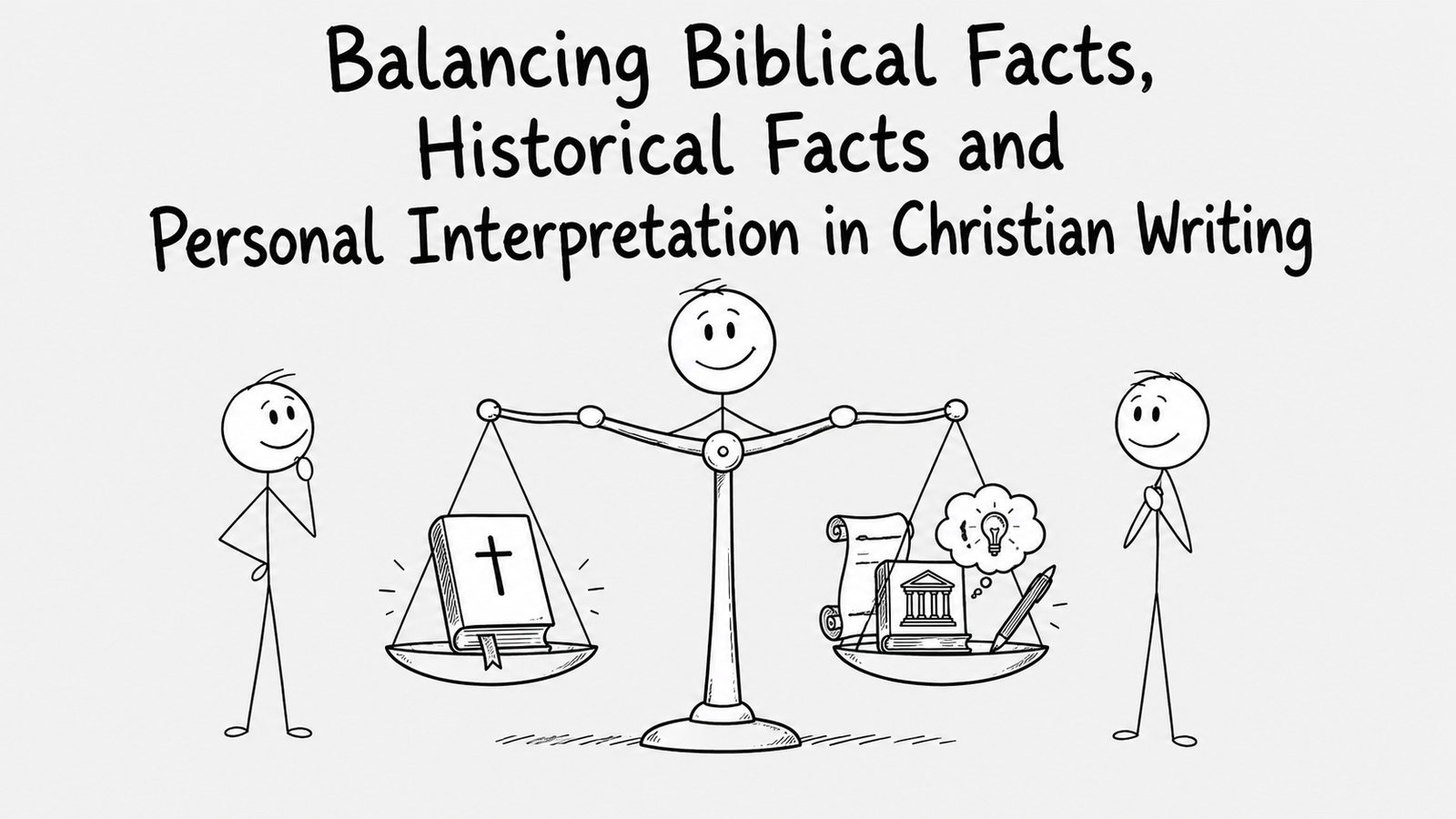
3-5c: Balancing Biblical Facts, Historical Facts and Personal Interpretation in Christian Writing
Learn how Christian writers can balance biblical facts, historical context and personal interpretation without confusing imagination with Scripture. This practical guide explains how to distinguish what the Bible records, what…
Read More3-3d: Why Creating a Comfortable Reading Rhythm for Your Book is Important
Learn why creating a comfortable reading rhythm is important for your book and how balanced chapter lengths can improve flow, structure, clarity and the overall reading experience.
Read More3-5a. How to Place Scriptures in a Creative Book
Learn how to place Scriptures clearly and consistently in a creative Christian book, including Bible versions, inline quotations, highlighted verses, references, italics, and manuscript formatting.
Read More3-2a. How to Choose and Use Point of View in Creative Writing: First, Second and Third Person
Learn how to choose and use first, second and third person point of view in creative writing, maintain narrative consistency, manage narrative distance, avoid head-hopping, and select the perspective that…
Read More3-2b. How to Develop Primary and Secondary Characters in a Story
Learn how to develop compelling primary and secondary characters by defining clear goals, motivations, conflicts, strengths, weaknesses, relationships, distinct voices and believable character arcs that move your story forward.
Read MoreAdvanced Skills: Publishing Books
Going the Extra Mile
4-3a: Why Should a Non-Fiction Book Have a Subtitle?
A subtitle is a powerful tool for non-fiction books, offering clarity and appeal to potential readers. It provides additional context about the book’s content, target audience, and benefits, helping it…
Read More4-2a: How to Peer Review Fiction and Non-Fiction Christian Literature Manuscripts
Peer reviewing Christian literature requires a thoughtful approach to ensure the manuscript aligns with Biblical principles while engaging readers effectively. For fiction, focus on character development, plot consistency, and spiritual…
Read More4-4c: Why is The Art of the Author Photo Important? Essential Specs for a Professional and Polished Image
Professional photos on a book’s back page play a crucial role in an author’s branding and marketing strategy. Learn More Here. #RaisingAfricanVoices
Read More4-4b. Why Professional Layout Is Non-Negotiable for African Christian Authors: Publishing With Excellence
Why professional book layout is non-negotiable for African Christian authors. Learn how industry-standard layout protects your message, credibility, reader experience, and publishing excellence from manuscript to marketplace.
Read More4-4a: Book Covers: Why They Matter for Every Author
Your book cover is not decoration—it is your book’s first decision-maker. Discover why covers matter for trust, genre clarity, and sales, plus common mistakes authors can avoid and a practical…
Read More4-1c: How to Turn a True Story into Autobiographical Fiction: Practical Steps for Writing Painful Personal History Well
Learn practical ways to turn a painful true story into autobiographical fiction without losing its truth or lessons. This training article helps African writers change names, settings, timelines, and identifying…
Read More4-2b: Why Theological Editing Must Come Before Comprehensive Editing
Christian manuscripts need theological editing before comprehensive editing. This training explains how theological review identifies speculative interpretations, unsupported symbolism, inaccurate Scripture quotations, weak historical claims and unbalanced treatment of difficult…
Read More4-1a. How to Use Cyclic Structure: Connecting Different Parts of Your Story
Learn how to use cyclic structure in creative writing to connect different parts of a story through flashbacks, memories, recurring themes, parallel experiences and clear transitions between past and present.
Read More4-1b. How to End a Book When preparing for a Sequel
Learn how to end a book when preparing for a sequel. This practical author resource covers plot closure, emotional resolution, sequel hooks, open story threads, foreshadowing, cliffhangers, final chapters and…
Read MoreContractual Skills: Publishing Books
Be Informed (Not Legal Advice)
5-2a: Why Every Author Needs a Non-Disclosure Agreement (NDA)
Protect your intellectual property with a Non-Disclosure Agreement (NDA) in publishing! An NDA safeguards your manuscripts and creative ideas by establishing confidentiality between authors, publishers, and editors. It ensures your…
Read More5-1a: What to Include in the Copyright Page and Complete the Copyrighting Process
Copyright law gives creators of original material the exclusive right to further use and duplicate that material for a given amount of time, at which point the copyrighted item becomes…
Read More5-3a: Terms and Conditions for Traditional Publishing/Adapting Existing Books into Other Versions
Adapting existing books into new versions, such as translations, audiobooks, or special editions, requires clear terms and conditions in traditional publishing agreements. These terms outline rights, royalties, and responsibilities for…
Read More5-4a: How to Publish a Book with Multiple Stakeholders: Best Practices for Rights Ownership, Expenses and Recognition
Publishing a book with multiple stakeholders requires clear communication and well-defined agreements to ensure smooth collaboration. Establish ownership rights, allocate expenses transparently, and outline recognition for each contributor’s role. Best…
Read More5-1b: How to Get ISBN in Kenya and Other African Countries
Learn how to get an ISBN in Kenya and other African countries, who issues ISBNs, what you need to apply, and why every published book needs one. A practical guide…
Read More5-2b. How to Write a Contributor Consent Form for a Memoir Book
Publishing a book with multiple stakeholders requires clear communication and well-defined agreements to ensure smooth collaboration. Establish ownership rights, allocate expenses transparently, and outline recognition for each contributor’s role. Best…
Read More5-2c: How to Ethically and Legally Use Free or Unpaid Images in Your Book
Learn how to use free images for your book ethically and legally by checking licences, reading the fine print on sites like Unsplash and Freepik, and knowing when paid or…
Read More