Christian poetry and spoken word have unusual power. Through rhythm, metaphor, refrain, first-person voice and performance, a poet can make a biblical scene feel immediate. Hagar can appear to speak from the wilderness. David can address a modern generation. A biblical phrase can become a refrain that stays with the listener long after the performance has ended. A poet can also connect biblical themes with contemporary African realities, family life, identity, leadership, suffering or hope.
That creative freedom, however, carries responsibility.
A Christian poet may write in the voice of Jesus, Samuel, David, Hagar or another biblical character. A spoken-word writer may transform a biblical event into a contemporary metaphor. A refrain may repeat a theological statement several times until it becomes the central truth listeners remember. These techniques can be powerful, but they can also make it difficult for the audience to distinguish between what Scripture actually says, what the poet understands the passage to mean, and what the poet has imaginatively added.
Second Timothy 2:15 calls believers to rightly handle the word of truth. For Christian poets, this means that creativity must serve Scripture rather than make Scripture serve creativity. The goal is not to suppress imagination.
The goal is to learn how to imagine faithfully.
Understanding Hermeneutics
Hermeneutics is the discipline of interpreting a text responsibly. In biblical poetry and spoken word, hermeneutics asks a simple but essential question:
What does this biblical passage actually mean before I turn it into poetry?
Closely related to hermeneutics is exegesis. Exegesis draws meaning out of Scripture. The opposite danger is eisegesis, where the writer begins with an idea and then reads that idea into the biblical text.
Exegesis
Exegesis begins with Scripture and seeks to discover the meaning that is already present in the text.
Eisegesis
Eisegesis begins with the writer’s own idea and then searches Scripture for a verse that appears to support it.
Scripture, Interpretation and Poetic Expression
Christian poets should learn to distinguish three different layers whenever they write from Scripture.
The first layer is the biblical text: what Scripture actually says.
The second layer is interpretation: what the passage means within its literary, historical and theological context.
The third layer is poetic expression: how the poet imaginatively communicates or applies that truth through imagery, rhythm, metaphor, voice or contemporary application.
These three layers do not carry equal authority.
Scripture is authoritative. The poet’s interpretation must submit to Scripture, and the poet’s imagination must submit to both.
This distinction is especially important because a beautiful poetic line can sound biblically authoritative even when it is actually the writer’s interpretation or imagination.
Read Before You Write
Before writing a poem from a biblical passage, read the entire passage rather than beginning only with the verse that inspired the poem.
Begin with the passage, not merely the line that caught your attention.
Identify the line that first inspired the poem.
Read what comes before and after the verse.
Let the fuller biblical meaning shape the poem.
Observe carefully who is speaking, who is being addressed, what has happened, where the event takes place, what happened immediately before it and what follows afterwards. Notice what characters actually say, what emotions Scripture explicitly records and what actions are described.
Then ask another important question:
What does the passage not tell me?
This question matters because poets naturally fill spaces with imagination. Scripture may tell us that Joseph took Mary and Jesus to Egypt, but it does not describe every moment of the journey. A poet may reasonably imagine darkness, urgency, danger, exhaustion or uncertainty. These details may enrich the poem, but they remain poetic reconstruction unless Scripture explicitly records them.
Biblical silence creates room for imagination, but it does not create permission for invented certainty.
Read the Passage in Context
A poetic line may sound compelling and still misrepresent Scripture if the verse has been removed from its context.
Do not build a poem from an isolated verse without first understanding the passage around it.
Immediate Context
Read the verses before and after the verse you want to use. Notice the argument, event, question or conversation already taking place.
Book Context
Ask what the biblical writer is communicating in the surrounding chapter and throughout the book.
Historical Context
Where necessary, consider the original audience, culture, geography and historical circumstances surrounding the passage.
Whole-Bible Context
Compare your interpretation with other relevant Scriptures. One verse should not be made to carry a theological conclusion that the wider biblical witness does not support.
The immediate context includes the verses surrounding the passage. The wider context includes the chapter and the entire biblical book. Historical context may involve the original audience, cultural setting, geography or political circumstances. Whole-Bible context asks whether the interpretation agrees with the broader teaching of Scripture.
For example, a single verse should not be forced to carry a theological conclusion that other passages clearly qualify.
This is why Christian poets should allow Scripture to interpret Scripture.
If writing about suffering, for instance, it would be inadequate to select only passages about discipline and conclude that suffering always results from personal sin. Job, John 9, Romans 8, 2 Corinthians 1, James 1 and the suffering of Christ contribute to a fuller biblical picture.
The same principle applies when writing about children, motherhood, fatherhood, marriage, healing, leadership, identity, forgiveness, spiritual warfare, prosperity, nations or calling.
Understand the Biblical Genre
The Bible contains different forms of writing: narrative, law, wisdom, poetry, prophecy, letters, parables, songs, prayers and apocalyptic literature. These genres do not function in exactly the same way.
Biblical narrative tells us what happened, but not everything that happened becomes a command for every believer. Proverbs communicate wisdom about how life ordinarily works, but they should not automatically be treated as unconditional promises. Biblical poetry often uses imagery and metaphor that should not always be interpreted literally.
Before turning a passage into poetry, ask: What kind of biblical writing am I interpreting?
Genre helps determine how strongly a conclusion may be stated.
Establish the Meaning Before Creating the Poem
Before asking, “What poem can I create from this passage?” first ask, “What is this passage principally communicating?”
A useful discipline is to complete one sentence:
The main truth of this passage is…
If that sentence cannot be stated clearly in ordinary prose, the poet may not yet be ready to develop the passage creatively.
Take Matthew 2:13–15 as an example. The biblical account records Joseph taking Jesus and Mary to Egypt after God warns him about Herod’s murderous intentions.
A sound summary would be: God directs Joseph to take the young Jesus to Egypt, preserving the Child from Herod, and Joseph responds obediently.
Only after establishing that meaning should the poet begin exploring imagery such as refuge, displacement, danger, Africa, childhood or divine preservation.
The order matters.
Meaning should guide poetry. Poetry should not create the meaning.
Poetic Imagination Has a Legitimate Place
Biblical poetry does not have to contain only words directly quoted from Scripture. If that were the standard, much of creative writing would disappear.
The poet may imaginatively explore atmosphere, emotion, movement, dialogue, scenery, questions and sensory detail. The important issue is knowing what level of certainty each poetic statement carries.
Know What Level of Certainty You Are Writing With
Consider the following distinction. Not every line in a Scripture-based poem carries the same level of biblical certainty.
Biblical Fact
This is directly established by the biblical text.
Strongly Supported
The passage strongly supports this conclusion even though the wording itself is not a direct quotation from Scripture.
Possible
This is possible, but Scripture does not explicitly tell us that Joseph felt afraid.
Poetic Imagination
This is an imagined literary detail created to make the scene vivid. Scripture does not record it.
All four may appear in Christian poetry. The problem begins when poetic imagination is presented with the authority of biblical fact.
Writing in the Voice of Biblical Characters
First-person biblical poetry can be particularly powerful. It allows readers and listeners to enter a biblical moment through the apparent voice of the person who experienced it.
First-person poetry gives immediacy to the biblical story, but it also places words into the mouth of a biblical person.
Before writing such lines, the poet should determine how closely the statement is grounded in Scripture. Three questions provide a useful test.
Did the character actually say this?
Look first for direct biblical evidence. If Scripture records the person’s words, the poet has the strongest foundation.
If not, does Scripture clearly show that the character knew or believed it?
The exact words may not appear in Scripture, but the wider passage may provide strong evidence that the idea reflects the character’s knowledge, convictions or experience.
If not, am I imaginatively creating this statement for poetic purposes?
The line may still have a legitimate place in the poem, but the poet should recognise that it is creative reconstruction rather than something Scripture explicitly records.
Writing in the Voice of Jesus Requires Greater Caution
Poetry written from Jesus’ first-person perspective should receive the highest level of theological scrutiny.
If the poem says, “I been there,” and the speaker is Jesus, listeners may reasonably assume that everything following reflects something Christ Himself could say.
Therefore, each claim should be tested.
Jesus experienced temptation. Scripture establishes that.
Jesus experienced rejection and opposition. Scripture establishes that.
Jesus understands human weakness. Scripture establishes that.
But the poet should be very careful about placing promises, explanations or theological conclusions into Jesus’ mouth when Scripture does not record or support them.
The Closer You Come to Speaking for God
The closer the poet comes to speaking for God, the stronger the biblical evidence should be.
Do Not Turn Every Biblical Event Into a Promise
One of the most common interpretive mistakes in Christian poetry is moving too quickly from “this happened in Scripture” to “therefore this will happen to you.”
For example, after Jesus resisted Satan in the wilderness, angels ministered to Him.
A poet may describe this event vividly. But the passage does not automatically guarantee that every believer who resists temptation will visibly encounter angels afterwards.
The event is biblical. The universal promise is not.
Remember:
A biblical example is not automatically a biblical promise.
In the same way, something God instructed one biblical person to do is not automatically a command for every Christian.
Poetic encouragement should arise from the enduring truth of the passage rather than from promising the reader an identical outcome.
Distinguish Poetic Application From Biblical Teaching
Poets naturally connect Scripture with contemporary life. This is one of the great strengths of Christian poetry.
For example, Matthew records that Jesus found refuge in Egypt. A poet may reflect on Egypt’s geographical location in Africa and describe Africa poetically as having received the young Jesus. This can become a meaningful literary reflection on refuge, hospitality and Africa’s place within the biblical story.
However, a stronger theological conclusion requires stronger biblical evidence.
If the poem moves from “Africa received Jesus” to “therefore God is obligated to prosper Africa in return,” the poet has moved beyond what Matthew explicitly teaches.
That thought may be expressed as prayer, hope, metaphor, prophetic appeal or theological reflection. But it should not be presented as though Matthew 2 directly establishes such a promise.
The stronger the theological claim, the stronger its biblical foundation must be.
Understand Levels of Certainty
A useful discipline for poets is to recognise four levels of certainty. Not every statement in a Scripture-based poem carries the same weight.
Clearly Biblical
Scripture explicitly says it. The statement rests directly on the biblical text.
Strongly Supported
The statement is not necessarily quoted directly, but it arises naturally from the passage and is well supported by its context.
Possible
The statement may reasonably fit the biblical scene, but Scripture does not confirm it.
Poetic Imagination
The poet has deliberately created the statement, image or detail for literary effect. It is not presented in Scripture.
The danger comes when something merely possible or imaginative is written as though it were explicitly revealed in Scripture.
In spoken word, listeners do not have time to pause and examine whether a line came directly from the Bible. A confident performer can make a speculative statement sound authoritative simply through tone, emphasis and delivery.
Refrains Require Theological Care
Refrains are especially powerful in spoken word because they become the lines listeners remember.
These repeated lines can give a poem rhythm, unity and emotional force. But repetition also gives a statement perceived authority.
A theological idea that sounds tentative once can begin to sound like absolute biblical truth when it is repeated again and again.
Does the refrain accurately reflect Scripture?
Test the main repeated statement against the biblical passage rather than assuming that a memorable line is automatically a sound theological line.
Does repetition make an uncertain idea sound certain?
A possible interpretation should not gain the authority of a biblical promise merely because it is repeated with confidence.
Could listeners mistake the refrain for Scripture?
In spoken word, listeners may remember the refrain more clearly than the biblical passage itself. Make sure the repeated line cannot easily be mistaken for a direct quotation or promise from God.
Metaphor Is Powerful but Has Limits
Poetry depends on metaphor.
A poet may say, for example, “Africa is a young child.”
The reader understands that Africa is not literally a child. The metaphor may help the poet explore vulnerability, potential, growth, exploitation, dependence or maturity.
But metaphor should not be asked to prove doctrine.
If Africa is compared to a young child poetically, it does not follow that every biblical promise concerning an individual child automatically becomes a divine promise concerning the African continent.
Metaphor illustrates and illuminates. It does not automatically establish theology.
The poet should ask: Where does this metaphor help communicate biblical truth, and where am I asking it to carry more theological weight than it can bear?
Prophetic Tone Is Not the Same as Divine Revelation
Spoken-word poetry often uses bold declarative language.
“You shall arise.”
“This generation shall live.”
“Africa shall fulfil her destiny.”
Such declarations can give a poem strength and urgency. However, Christian poets must distinguish between declaring biblical truth and claiming specific knowledge of what God will do in the future.
If Scripture clearly promises something, it may be declared confidently.
If the statement is the poet’s prayer, it should function as prayer.
If it is hope, let it be hope.
If it is exhortation, let it be exhortation.
If it is poetic vision, let it remain poetic vision.
Poetic confidence should not automatically be presented as direct divine revelation.
Let Scripture Interpret Scripture
A major theological statement should rarely rest upon one isolated verse. Christian poets should examine the wider biblical witness before building a strong theological conclusion into a poem.
Do not make one verse carry more theological weight than Scripture gives it.
Fatherhood
Examine the wider biblical teaching on fathers, family, responsibility, provision, discipline, example and God’s Fatherhood.
Motherhood
Consider the diversity of biblical mothers, their circumstances, their faith, their struggles and the different family situations represented throughout Scripture.
Leadership
Consult the broader biblical teaching on justice, stewardship, authority, humility and service rather than relying on one ruler or one leadership story.
Understand the verse in its immediate context.
Look at other passages that address the same subject.
Let the wider biblical witness shape your conclusion.
Let your imagery grow from the breadth of Scripture.
It Protects the Theology
This guards the poet against making one story or one verse support more than Scripture intends.
It Enriches the Poetry
The writer gains more images, voices, contrasts and biblical connections because the imagination is rooted in the breadth of Scripture rather than in a single proof text.
Truth Should Still Be Spoken in Love
Biblical accuracy is not only about doctrinal correctness. Christian poetry also carries pastoral responsibility.
Poets may address sexual sin, teenage pregnancy, fatherlessness, abandonment, irresponsible parenting, family breakdown, injustice or harmful leadership. These subjects require truth, but they also involve readers and listeners who may carry deep wounds.
Ephesians 4:15 speaks of “speaking the truth in love.”
A poem may confront wrongdoing without reducing a person to their wrongdoing.
A strong Christian movement is often:
name the wrong, protect the dignity of the wounded, call the responsible person to repentance, point towards grace, and make room for restoration.
Prophetic poetry confronts.
Pastoral poetry restores.
Mature Christian spoken word can do both.
A Practical Exercise Before Writing
Before developing a biblical poem, separate what Scripture explicitly says, what you believe the passage means in context, and how you intend to express that meaning poetically.
Complete each row carefully. You can add more rows as you work through the passage.
Joseph takes Jesus and Mary to Egypt after God’s warning. Matthew 2:13–15.
God preserves Jesus from Herod, and Joseph obeys God’s direction.
Egypt may become an image of refuge, allowing reflection on Africa’s place in the young Jesus’ story.
Once you have worked through the biblical text and its meaning, draft your poem below.
What have I added that Scripture itself does not say?
Return to your poetic expression and draft. Identify the words, emotions, dialogue, scenery, conclusions or theological connections that come from your imagination rather than directly from the biblical text.
Imaginative lines do not automatically need to be deleted. The goal is to recognise the difference between biblical revelation and poetic imagination.
Warning Signs During Revision
Pause during revision when the poem implies that “the Bible says” something Scripture does not actually say, when it claims that “God always” acts in a certain way although Scripture presents different possibilities, or when it explains why something happened even though the biblical text never gives the reason.
Likewise, reconsider lines that promise a reader exactly what happened to a biblical character, assign unrecorded emotions to biblical characters as fact, or place “God says” before what is actually the poet’s interpretation.
These phrases often signal that poetic certainty may have moved beyond biblical certainty.
A Revision Checklist for Scripture-Based Poetry
Before publishing or performing a biblical poem, review it carefully. Use this checklist to test the poem’s biblical grounding, interpretation, poetic imagination and theological clarity.
The goal is not to remove poetic imagination. The goal is to ensure that imagination remains under the authority of Scripture.
A Simple Process for Biblical Poetry
A useful process for developing Scripture-based poetry is to move deliberately from the biblical text to interpretation, imagination, writing, performance and final review.
Observe
Ask what Scripture actually says. Notice the people, words, actions, setting and details that the biblical text explicitly gives you.
Interpret
Determine what the passage means in its immediate, literary, historical and wider biblical context.
Imagine
Explore how imagery, voice, metaphor, refrain and rhythm might make the biblical truth vivid without changing its meaning.
Write
Develop the poem, allowing the biblical meaning to guide the creative choices rather than forcing Scripture to fit the poem.
Perform
Read or perform the poem aloud. Spoken delivery often reveals theological overstatement, awkward language and unclear transitions that may be less obvious on the page.
Review
Return to Scripture and test the finished poem. Check its facts, interpretation, imagination, refrains, metaphors and theological claims.
Beginning With the Message
The process should not begin with a powerful line, followed by a message, followed by a search for a verse that appears to support it.
Beginning With Scripture
Let the biblical text establish the truth first. Then allow interpretation and creative imagination to shape its poetic expression.
Scripture → meaning → imagination → poetry.
Conclusion: Imagination Under Scripture
The Christian poet does not have to choose between biblical faithfulness and artistic freedom.
Both matter.
Metaphor may be bold. Refrains may be memorable. Rhythm may be unconventional. African imagery may be vivid. Biblical characters may feel immediate. Spoken-word language may be forceful.
But the writer should always know where Scripture ends and poetic imagination begins.
The mature biblical poet should be able to say:
This is what Scripture says.
This is what I understand it to mean.
And this is how I have imaginatively expressed that truth.
Scripture remains the authority.
Interpretation seeks its meaning.
Poetry gives that meaning imagery, rhythm and voice.
Spoken word gives it breath.
Read faithfully. Interpret carefully. Imagine responsibly. Write boldly. Speak truthfully.
Training by: Dr. Muthoni Mercy Omukhango
Dr. Muthoni Mercy Omukhango is a Christian publisher, author, trainer, and marketplace minister. She serves as National Director of CLC Kenya, Authors’ Manager at the African Christian Authors Book Award (ACABA), Convener of Mama Africa Book Box, and Patron of CLC Kids and Teens.
Through the Publishing in Africa Series, she equips authors, publishers, and literary entrepreneurs with practical strategies for developing, publishing, distributing, and growing African-authored literature.
Her ministry is centred on advancing God’s Kingdom through literature and helping more African voices to be written, published, distributed, and read.
Getting Started: Publishing Books
Preparing to Write/Publish
1-1a: Prepare Yourself to Get Published…
Are you ready to publish your book? Here is how you need to prepare. Have your manuscript ready and explore the oprions available today. If you are stuck in getting...
Read More1-1b: Let’s Talk About Publishing
The self-publishing landscape has changed considerably in the past two decades with new technologies such as the Internet, and the $1 billion markets continuing to change at a rapid pace....
Read More1-1d: Factors to Consider Before Self Publishing
Jesus, while talking to the disciples about following Him, asked them to count the cost. The same Scripture applies to authors today - you have to count the cost from...
Read More1-1e: Requirements for Self Publishing

Are you ready to be published? Use our 4 points check list and tick 'Published Author' box so you can move on to the next God-given assignment... #RaisingAfricanVoices
Read More1-1f: Publishing Steps – Review
Is your manuscript due for a review towards getting published? The major focus during manuscript review is the general quality of the book. It is important to establish the overall...
Read More1-1c: How Can We Become Effective Christian Authors?
Learn how to become an effective Christian author by writing under the guidance of the Holy Spirit, remaining rooted in Scripture, pursuing excellence, serving the right readers and trusting God...
Read MoreElementary Skills: Publishing Books
How to Write
2-2b: How to Write a Book Dedication
A book dedication is a way for you, the author to bestow a high honor on a person (or a group of people) you wish to praise or otherwise spotlight....
Read More2-3e: How to Write a Book’s Foreword
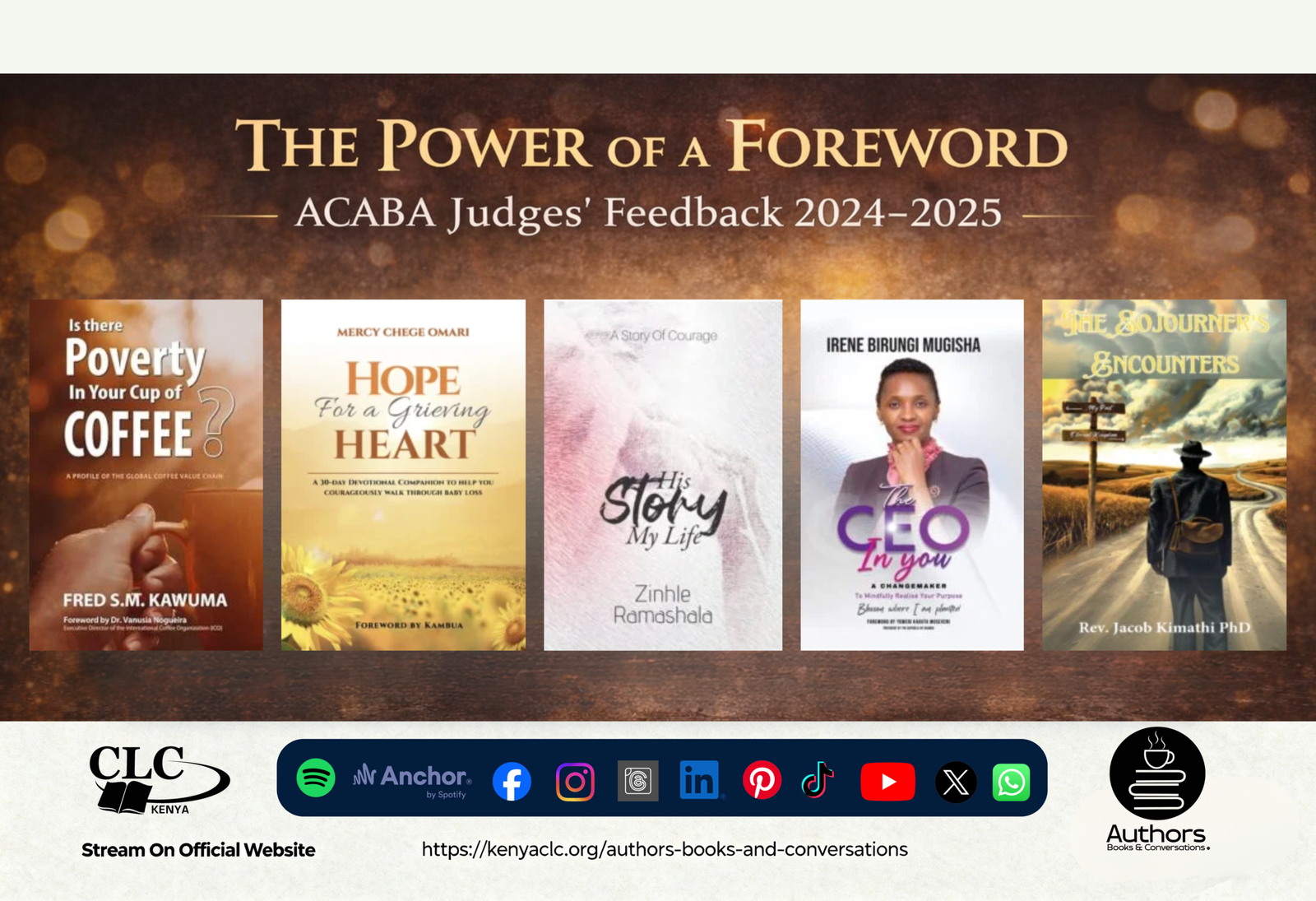
A well-written foreword can function as the ultimate third-party recommendation or endorsement for your book, generating interest and helping when it’s time to market your book. Here’s how to write...
Read More2-2e: How to Write a Book Introduction
Are you stuck on writing your book introduction? Here's how to... Hook the reader right from the beginning with a personal story from your life, a funny story, a joke,...
Read More2-3a: How to Write a Book’s Conclusion
If your readers are in the conclusion chapter, it also means they read the whole book, they liked it, and now they want you to wrap it up. So don’t...
Read More2-2a: How to Write an Author’s Bio
People are looking for reasons why they should spend their time reading what you have written. You need to instill confidence in your readers that you are knowledgeable on the...
Read More2-3b: How to Write a Book’s Blurb
A blurb is a short yet descriptive account of the book that goes on the back cover or within the book sleeve of a hardcover book. It includes any information...
Read More2-2c: How to Write an Acknowledgement
An acknowledgment section in a book provides the space to go into lenghty details in thanking the people who were sources of inspiration and support for your book and life....
Read More2-3c: How to Write Table of Contents
A table of content shows the things that are held or included in something. In the book industry, it is a list of the chapters or sections given at the...
Read More2-3d: How to Differentiate Between a Foreword and Endorsement
Foreword vs endorsement: what’s the difference? Discover their purpose, placement, length, and how each builds credibility and helps readers choose your book.
Read More2-1a: How to Profile Your Target Reader
Learn how to profile your target reader so you can write with greater focus, choose the right tone and examples, address real needs, and market your book more effectively. This...
Read More2-2d: How to Start the First Sentence or Paragraph of Your Book
Learn how to start the first sentence or paragraph of your book without overthinking. Discover seven practical opening approaches, from personal stories and questions to bold statements, scenes and Scripture...
Read More2-1c: How to Do Proper Research Before or As You Write
Learn how to conduct proper research before or as you write. This practical Christian writing guide covers foundational and advanced research, credible sources, Scripture study, plagiarism, interviews, permissions, fact-checking and...
Read More2-1b. How to Create an Outline for Your Book
Learn how to create a clear and practical book outline that organises your ideas, strengthens your chapter flow and guides the writing process while remaining open to the leading of...
Read MorePoetry Elementary Skills: Publishing Books
How to Write
2a-1b Biblical Interpretation & Hermeneutics for Christian Poetry and Spoken Word
Learn how Christian poets and spoken-word writers can interpret Scripture responsibly, distinguish biblical meaning from poetic imagination, and create faithful, powerful work rooted in God’s Word.
Read More2a-1a Poetry Foundations: Finding Your Voice and Mastering the Craft
Learn how Christian poets and spoken-word writers can interpret Scripture responsibly, distinguish biblical meaning from poetic imagination, and create faithful, powerful work rooted in God’s Word.
Read More10e How to Handle Readers’ Feedback Well
Learn how to handle reader feedback with wisdom and discernment. Understand positive, constructive, personal preference, unfair and malicious reviews, and respond in ways that strengthen your writing without allowing criticism...
Read MoreTechnical Skills: Publishing Books
Refining Your Manuscript
3-3a: Why is Organising Your Non-Fiction Into Chapters Important?
Organising your non-fiction book into clear, well-structured chapters enhances readability, engagement, and comprehension for your audience. Chapters create a logical flow, making complex ideas easier to digest while guiding readers...
Read More3-3b: Why a Strong Chapter Structure Matters
A well-structured chapter helps your reader follow your message with ease. This simple guide shows writers how to build a chapter that flows from introduction to teaching, story, application, reflection,...
Read More3-7a: Why Self-Edit Your Book Before Submitting it for Publishing?
Self-editing is a crucial step before submitting your manuscript for publishing. It allows you to refine your ideas, correct errors, and enhance the overall quality of your work. A well-edited...
Read More3-7b: Train Your Ears to Edit: How African Writers Can Listen to Their Manuscripts Using MS Word Read Aloud
Learn how to use MS Word’s Read Aloud feature to listen to your manuscript, catch awkward sentences, improve flow, sharpen dialogue, and edit your writing more effectively as an African...
Read More3-1a: How to Write a Devotional
A devotional book is a literary work designed to provide spiritual inspiration, guidance, and reflection for readers seeking to deepen their faith and relationship with God. Get started here. #RaisingAfricanVoices
Read More3-1b: How to Write a Captivating Novel
A great novel is a complex interplay of various elements, but some key components often contribute to its greatness. Get started here. #RaisingAfricanVoices
Read More3-2c: How to Use Dialogue in Story Writing
Effective dialogue is characterized by authenticity, clarity, and relevance to the story. It should sound natural and believable, reflecting the unique voices and perspectives of the characters. Dialogue tags, such...
Read More3-2d: How to Use ‘Show Don’t Tell’ in Story Writing
"Show don't tell" is a fundamental principle in storytelling that encourages writers to use descriptive language, actions, dialogue and scenes to reveal information to the reader, rather than simply telling...
Read More3-1c: How to Elevate a Non-fiction Christian Book to Make it Personal and Engaging
Transforming a flat non-fiction Christian book into an engaging and impactful read requires authenticity and connection. Share your personal testimony, use relatable real-life examples, and offer practical applications to make...
Read More3-6b: How to Ethically Use Other People’s Public Stories in a Non-fiction Christian Book
Using public stories in your Christian book requires integrity and respect for the individuals involved. Always seek permission where possible, give proper attribution, and ensure the story aligns with your...
Read More3-2e: How to overcome the challenge of mixed languages in writing a manuscript
Writing a manuscript with mixed languages can be both enriching and challenging. To overcome this, establish clear guidelines for when and how to incorporate multiple languages. Use translations sparingly and...
Read More3-6d: How to Ensure Diversity and Inclusion in Christian Writing
By embracing diverse voices, ensuring equitable access for underrepresented authors, and encouraging inclusive storytelling, authors and publishers can reflect the richness of God's Kingdom. This includes actionable strategies to amplify...
Read More3-6a: How to Use External Source Excerpts with Footnotes and Endnotes
Many writers think footnotes and endnotes belong only in academic writing, yet they can strengthen memoir, Christian non-fiction, and reflective books too. Here is a simple guide for African writers,...
Read More3-6c: How Authors Should Mention Other People in Painful Stories
Learn how authors can write about real people in painful situations with wisdom, honesty, and grace. This post explores how to change names, stay objective, avoid slander, acknowledge personal responsibility,...
Read More3-1d: Why Consistency in Every Session Matters: Writing Workbooks Well
Learn practical workbook writing tips for African authors, with a focus on consistency in every session. Discover how clear structure, repeated formats, and reader expectations can make your workbook more...
Read More3-4d: How to Differentiate Repetition from Emphasis: Helping African Writers Strengthen Their Message Without Tiring the Reader
African writers must learn the difference between repetition and emphasis if they want to keep readers engaged. This training article explains how to emphasize key concepts with clarity, rhythm, imagery,...
Read More3-4c: How to Use Transition Paragraphs in Your Writing
Learn how to use transition paragraphs effectively in your writing. This concise guide for authors explains how to introduce a story smoothly, move from story to application, and end one...
Read More3-4b: How to Paragraph Your Manuscript Well
Learn how to paragraph your manuscript in a simple, clear way. This short guide teaches authors to keep one paragraph to one idea, avoid crowding thoughts, and use clean paragraph...
Read More3-5b: How to Handle Theology with Balance in Christian Writing
Christian authors must handle theology with both biblical truth and pastoral care. This article explains how to balance personal testimony, Scripture, exegesis, and reader application so Christian writing remains sound,...
Read More3-4a: Spoken vs Written Language: Helping Authors Refine Their Voice for Book Form
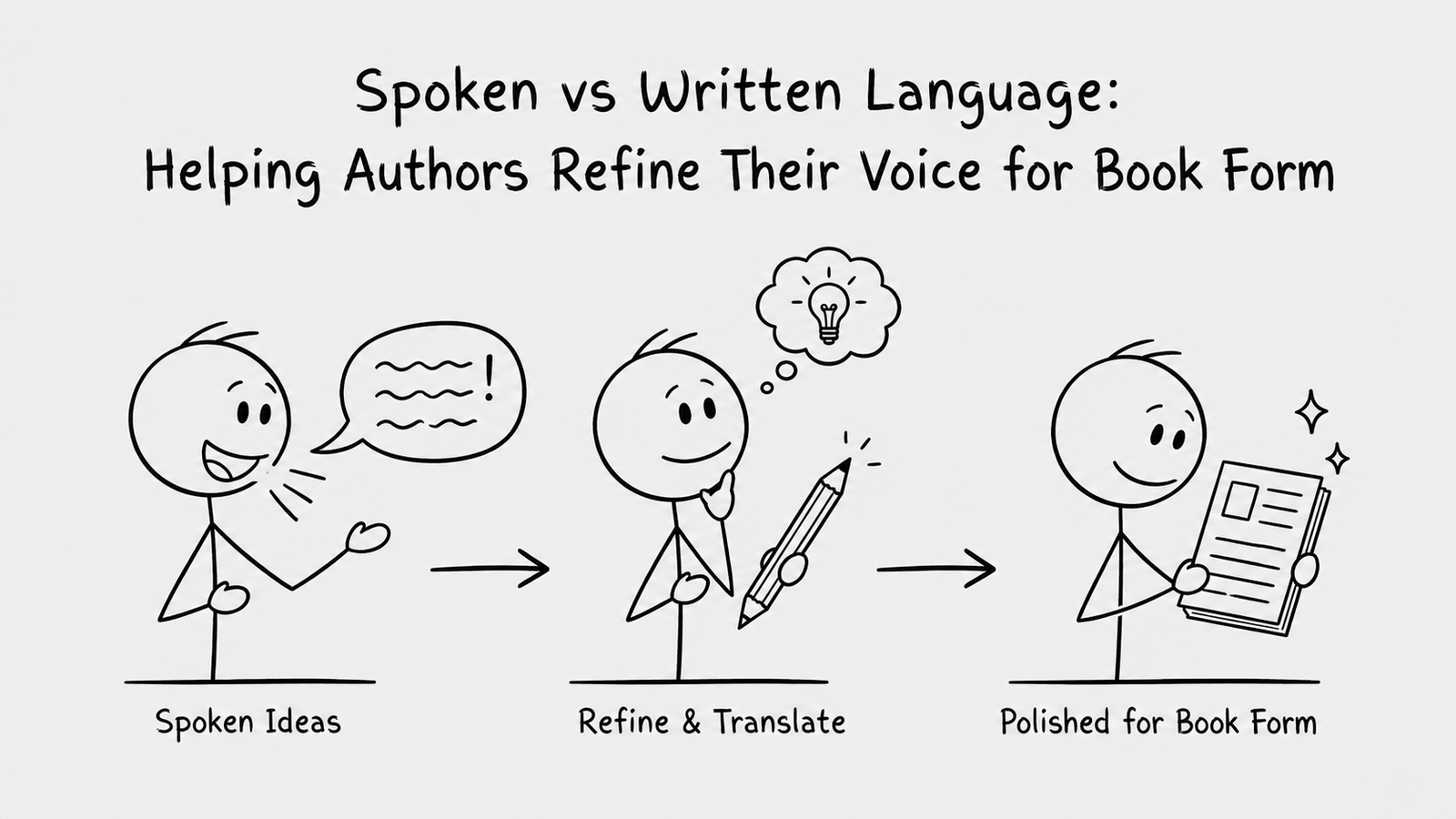
Many Christian manuscripts begin as sermons, testimonies, teachings, or spoken reflections. This article helps authors refine informal spoken language into clear, timeless book prose while preserving warmth, humour, personality, and...
Read More3-3c: Why Creative Non-Fiction and Non-Academic Books Should Not Be Too Long
Learn why creative non-fiction books should not be unnecessarily long. This practical guide helps authors improve focus, reduce repetition, lower production costs and write books that readers can afford, finish...
Read More3-5c: Balancing Biblical Facts, Historical Facts and Personal Interpretation in Christian Writing
Learn how Christian writers can balance biblical facts, historical context and personal interpretation without confusing imagination with Scripture. This practical guide explains how to distinguish what the Bible records, what...
Read More3-3d: Why Creating a Comfortable Reading Rhythm for Your Book is Important
Learn why creating a comfortable reading rhythm is important for your book and how balanced chapter lengths can improve flow, structure, clarity and the overall reading experience.
Read More3-5a. How to Place Scriptures in a Creative Book
Learn how to place Scriptures clearly and consistently in a creative Christian book, including Bible versions, inline quotations, highlighted verses, references, italics, and manuscript formatting.
Read More3-2a. How to Choose and Use Point of View in Creative Writing: First, Second and Third Person
Learn how to choose and use first, second and third person point of view in creative writing, maintain narrative consistency, manage narrative distance, avoid head-hopping, and select the perspective that...
Read More3-2b. How to Develop Primary and Secondary Characters in a Story
Learn how to develop compelling primary and secondary characters by defining clear goals, motivations, conflicts, strengths, weaknesses, relationships, distinct voices and believable character arcs that move your story forward.
Read MoreAdvanced Skills: Publishing Books
Going the Extra Mile
4-3a: Why Should a Non-Fiction Book Have a Subtitle?
A subtitle is a powerful tool for non-fiction books, offering clarity and appeal to potential readers. It provides additional context about the book's content, target audience, and benefits, helping it...
Read More4-2a: How to Peer Review Fiction and Non-Fiction Christian Literature Manuscripts
Peer reviewing Christian literature requires a thoughtful approach to ensure the manuscript aligns with Biblical principles while engaging readers effectively. For fiction, focus on character development, plot consistency, and spiritual...
Read More4-4c: Why is The Art of the Author Photo Important? Essential Specs for a Professional and Polished Image
Professional photos on a book’s back page play a crucial role in an author’s branding and marketing strategy. Learn More Here. #RaisingAfricanVoices
Read More4-4b. Why Professional Layout Is Non-Negotiable for African Christian Authors: Publishing With Excellence
Why professional book layout is non-negotiable for African Christian authors. Learn how industry-standard layout protects your message, credibility, reader experience, and publishing excellence from manuscript to marketplace.
Read More4-4a: Book Covers: Why They Matter for Every Author
Your book cover is not decoration—it is your book’s first decision-maker. Discover why covers matter for trust, genre clarity, and sales, plus common mistakes authors can avoid and a practical...
Read More4-1c: How to Turn a True Story into Autobiographical Fiction: Practical Steps for Writing Painful Personal History Well
Learn practical ways to turn a painful true story into autobiographical fiction without losing its truth or lessons. This training article helps African writers change names, settings, timelines, and identifying...
Read More4-2b: Why Theological Editing Must Come Before Comprehensive Editing
Christian manuscripts need theological editing before comprehensive editing. This training explains how theological review identifies speculative interpretations, unsupported symbolism, inaccurate Scripture quotations, weak historical claims and unbalanced treatment of difficult...
Read More4-1a. How to Use Cyclic Structure: Connecting Different Parts of Your Story
Learn how to use cyclic structure in creative writing to connect different parts of a story through flashbacks, memories, recurring themes, parallel experiences and clear transitions between past and present.
Read More4-1b. How to End a Book When preparing for a Sequel
Learn how to end a book when preparing for a sequel. This practical author resource covers plot closure, emotional resolution, sequel hooks, open story threads, foreshadowing, cliffhangers, final chapters and...
Read MoreContractual Skills: Publishing Books
Be Informed (Not Legal Advice)
5-2a: Why Every Author Needs a Non-Disclosure Agreement (NDA)
Protect your intellectual property with a Non-Disclosure Agreement (NDA) in publishing! An NDA safeguards your manuscripts and creative ideas by establishing confidentiality between authors, publishers, and editors. It ensures your...
Read More5-1a: What to Include in the Copyright Page and Complete the Copyrighting Process
Copyright law gives creators of original material the exclusive right to further use and duplicate that material for a given amount of time, at which point the copyrighted item becomes...
Read More5-3a: Terms and Conditions for Traditional Publishing/Adapting Existing Books into Other Versions
Adapting existing books into new versions, such as translations, audiobooks, or special editions, requires clear terms and conditions in traditional publishing agreements. These terms outline rights, royalties, and responsibilities for...
Read More5-4a: How to Publish a Book with Multiple Stakeholders: Best Practices for Rights Ownership, Expenses and Recognition
Publishing a book with multiple stakeholders requires clear communication and well-defined agreements to ensure smooth collaboration. Establish ownership rights, allocate expenses transparently, and outline recognition for each contributor's role. Best...
Read More5-1b: How to Get ISBN in Kenya and Other African Countries
Learn how to get an ISBN in Kenya and other African countries, who issues ISBNs, what you need to apply, and why every published book needs one. A practical guide...
Read More5-2b. How to Write a Contributor Consent Form for a Memoir Book
Publishing a book with multiple stakeholders requires clear communication and well-defined agreements to ensure smooth collaboration. Establish ownership rights, allocate expenses transparently, and outline recognition for each contributor's role. Best...
Read More5-2c: How to Ethically and Legally Use Free or Unpaid Images in Your Book
Learn how to use free images for your book ethically and legally by checking licences, reading the fine print on sites like Unsplash and Freepik, and knowing when paid or...
Read More